Social Security Benefits 2026: What to Expect from COLA
Advertisements
The 2026 Cost-of-Living Adjustment (COLA) for Social Security benefits is a crucial annual change influencing millions of Americans’ financial well-being, directly tied to inflation and economic indicators.
Understanding your financial future is paramount, especially when it comes to retirement income. For millions of Americans, Social Security Benefits: What to Expect from the 2026 Cost-of-Living Adjustment (COLA) is a topic of significant interest. This adjustment plays a vital role in ensuring that the purchasing power of your benefits keeps pace with inflation, helping you maintain your standard of living.
The mechanics of the Social Security COLA
The Cost-of-Living Adjustment, or COLA, is an annual increase to Social Security and Supplemental Security Income (SSI) benefits. Its primary purpose is to counteract the effects of inflation, ensuring that the value of beneficiaries’ payments does not erode over time. Without COLA, the fixed income of retirees and other beneficiaries would steadily lose purchasing power as prices for goods and services rise.
The Social Security Administration (SSA) determines the COLA based on changes in the Consumer Price Index for Urban Wage Earners and Clerical Workers (CPI-W). This specific index measures the average change over time in the prices paid by urban wage earners and clerical workers for a market basket of consumer goods and services. The calculation typically compares the CPI-W from the third quarter of the current year to the third quarter of the previous year. If there’s an increase, that percentage becomes the COLA for the following year.
How COLA is calculated
The calculation method for COLA is standardized and has been in place for decades. It’s not a discretionary decision but rather an automatic adjustment based on a specific economic metric. This ensures transparency and predictability, though the actual percentage can fluctuate significantly based on prevailing economic conditions.
- CPI-W Data: The Bureau of Labor Statistics (BLS) collects and publishes the CPI-W data monthly.
- Third Quarter Comparison: The average CPI-W for July, August, and September is compared year-over-year.
- No Decrease: By law, Social Security benefits cannot decrease due to COLA, even if deflation occurs.
Understanding this mechanism is crucial for beneficiaries to anticipate potential changes to their income. While the exact percentage is not known until late in the year, economic forecasts and inflation trends provide strong indicators. The goal is to provide a safeguard against inflation, ensuring that seniors and other beneficiaries can afford essential living expenses.
In essence, the COLA is a critical component of the Social Security system, acting as a financial lifeline for millions. Its consistent application helps maintain stability and confidence in the long-term viability of benefits, allowing individuals to plan their finances with a clearer understanding of future income adjustments.
Economic factors influencing the 2026 COLA
Forecasting the 2026 COLA requires a careful analysis of various economic indicators, particularly inflation. The CPI-W, which is the benchmark for COLA, is highly sensitive to broad economic trends. Several factors could significantly influence the inflation rate leading up to the 2026 announcement, thereby affecting the size of the adjustment.
Global economic stability, supply chain dynamics, and energy prices are major contributors to inflation. For instance, disruptions in global supply chains can drive up the cost of goods, impacting the CPI-W. Similarly, fluctuations in crude oil prices directly affect transportation costs and, consequently, the prices of many consumer products. Geopolitical events also play a role, as they can create uncertainty and impact commodity markets.
Key economic indicators to watch
Several economic data points provide insights into potential inflation trends and, by extension, the 2026 COLA. Keeping an eye on these can help beneficiaries and financial planners make more informed predictions.
- Consumer Price Index (CPI-W): The most direct measure, tracking changes in prices paid by urban wage earners.
- Energy Prices: Volatility in oil and gas prices often translates to broader inflationary pressures.
- Wage Growth: Strong wage growth can sometimes lead to increased consumer spending and demand-driven inflation.
- Interest Rates: Federal Reserve policy on interest rates influences borrowing costs and overall economic activity, indirectly affecting inflation.
Moreover, the post-pandemic economic recovery and any lingering effects on labor markets and production capacities will likely continue to shape inflationary pressures. Government fiscal policies, such as spending programs or tax changes, can also inject or withdraw money from the economy, influencing price levels. All these elements combine to create a complex economic landscape that ultimately dictates the COLA.
Therefore, understanding the interplay of these economic factors is essential for anyone trying to anticipate the Social Security Benefits: What to Expect from the 2026 Cost-of-Living Adjustment. While precise predictions are challenging, a comprehensive view of the economic environment provides valuable context for future benefit adjustments.
Projections and expert forecasts for 2026
Predicting the exact 2026 COLA is challenging, as it depends on economic data that won’t be fully available until late 2025. However, economists and financial analysts regularly offer projections based on current trends and historical patterns. These forecasts provide a range of possibilities, allowing beneficiaries to prepare for potential adjustments to their Social Security income.
Early projections often consider the Federal Reserve’s inflation targets, global economic growth rates, and specific sector-by-sector inflation outlooks. For instance, if energy prices are expected to remain stable or decline, this could temper overall inflation. Conversely, persistent supply chain issues or strong consumer demand could lead to higher inflation and a more substantial COLA.
Current trends and historical context
Analyzing recent COLA percentages and the economic conditions that led to them offers valuable context. Periods of high inflation typically result in higher COLA adjustments, while stable prices lead to smaller or even zero adjustments (though benefits never decrease). The average COLA over the past few decades provides a baseline, but recent volatility has shown that significant deviations are possible.
- Recent Volatility: The past few years have seen notable COLA variations due to unique economic circumstances.
- Analyst Consensus: Many financial institutions publish their COLA predictions, often converging on a narrow range.
- Government Reports: Agencies like the Congressional Budget Office (CBO) also release long-term economic forecasts that include inflation projections.
It’s important to remember that these are projections, not guarantees. Economic models are complex, and unforeseen events can drastically alter the trajectory of inflation. However, these forecasts serve as an important tool for financial planning, providing a reasonable expectation for what might come. Beneficiaries should monitor these projections and consider how different COLA scenarios might impact their personal budgets.
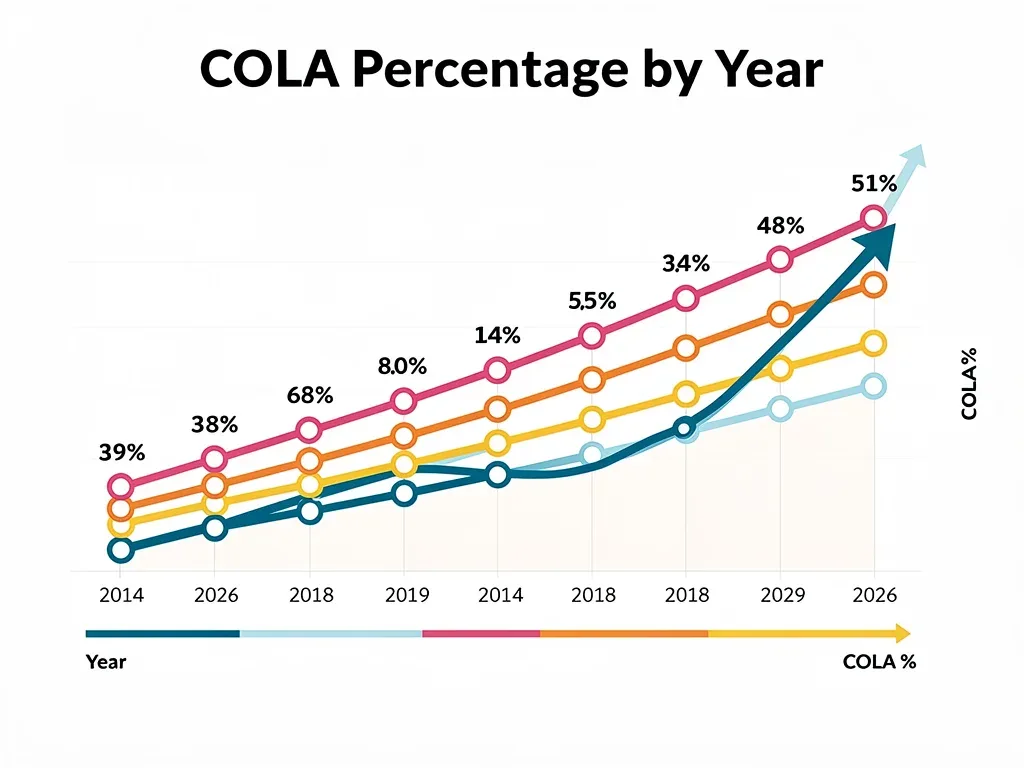
Ultimately, while we can’t pinpoint the exact figure for the Social Security Benefits: What to Expect from the 2026 Cost-of-Living Adjustment today, the ongoing analysis of economic indicators and expert opinions offers a valuable framework for understanding the likely range of the adjustment. Staying informed will be key to adapting to these changes effectively.
Impact on beneficiaries and financial planning
The 2026 COLA, regardless of its size, will have a tangible impact on the daily lives and financial planning of millions of Social Security beneficiaries. For those relying primarily on these benefits, even a small adjustment can make a significant difference in their ability to cover essential expenses. A higher COLA is generally welcomed, as it helps offset rising costs for necessities like food, housing, and healthcare.
However, it’s also crucial to consider that COLA primarily addresses inflation, not necessarily an increase in purchasing power beyond maintaining the status quo. If inflation is particularly high, a COLA might simply allow beneficiaries to keep pace, rather than providing them with extra discretionary income. This distinction is vital for realistic financial planning.
Budgeting with COLA in mind
Beneficiaries should integrate COLA projections into their annual budgeting. While the exact figure isn’t known until late in the year, understanding the factors that influence it can help in creating flexible financial plans. This involves not only anticipating an increase in income but also considering how potential inflation might affect expenses.
- Review Expenses: Regularly assess your spending habits, especially on items prone to inflation.
- Healthcare Costs: Medicare Part B premiums are often deducted from Social Security benefits and can also adjust annually.
- Supplemental Income: Consider how COLA interacts with other sources of retirement income, such as pensions or investments.
For those still working or planning for retirement, the COLA mechanism highlights the importance of diversified retirement savings. Relying solely on Social Security, even with annual adjustments, may not be sufficient to cover all future expenses, particularly if healthcare costs continue to rise faster than general inflation. Therefore, a comprehensive financial strategy that includes personal savings, investments, and understanding Social Security’s role is essential.
The Social Security Benefits: What to Expect from the 2026 Cost-of-Living Adjustment is not just a number; it’s a critical element in the financial tapestry of American retirees. Proactive planning and a clear understanding of its implications are key to navigating the economic landscape effectively.
Potential legislative changes and future outlook
While the COLA calculation is currently automatic, the broader Social Security system is always subject to legislative discussions and potential reforms. Concerns about the long-term solvency of Social Security often lead to proposals for changes, some of which could indirectly affect how COLA is calculated or applied in the future. These discussions are complex, involving political, economic, and social considerations.
One common proposal involves changing the index used to calculate COLA. For example, some suggest using the Chained Consumer Price Index (C-CPI-U) instead of the CPI-W. The C-CPI-U typically shows a lower rate of inflation because it accounts for consumers substituting cheaper goods when prices rise. Such a change would likely result in smaller COLA adjustments over time, potentially impacting beneficiaries’ purchasing power.
Debates around COLA methodology
The debate over the most appropriate inflation measure for COLA is ongoing. Advocates for sticking with the CPI-W argue that it better reflects the spending patterns of seniors, who often face higher healthcare costs that are not fully captured by other indices. Conversely, proponents of alternative measures often cite the need for fiscal responsibility and long-term system sustainability.
- CPI-E (Consumer Price Index for the Elderly): Some argue this index would more accurately reflect inflation experienced by seniors.
- Fiscal Solvency: Discussions often revolve around balancing benefit adequacy with the financial health of the Social Security trust funds.
- Political Landscape: Any significant changes to COLA methodology would require bipartisan support in Congress.
As we look towards 2026 and beyond, these legislative discussions will continue to shape the future of Social Security benefits. While immediate changes to the COLA formula are not anticipated, beneficiaries and future retirees should remain aware of these ongoing policy debates. Understanding the potential for legislative intervention is part of a comprehensive understanding of Social Security Benefits: What to Expect from the 2026 Cost-of-Living Adjustment and its long-term trajectory.

Therefore, staying informed about policy proposals and their potential ramifications is as important as tracking economic indicators for the upcoming COLA. The future of Social Security is a dynamic subject, influenced by both economic realities and legislative decisions.
Maximizing your Social Security benefits
While the COLA helps maintain the purchasing power of your Social Security benefits, there are other strategies beneficiaries can employ to maximize their overall income and financial security in retirement. Understanding these options can empower individuals to make more informed decisions about their retirement planning.
One of the most significant decisions is when to claim Social Security benefits. While you can start receiving benefits as early as age 62, delaying claims beyond your Full Retirement Age (FRA) can result in significantly higher monthly payments. For each year you delay past your FRA, up to age 70, your benefits increase by a certain percentage, known as delayed retirement credits. This increase is permanent and applies to your monthly benefit for the rest of your life.
Strategic claiming decisions
The optimal claiming age is highly personal and depends on various factors, including your health, other sources of income, and family situation. For married couples, coordinating claiming strategies can yield substantial benefits, often involving one spouse claiming early while the other delays.
- Full Retirement Age (FRA): Know your FRA, which varies based on your birth year.
- Spousal Benefits: Explore options for claiming benefits based on a spouse’s work record.
- Work While Receiving Benefits: Understand the earnings test if you plan to work before FRA.
Furthermore, staying informed about your earnings record is crucial. The Social Security Administration provides annual statements detailing your earnings history and estimated future benefits. Reviewing these statements regularly can help identify any discrepancies and ensure your benefits are calculated accurately. Any errors could potentially reduce your future payments, so proactive monitoring is advisable.
Beyond claiming strategies, understanding how your benefits interact with other income sources, such as pensions, 401(k)s, and IRAs, is also vital. A holistic approach to retirement planning ensures that all components of your financial picture work together efficiently. This comprehensive view, combined with an understanding of Social Security Benefits: What to Expect from the 2026 Cost-of-Living Adjustment, provides a robust foundation for a secure retirement.
By taking these steps, beneficiaries can not only adapt to the annual COLA but also strategically enhance their overall financial well-being throughout their retirement years.
Staying informed and preparing for 2026
As we approach 2026, staying informed about the Social Security COLA and broader economic trends is paramount for effective financial planning. The official announcement of the 2026 COLA will come in October 2025, providing the definitive percentage by which benefits will adjust. Until then, beneficiaries and those planning for retirement should actively monitor reliable sources for economic updates and projections.
Reliable sources include official government reports from the Social Security Administration, the Bureau of Labor Statistics, and reputable financial news outlets. These sources offer data-driven insights and expert analysis that can help you anticipate potential changes. Avoiding speculation and relying on verified information is crucial to making sound financial decisions.
Resources for beneficiaries
Several resources are available to help you understand your Social Security benefits and prepare for future adjustments. The Social Security Administration’s official website is an invaluable tool, offering personalized benefit statements, detailed information on claiming rules, and updates on COLA announcements.
- SSA.gov: Your primary resource for personal benefit statements and program information.
- Financial Advisors: Consult with professionals who specialize in retirement planning and Social Security.
- Economic News: Follow reputable financial news sources for inflation trends and expert forecasts.
Preparing for 2026 involves not just understanding the COLA but also ensuring your personal financial plan is robust and adaptable. This includes reviewing your budget, assessing your savings, and considering how any changes to your Social Security income might affect your overall financial picture. Proactive preparation can help mitigate any surprises and ensure a smoother transition into the new benefit year.
The Social Security Benefits: What to Expect from the 2026 Cost-of-Living Adjustment will be a key factor in many retirees’ financial stability. By staying vigilant and utilizing available resources, you can confidently navigate these adjustments and maintain control over your financial future. Continuous learning and adaptation are essential in managing retirement income effectively.
| Key Point | Brief Description |
|---|---|
| COLA Purpose | Adjusts Social Security benefits to keep pace with inflation, protecting purchasing power. |
| Calculation Method | Based on the Consumer Price Index for Urban Wage Earners and Clerical Workers (CPI-W) from Q3. |
| Economic Influences | Global stability, supply chains, energy prices, and wage growth significantly impact inflation and COLA. |
| Beneficiary Impact | Affects budgeting, healthcare costs, and overall financial security for millions of Americans. |
Frequently asked questions about 2026 COLA
What is the primary purpose of the Social Security COLA?▼The primary purpose of the Social Security Cost-of-Living Adjustment (COLA) is to protect the purchasing power of Social Security and Supplemental Security Income (SSI) benefits. It helps ensure that beneficiaries’ income keeps pace with inflation, preventing the erosion of their fixed payments over time due to rising prices for goods and services.
How is the 2026 COLA specifically calculated?▼The 2026 COLA will be calculated by comparing the average Consumer Price Index for Urban Wage Earners and Clerical Workers (CPI-W) for the third quarter of 2025 (July, August, September) to the average CPI-W for the third quarter of 2024. The percentage increase, if any, will determine the COLA for 2026.
When will the official 2026 COLA be announced?▼The official 2026 COLA announcement is typically made by the Social Security Administration (SSA) in October of 2025. This allows for the collection and analysis of the third-quarter CPI-W data, which is crucial for the calculation. Beneficiaries will then be notified of their new benefit amounts.
Can the COLA ever result in a decrease in Social Security benefits?▼No, by law, the Social Security COLA cannot result in a decrease in benefits. If the Consumer Price Index for Urban Wage Earners and Clerical Workers (CPI-W) shows a decline, the COLA for that year will be zero, meaning benefits remain unchanged, but they will never be reduced due to a negative COLA.
How can I best prepare for the 2026 COLA’s impact on my finances?▼To best prepare, monitor economic forecasts and inflation trends from reliable sources. Review your personal budget annually, considering how potential COLA adjustments interact with rising costs for healthcare and other expenses. Diversifying retirement income and strategically planning your claiming age can also maximize your financial security.
Conclusion
The 2026 Cost-of-Living Adjustment for Social Security benefits stands as a pivotal annual event for millions of Americans, directly shaping their financial stability in retirement. While the exact percentage remains to be seen, understanding the underlying economic mechanisms, particularly inflation and the CPI-W, provides a clear framework for anticipation. Beneficiaries should actively engage with reliable information, integrate COLA projections into their financial planning, and explore strategies to maximize their benefits. By doing so, they can confidently navigate the economic landscape and ensure their Social Security income continues to support their desired quality of life well into 2026 and beyond.