2026 Federal Reserve Rate Hikes: 0.50% Mortgage Impact
Advertisements
A 0.50% Federal Reserve interest rate hike in 2026 could significantly alter mortgage landscapes, directly affecting monthly payments, housing affordability, and borrowing costs for millions of homeowners and prospective buyers across the United States.
As we look ahead to 2026, the prospect of the Federal Reserve 2026 mortgage interest rate hikes looms large, especially a potential 0.50% increase, which could profoundly reshape the financial landscape for homeowners and those aspiring to buy. Understanding the nuances of these potential shifts is crucial for prudent financial planning.
Understanding Federal Reserve Interest Rates and Their Impact
The Federal Reserve, often referred to as ‘the Fed,’ plays a pivotal role in the U.S. economy by setting monetary policy, primarily through adjusting the federal funds rate. This benchmark rate influences all other interest rates in the economy, including those for mortgages. When the Fed raises rates, it generally aims to curb inflation and cool down an overheating economy. However, these actions have direct and indirect consequences for consumers, particularly those with significant debt like mortgages.
A 0.50% increase in the federal funds rate, while seemingly small, can trigger a chain reaction throughout the financial system. Banks typically respond by raising their prime rates, which then affects variable-rate loans, credit cards, and, most notably, mortgage rates. For homeowners, this means that the cost of borrowing for a new home or refinancing an existing one becomes more expensive. This ripple effect is not instantaneous but tends to materialize over several months, giving both lenders and borrowers time to adjust.
The Fed’s decisions are based on a complex analysis of economic indicators, including inflation, employment figures, and global economic conditions. Predicting the exact timing and magnitude of future rate hikes, such as those anticipated for 2026, involves considerable speculation. However, financial markets and analysts constantly monitor these indicators to anticipate the Fed’s next moves, providing a degree of foresight for consumers. Understanding this mechanism is the first step in preparing for potential changes in your mortgage landscape.
The Mechanism of Rate Hikes
The federal funds rate is the target rate for interbank lending. When the Fed increases this target, banks must pay more to borrow from each other, which translates to higher costs for consumers. This mechanism is fundamental to how monetary policy is transmitted through the economy.
- Federal Funds Rate: The base rate for overnight lending between banks.
- Prime Rate: The rate banks charge their most creditworthy customers, directly influenced by the federal funds rate.
- Mortgage Rates: Often tied to long-term Treasury yields, which react to expectations of future Fed actions.
In essence, a rate hike makes money more expensive to borrow, impacting everything from business investments to individual consumer loans. This increased cost of capital is designed to slow economic activity and bring inflation back to target levels. For mortgages, this means higher monthly payments for new loans and potentially for adjustable-rate mortgages (ARMs).
The anticipation of a rate hike can sometimes have an impact even before the official announcement. Markets often price in expected changes, meaning mortgage rates can start to climb in advance of a confirmed Fed move. This forward-looking nature of financial markets underscores the importance of staying informed and proactive.
Direct Impact on Mortgage Payments: A 0.50% Increase Scenario
Let’s delve into the tangible effects of a 0.50% increase on your mortgage. For prospective homebuyers, this means higher monthly payments, reducing their purchasing power. For existing homeowners with adjustable-rate mortgages (ARMs), their payments could also rise, impacting their household budgets. Fixed-rate mortgages, however, would remain unaffected if they were originated before the rate hike.
Consider a hypothetical scenario: a borrower takes out a $300,000 fixed-rate mortgage. If the interest rate is 6.00%, their principal and interest payment would be approximately $1,798.65. If the rate were to increase by 0.50% to 6.50%, that same $300,000 mortgage would now cost approximately $1,896.20 per month. This represents an increase of nearly $97.55 per month, or $1,170.60 annually. While this might not seem astronomical for some, it can significantly strain budgets, especially for those already operating on tight margins.
The cumulative effect over the life of a 30-year mortgage is even more substantial. That $97.55 monthly difference translates to over $35,000 in additional interest paid over the life of the loan. This highlights why even seemingly small rate increases warrant careful attention and strategic planning. The impact is not just on monthly cash flow but on the total cost of homeownership.
Adjustable-Rate Mortgages (ARMs) vs. Fixed-Rate Mortgages
The vulnerability to interest rate hikes differs significantly between ARM and fixed-rate mortgage holders. Fixed-rate mortgages lock in an interest rate for the entire loan term, providing stability and predictability regardless of market fluctuations. Conversely, ARMs have interest rates that adjust periodically based on an index, making them susceptible to Fed rate changes.
- Fixed-Rate Mortgages: Payments remain constant, offering budget stability.
- Adjustable-Rate Mortgages (ARMs): Payments can increase or decrease, introducing payment variability.
- Hybrid ARMs: Offer an initial fixed-rate period before becoming adjustable.
Homeowners with ARMs should carefully review their loan terms, paying close attention to the adjustment period, caps on rate increases, and the specific index their loan is tied to. Understanding these details is crucial for forecasting potential payment increases and planning accordingly. Some ARMs have annual or lifetime caps on how much the interest rate can increase, which provides some protection but doesn’t eliminate the risk entirely.
For those considering a new mortgage, the choice between a fixed-rate and an ARM becomes even more critical in a rising rate environment. While ARMs often offer lower initial rates, the long-term risk of increased payments due to Fed hikes must be weighed against the potential savings in the initial years. Financial advisors often recommend fixed-rate mortgages during periods of anticipated rate increases for greater payment stability.
Broader Economic Implications and Housing Market Trends
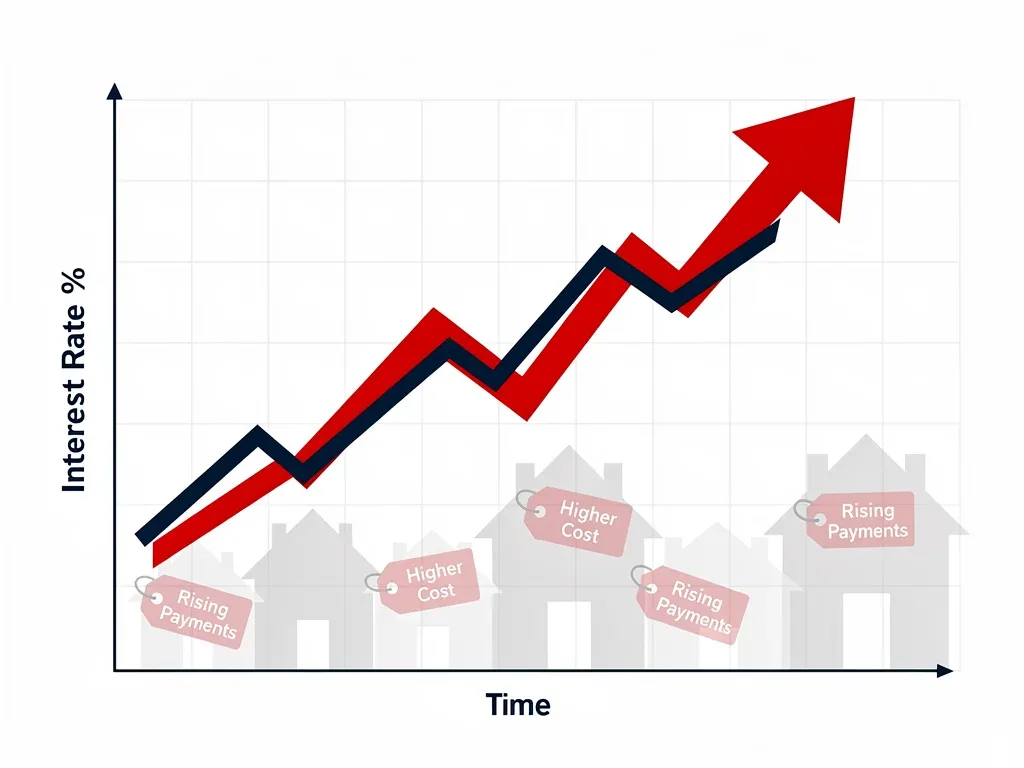
Beyond individual mortgage payments, a 0.50% Federal Reserve rate hike in 2026 could have broader implications for the U.S. housing market and the overall economy. Higher borrowing costs tend to cool down housing demand, as fewer prospective buyers can afford the increased monthly payments. This can lead to a slowdown in home sales and, in some cases, a moderation or even a decline in home price appreciation.
The housing market is intricately linked to consumer confidence and economic growth. When mortgage rates rise, it can reduce affordability, particularly for first-time homebuyers who are often sensitive to monthly payment fluctuations. This decreased demand can also impact home builders, leading to fewer new construction projects and potentially affecting employment in the construction sector. The ripple effect extends to related industries such as real estate agents, mortgage brokers, and home improvement retailers.
Furthermore, higher interest rates can make it more challenging for homeowners to access home equity loans or lines of credit, which are often used for renovations or other significant expenses. This can further dampen economic activity by reducing consumer spending on discretionary items and large projects. The cumulative effect of these factors can contribute to a broader economic slowdown, which is often the Fed’s intention when it raises rates to combat inflation.
Affordability and Buyer Behavior
Affordability is a key concern in any housing market, and rising interest rates directly exacerbate this issue. As mortgage payments increase, the pool of eligible buyers shrinks, especially in competitive markets where home prices are already high. This shift in affordability can alter buyer behavior, pushing some out of the market entirely or forcing others to consider smaller homes or less desirable locations.
- Reduced Purchasing Power: Buyers can afford less home for the same monthly payment.
- Increased Rental Demand: Some potential buyers may opt to rent longer, increasing pressure on rental markets.
- Market Slowdown: Fewer transactions and potentially slower home price growth.
The psychological impact on buyers is also significant. Uncertainty about future rate hikes can lead to a ‘wait-and-see’ approach, further slowing down market activity. However, for some, the fear of even higher rates might spur them to act sooner. This dynamic interplay of factors makes predicting precise market movements challenging, but the general trend points towards a more restrained housing market in the face of rising rates.
The overall health of the economy also plays a critical role. If wage growth keeps pace with inflation and interest rate increases, the impact on affordability might be mitigated for some households. However, if wages stagnate while rates rise, the affordability crisis could deepen, particularly for lower and middle-income families.
Strategies for Homeowners to Mitigate Risk
For current homeowners, proactive strategies can help mitigate the risks associated with potential Federal Reserve 2026 mortgage rate hikes. Understanding your current mortgage terms is the first step. If you have an adjustable-rate mortgage, knowing when your rate is scheduled to adjust and by how much is critical. This information allows you to plan for potential payment increases and explore options before they become urgent.
One of the most common strategies for ARM holders in a rising rate environment is to consider refinancing into a fixed-rate mortgage. While rates may already be higher than they were in previous years, securing a fixed rate can provide long-term payment stability and eliminate the uncertainty of future adjustments. It’s essential to compare current fixed rates, closing costs, and the break-even point to determine if refinancing makes financial sense for your specific situation.
Another approach is to make extra principal payments on your mortgage. Even small additional payments can significantly reduce the total interest paid over the life of the loan and shorten the repayment period. This strategy is particularly effective for fixed-rate mortgage holders, as it allows them to build equity faster and reduce their overall debt burden, making them more resilient to any future economic shifts.
Refinancing Options and Considerations
Refinancing involves taking out a new mortgage to pay off your existing one, typically with more favorable terms or a different rate structure. In a rising rate environment, the primary goal of refinancing is often to convert an ARM into a fixed-rate mortgage to lock in a stable payment.
- Fixed-Rate Refinance: Locks in a consistent interest rate for the life of the loan.
- Cash-Out Refinance: Allows you to access home equity while potentially securing a new rate.
- Streamline Refinance: For FHA or VA loans, often with less paperwork and lower costs.
Before refinancing, thoroughly research current interest rates and compare offers from multiple lenders. Pay close attention to the annual percentage rate (APR), which includes not only the interest rate but also other loan costs, giving you a more accurate picture of the true cost of the loan. Also, consider the closing costs associated with refinancing, which can range from 2% to 5% of the loan amount.
For those with fixed-rate mortgages, refinancing might still be an option if current rates are significantly lower than their existing rate, though this becomes less likely in a rising rate environment. However, if you’re looking to shorten your loan term or tap into home equity, a refinance could still be beneficial, provided the new rate is manageable.
Strategies for Prospective Homebuyers in a Rising Rate Environment
Prospective homebuyers face a unique set of challenges when interest rates are on the rise. A 0.50% increase in the Federal Reserve 2026 mortgage rate can directly impact affordability, making it harder to qualify for loans or requiring a larger down payment. However, strategic planning can help navigate these waters successfully.
The first step for any prospective buyer is to get pre-approved for a mortgage. This not only gives you a clear understanding of how much you can afford but also locks in an interest rate for a certain period, typically 30 to 90 days. This pre-approval can provide a buffer against immediate rate increases and give you confidence in your purchasing power while house hunting. It also makes you a more attractive buyer to sellers.
Saving for a larger down payment is another powerful strategy. A larger down payment reduces the amount you need to borrow, which in turn lowers your monthly mortgage payment and the total interest paid over the life of the loan. It can also help you qualify for a better interest rate, as lenders often view borrowers with more equity upfront as less risky. Even an extra few percentage points on your down payment can make a noticeable difference in your long-term financial commitment.

Budgeting and Financial Preparedness
In a rising rate environment, meticulous budgeting and financial preparedness become paramount. Prospective buyers should create a detailed budget that accounts for not only the mortgage payment but also property taxes, homeowner’s insurance, utilities, and potential maintenance costs. It’s wise to stress-test this budget by factoring in a slightly higher interest rate than initially anticipated, just in case rates continue to climb.
- Detailed Budgeting: Account for all homeownership costs, not just the mortgage.
- Emergency Fund: Build a robust emergency fund to cover unexpected expenses.
- Debt Reduction: Pay down high-interest debt to improve your debt-to-income ratio.
Improving your credit score is another critical step. A higher credit score can qualify you for the most competitive interest rates, potentially offsetting some of the impact of a general rate hike. Review your credit report for errors, pay bills on time, and reduce outstanding debt to boost your score. Even a small improvement can translate into significant savings over the life of a mortgage.
Exploring different loan products, such as FHA or VA loans, can also be beneficial, as they often have more flexible qualification requirements and can offer competitive rates, even for borrowers with less-than-perfect credit or smaller down payments. Working with an experienced mortgage broker can help you navigate these options and find the best fit for your financial situation.
The Federal Reserve’s Decision-Making Process and Future Outlook
The Federal Reserve’s decisions on interest rates are not made in a vacuum; they are the result of careful deliberation by the Federal Open Market Committee (FOMC). This committee meets eight times a year, or more frequently if economic conditions warrant, to assess the state of the economy and determine the appropriate course for monetary policy. Their primary mandates are to achieve maximum employment and stable prices (low inflation).
When considering a rate hike, such as the potential 0.50% increase in 2026, the FOMC analyzes a vast array of economic data. This includes inflation reports, employment figures, GDP growth, consumer spending, and global economic developments. They also consider qualitative factors, such as business sentiment and financial market stability. The goal is to strike a balance: raise rates enough to control inflation without stifling economic growth or triggering a recession.
Forecasting the Fed’s actions for 2026 involves a degree of uncertainty, as economic conditions can change rapidly. However, current trends and projections suggest a continued focus on bringing inflation down to its target level, which may necessitate further rate adjustments. Market analysts often look to the ‘dot plot,’ a projection of future interest rates by FOMC members, for clues about the Fed’s long-term intentions, though these are subject to change.
Key Economic Indicators to Monitor
For those looking to anticipate future Fed actions and their impact on mortgage rates, monitoring key economic indicators is essential. These indicators provide insights into the health of the economy and the pressures the Fed is responding to.
- Consumer Price Index (CPI): A measure of inflation, indicating changes in the cost of goods and services.
- Employment Report: Includes unemployment rates, job growth, and wage increases.
- Gross Domestic Product (GDP): The broadest measure of economic activity and growth.
Inflation figures are particularly critical, as the Fed has a stated target of 2% inflation. If inflation remains stubbornly high, the likelihood of further rate hikes increases. Conversely, if inflation shows signs of decelerating, the Fed might adopt a more dovish stance, potentially pausing or even reversing rate increases. Understanding these indicators empowers individuals to make more informed financial decisions.
The global economic landscape also plays a role. International trade tensions, geopolitical events, and economic conditions in major trading partners can all influence the Fed’s decisions. A global slowdown, for instance, might lead the Fed to be more cautious about raising rates, even if domestic inflation remains elevated. This holistic view is what guides the FOMC’s complex decision-making process.
The Role of Personalized Financial Advice and Planning
Given the complexities of the economic landscape and the potential for Federal Reserve 2026 mortgage rate hikes, personalized financial advice and diligent planning are more crucial than ever. While general strategies can provide a framework, individual financial situations vary widely, and what works for one person may not be ideal for another. Engaging with a qualified financial advisor can provide tailored guidance and help navigate these challenging times.
A financial advisor can help you assess your current financial health, understand your risk tolerance, and develop a personalized plan that aligns with your long-term goals. This might involve reviewing your existing mortgage, exploring refinancing options, adjusting your investment strategy, or optimizing your savings plan. They can also help you understand the fine print of various loan products and identify potential pitfalls.
Beyond professional advice, continuous personal financial education is vital. Staying informed about economic news, understanding how interest rates work, and regularly reviewing your budget and financial goals empowers you to make proactive decisions. The more informed you are, the better equipped you will be to adapt to changing market conditions and protect your financial well-being.
Building a Resilient Financial Future
Building a resilient financial future involves more than just reacting to interest rate changes; it requires a comprehensive approach to personal finance. This includes managing debt, building an emergency fund, saving for retirement, and diversifying investments. Each of these components contributes to your overall financial stability and ability to withstand economic shocks.
- Debt Management: Prioritize paying down high-interest debt to free up cash flow.
- Emergency Savings: Aim for 3-6 months of living expenses in an easily accessible account.
- Investment Diversification: Spread investments across different asset classes to reduce risk.
Regularly reviewing your financial plan and making adjustments as needed is also crucial. Life circumstances change, economic conditions evolve, and your goals may shift. A flexible financial plan allows you to adapt to these changes without derailing your progress. Consider conducting an annual financial check-up with your advisor or independently to ensure you remain on track.
Ultimately, navigating potential Federal Reserve rate hikes in 2026 requires a combination of knowledge, foresight, and proactive action. By understanding the potential impacts, exploring mitigation strategies, and committing to sound financial planning, both homeowners and prospective buyers can position themselves for greater financial security in an evolving economic environment.
| Key Aspect | Brief Description |
|---|---|
| Mortgage Payments | A 0.50% hike could increase monthly payments by nearly $100 for a $300k mortgage, significantly impacting budgets. |
| Housing Affordability | Higher rates reduce purchasing power, making homeownership less accessible, especially for first-time buyers. |
| Refinancing Strategy | Consider refinancing ARMs to fixed-rate mortgages to secure payment stability amidst rising rates. |
| Financial Preparedness | Budgeting, larger down payments, and improving credit scores are crucial for navigating rate increases. |
Frequently Asked Questions About 2026 Federal Reserve Rate Hikes
How does a 0.50% Fed rate hike affect my existing fixed-rate mortgage?▼A 0.50% Federal Reserve rate hike will not directly impact your existing fixed-rate mortgage. Your interest rate and monthly payments are locked in for the life of the loan. However, it might affect your ability to refinance or the rates on other variable-rate debts you hold.
What does a rate hike mean for first-time homebuyers in 2026?▼For first-time homebuyers, a 0.50% rate hike means higher borrowing costs and potentially reduced affordability. Monthly payments for the same loan amount will increase, requiring a larger budget or a smaller home purchase. Pre-approval and a larger down payment become even more critical.
Should I refinance my adjustable-rate mortgage (ARM) before 2026?▼If you have an ARM, considering a refinance to a fixed-rate mortgage before potential 2026 hikes could be a wise move. This would lock in your interest rate, protecting you from future payment increases. Evaluate current fixed rates and closing costs to make an informed decision.
How can I prepare my finances for potential interest rate increases?▼To prepare, focus on strengthening your financial position: build a robust emergency fund, pay down high-interest debt, improve your credit score, and create a detailed budget. These steps enhance your financial resilience against rising borrowing costs and economic shifts.
What economic indicators should I watch for clues on Fed actions?▼Key indicators to monitor include the Consumer Price Index (CPI) for inflation, the monthly Employment Report for job growth and wages, and Gross Domestic Product (GDP) for overall economic activity. These provide insight into the Federal Reserve’s likely monetary policy decisions and future rate adjustments.
Conclusion
The prospect of a 0.50% Federal Reserve interest rate hike in 2026 presents a significant financial inflection point for homeowners and prospective buyers across the United States. While such an increase aims to stabilize the broader economy, its direct implications for mortgage payments, housing affordability, and personal financial planning are undeniable. Understanding the intricate relationship between the Fed’s monetary policy and the mortgage market is not merely an academic exercise; it is a vital component of informed financial decision-making. By proactively assessing current mortgage structures, exploring refinancing options, bolstering personal financial preparedness through budgeting and debt management, and staying attuned to economic indicators, individuals can effectively navigate these anticipated changes. The journey through 2026 and beyond requires foresight, adaptability, and a commitment to sound financial principles to secure and maintain stable homeownership in an evolving economic landscape.