Parental Contributions to College Costs 2026: Savings & Support
Advertisements
Effectively managing parental contributions to college costs in 2026 requires early planning, strategic use of savings vehicles like 529 plans, and a thorough understanding of financial aid opportunities to minimize out-of-pocket expenses for higher education.
Preparing for college expenses can feel overwhelming, but understanding parental contributions to college costs in 2026: strategies for savings and support is the first crucial step. As tuition fees continue to climb, families across the United States are seeking effective ways to fund their children’s higher education without falling into debilitating debt. This comprehensive guide aims to demystify the process, offering actionable insights and expert advice to help you navigate the financial landscape of college in the coming years.
Understanding the Landscape of College Costs in 2026
The cost of higher education in the United States continues its upward trajectory, making proactive planning more critical than ever. In 2026, families can anticipate a continuation of these trends, with tuition, room, board, and other fees potentially reaching new highs. Grasping the full scope of these expenses is essential for any parent embarking on the journey of funding their child’s college education.
Beyond the sticker price of tuition, there are numerous other costs that contribute to the overall expense of college. These often include fees for student activities, technology, health services, and textbooks, which can collectively add thousands of dollars to the annual bill. Furthermore, living expenses, whether on-campus or off-campus, play a significant role. Room and board, transportation, and personal expenses must all be factored into the total budget.
Projected Tuition Increases and Inflation
Historically, college tuition has outpaced general inflation, and this trend is expected to persist into 2026. Experts project annual increases ranging from 3% to 5% at many institutions. This means that a college education costing $30,000 per year today could easily be $35,000 or more by the time your child enrolls.
- Public vs. Private Institutions: Public universities generally have lower tuition rates, especially for in-state students, but private colleges offer unique academic programs and smaller class sizes that can justify their higher costs.
- Cost of Living: The geographic location of a college significantly impacts living expenses. Urban centers often come with higher housing and transportation costs compared to rural areas.
- Hidden Fees: Be aware of mandatory fees that may not be included in the advertised tuition. These can range from lab fees to athletic facility charges.
Understanding these financial realities early allows parents to set realistic savings goals and explore all available funding avenues. The earlier you start planning for parental contributions to college costs in 2026, the better positioned you will be to meet these financial demands without undue stress.
Strategic Savings Vehicles for Education Funding
One of the most effective ways to manage parental contributions to college costs in 2026 is through dedicated savings vehicles. These accounts offer tax advantages and structured approaches to accumulate funds specifically for educational expenses. Choosing the right savings plan depends on your financial situation, risk tolerance, and timeline.
The landscape of college savings options has evolved, providing diverse avenues for families to build their education nest egg. Each option comes with its own set of rules, benefits, and potential drawbacks, making it crucial to understand which best aligns with your long-term financial goals.
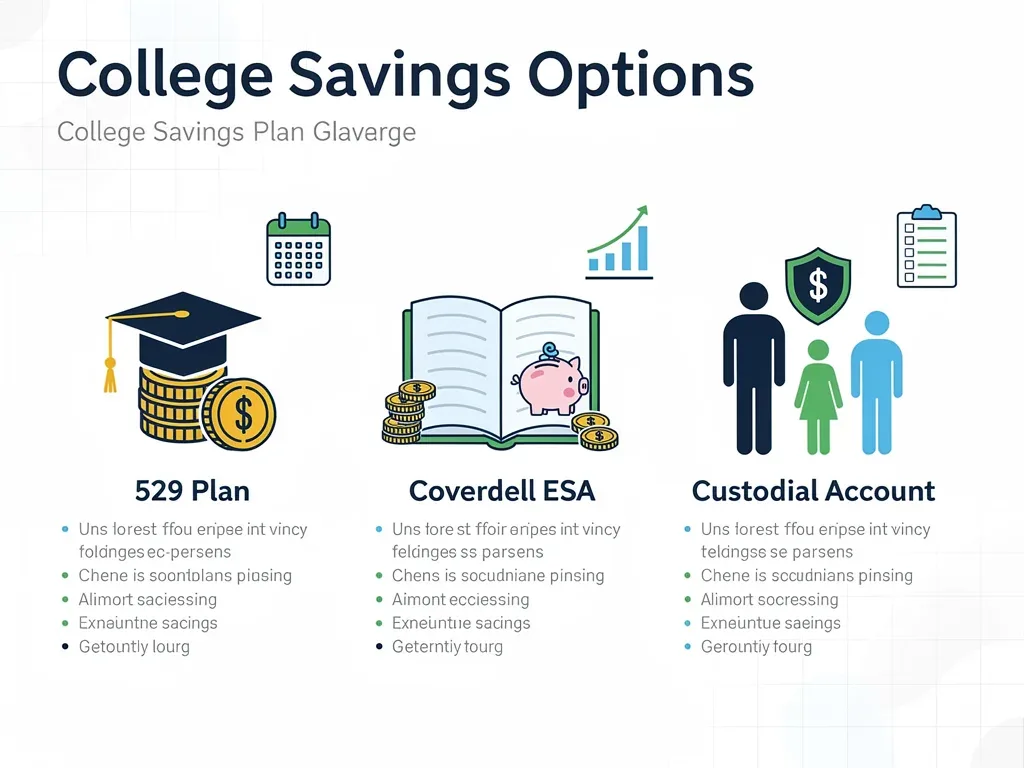

Exploring 529 Plans: The Gold Standard
529 plans are widely considered the premier college savings tool due to their significant tax benefits. Contributions grow tax-free, and withdrawals are tax-free when used for qualified educational expenses. Most states offer 529 plans, and many provide state income tax deductions or credits for contributions.
- Investment Options: 529 plans typically offer a range of investment options, from age-based portfolios that become more conservative as your child approaches college to static portfolios.
- Flexibility: Funds can be used at eligible two-year and four-year colleges, universities, and vocational schools. Recent changes also allow up to $10,000 per year for K-12 tuition and up to $35,000 over a lifetime to pay off student loans.
- Ownership: The parent or account owner maintains control of the funds, even after the child turns 18, providing security and ensuring funds are used as intended.
Beyond 529 plans, other options exist. Coverdell Education Savings Accounts (ESAs) offer tax-free growth and withdrawals for qualified education expenses, similar to 529s, but with lower annual contribution limits and income restrictions. Custodial accounts, such as UGMA/UTMA accounts, allow parents to save money in a child’s name, but these funds become the child’s property at the age of majority and can negatively impact financial aid eligibility. It is vital to weigh the pros and cons of each to ensure your savings strategy for parental contributions to college costs in 2026 is both efficient and effective.
Maximizing Financial Aid and Scholarships
Even with robust savings, most families will need to rely on some form of financial aid to cover college costs. Understanding how financial aid works and actively pursuing scholarships can significantly reduce the burden of parental contributions to college costs in 2026. The Free Application for Federal Student Aid (FAFSA) is the gateway to federal, state, and institutional aid.
The FAFSA collects detailed financial information from families to determine their Expected Family Contribution (EFC), which colleges use to calculate aid packages. It’s crucial to complete the FAFSA accurately and on time, as many aid programs are awarded on a first-come, first-served basis. Furthermore, some private colleges also require the CSS Profile, which delves deeper into family finances.
Understanding the Expected Family Contribution (EFC)
The EFC is not the amount your family will necessarily pay, but rather an index used by financial aid offices. It considers parental income and assets, student income and assets, and family size. Strategies to lower your EFC often involve managing assets strategically.
- Income Protection Allowance: A portion of parental income is protected and not counted in the EFC calculation. Understanding this can help in financial planning.
- Asset Protection: Retirement accounts (401k, IRAs) are generally not counted in the EFC. Non-retirement assets, especially those held in the student’s name, are assessed at a higher rate than parental assets.
- Business and Farm Assets: For small businesses and family farms, specific rules apply that can sometimes exclude their value from EFC calculations, providing a significant advantage.
Scholarships are another powerful tool to reduce college expenses, as they do not need to be repaid. They are available from a vast array of sources, including colleges themselves, private organizations, community groups, and corporations. Encouraging your child to actively search and apply for scholarships based on academics, talents, interests, and even unique characteristics can yield substantial results. Many scholarships are specific to certain majors or demographics, so a targeted search is often more fruitful. By meticulously navigating financial aid applications and diligently seeking scholarships, families can significantly lower their parental contributions to college costs in 2026.
Budgeting and Lifestyle Adjustments for College Funding
Funding a college education often requires a holistic approach that extends beyond just savings accounts and financial aid. For many families, making conscious budgeting decisions and adjusting lifestyle choices can free up significant funds to contribute towards college costs. This involves a thorough review of current spending habits and identifying areas where expenses can be reduced or reallocated.
Creating a detailed budget is the cornerstone of effective financial management. It allows parents to track income and expenses, identify discretionary spending, and set realistic savings goals. This isn’t about deprivation, but rather about making informed choices that prioritize long-term educational objectives.


Practical Steps for Budget Optimization
Start by categorizing your expenses. Distinguish between fixed costs (mortgage, car payments) and variable costs (groceries, entertainment). Variable costs often offer the most flexibility for adjustments.
- Review Subscriptions: Cancel unused streaming services, gym memberships, or other recurring subscriptions that are not essential.
- Dining Out Less: Eating at home more frequently can lead to substantial savings compared to restaurant meals or takeout.
- Delay Large Purchases: Postponing non-essential big-ticket items like a new car or home renovation can free up capital for college savings.
Furthermore, consider opportunities to increase your income, even temporarily. This could involve taking on a side hustle, selling unused items, or negotiating a salary increase. Every extra dollar saved or earned can directly reduce the amount needed for parental contributions to college costs in 2026. Open and honest conversations with your family about financial priorities can also foster a collective effort towards achieving college funding goals, making everyone a part of the solution.
Considering Student Loans and Debt Management
While the primary goal is to minimize debt, student loans often become a necessary component of college funding. Understanding the different types of loans and how to manage them responsibly is crucial for both parents and students. The aim should always be to borrow only what is absolutely necessary and to understand the implications of each loan type.
Federal student loans are generally the preferred option due to their borrower protections, such as fixed interest rates, income-driven repayment plans, and potential for deferment or forbearance. Private student loans, offered by banks and other financial institutions, often have fewer protections and may carry variable interest rates, making them a less ideal choice.
Federal Student Loan Options for Parents and Students
The federal government offers several loan programs designed to help families cover college costs:
- Direct Subsidized Loans: Available to undergraduate students with financial need. The government pays the interest while the student is in school and during grace periods.
- Direct Unsubsidized Loans: Available to undergraduate and graduate students regardless of financial need. Interest accrues while the student is in school.
- Direct PLUS Loans: These are federal loans that graduate or professional students and parents of dependent undergraduate students can use to help pay for education expenses. A credit check is required.
When considering parental contributions to college costs in 2026, parents should carefully evaluate their ability to repay PLUS loans, as these are typically in the parent’s name. It’s also wise to research interest rates and repayment terms for any private loans before committing. Encouraging students to understand their loan obligations early can foster financial literacy and responsible borrowing habits. A well-thought-out debt management strategy ensures that student loans serve their purpose without becoming an overwhelming burden after graduation.
The Role of Early Planning and Communication
The cornerstone of successful college funding, particularly concerning parental contributions to college costs in 2026, is early planning and open communication. Starting the conversation and the savings process well in advance provides more time for investments to grow, for families to adjust their budgets, and for students to explore their academic and career interests.
Procrastination can severely limit options, forcing families into less favorable financial decisions. Early planning allows for a systematic approach, breaking down what might seem like an insurmountable goal into manageable steps. It also provides the flexibility to adapt to changing circumstances, whether they are shifts in college costs or family financial situations.
Benefits of Starting Early
Beginning to save and plan when your child is young offers significant advantages:
- Compounding Returns: The power of compound interest means that money saved early grows significantly over time, requiring less out-of-pocket contributions later.
- More Options: Early planning allows families to consider a wider range of colleges and universities, including those with higher price tags, because they have had more time to save.
- Reduced Stress: Knowing that college funding is being actively addressed can alleviate a great deal of financial stress for both parents and students.
Open and honest communication within the family about college expectations and financial realities is equally important. Discussing potential college choices, the expected level of parental contributions, and the student’s role in funding their education (through scholarships, part-time jobs, or loans) can prevent misunderstandings and foster a shared sense of responsibility. This collaborative approach ensures that everyone is on the same page regarding parental contributions to college costs in 2026 and works together towards a common goal.
Navigating Tax Implications and Educational Credits
Understanding the tax implications of college savings and taking advantage of available educational tax credits can significantly reduce the net cost of higher education. These tax benefits are designed to alleviate some of the financial pressure on families, and properly utilizing them is a key component of managing parental contributions to college costs in 2026.
The U.S. tax code offers several provisions for education expenses, but navigating them can be complex. It’s important to be aware of the eligibility requirements and how different credits and deductions interact with each other and with various savings vehicles. Consulting a tax professional can be invaluable in optimizing these benefits.
Key Educational Tax Credits and Deductions
Several tax credits and deductions can help offset college expenses:
- American Opportunity Tax Credit (AOTC): This credit is for qualified education expenses for eligible students for the first four years of higher education. It can be worth up to $2,500 per eligible student.
- Lifetime Learning Credit (LLC): The LLC is for qualified education expenses paid for eligible students enrolled in an eligible educational institution. This credit can be worth up to $2,000 per tax return.
- Student Loan Interest Deduction: If you paid interest on a qualified student loan, you might be able to deduct up to $2,500 of the interest paid.
It’s important to note that you generally cannot claim both the AOTC and the LLC for the same student in the same tax year. Furthermore, using tax-free withdrawals from a 529 plan for expenses covered by a tax credit could lead to double-dipping issues, so careful planning is required. Strategic coordination of these tax benefits with your savings and financial aid strategies can make a substantial difference in the overall parental contributions to college costs in 2026. Staying informed about current tax laws and potential changes is also crucial to maximize these financial advantages.
| Key Strategy | Brief Description |
|---|---|
| Start Early with 529 Plans | Leverage tax-advantaged 529 plans for long-term growth and tax-free withdrawals for qualified education expenses. |
| Maximize Financial Aid | Complete FAFSA/CSS Profile accurately and on time to access federal, state, and institutional grants and scholarships. |
| Budget & Lifestyle Adjustments | Identify areas for expense reduction and potential income increase to free up funds for college contributions. |
| Utilize Tax Benefits | Claim eligible educational tax credits like AOTC or LLC to reduce your overall tax burden and college costs. |
Frequently Asked Questions About College Funding
What is the average parental contribution to college costs in 2026?▼The average parental contribution varies widely based on income, assets, and the college’s cost. While there’s no single average for 2026 yet, historical data suggests families contribute a significant portion, often between $10,000 and $30,000 annually, with many relying on savings, income, and loans to meet the Expected Family Contribution (EFC).
How do 529 plans impact financial aid eligibility?▼529 plans owned by a parent are generally considered a parental asset on the FAFSA and have a minimal impact on financial aid eligibility, typically assessed at a rate of 5.64% of their value. This is much more favorable than assets held in the student’s name, which are assessed at 20%.
Are there income limits for college tax credits?▼Yes, both the American Opportunity Tax Credit (AOTC) and the Lifetime Learning Credit (LLC) have income phase-outs. For 2023, the AOTC begins to phase out for single filers with modified adjusted gross income (MAGI) over $80,000 ($160,000 for married filing jointly), and the LLC has lower thresholds. These limits adjust annually.
What is the difference between subsidized and unsubsidized student loans?▼Direct Subsidized Loans are for undergraduates with financial need; the government pays the interest while the student is in school. Direct Unsubsidized Loans are available to all students regardless of need, but interest accrues from the time the loan is disbursed.
When should parents start saving for college?▼The best time to start saving for college is as early as possible, ideally when the child is born. This allows for the maximum benefit from compound interest and provides a longer runway for investments to grow, significantly easing the burden of parental contributions to college costs in 2026 and beyond.
Conclusion
Navigating parental contributions to college costs in 2026: strategies for savings and support demands a proactive, informed, and multi-faceted approach. From leveraging tax-advantaged savings vehicles like 529 plans to meticulously completing financial aid applications and making smart budgeting choices, every step contributes to a more secure financial future for your child’s education. Open communication within the family and a clear understanding of all available resources, including scholarships and tax credits, are paramount. By embracing these strategies, parents can confidently support their children’s dreams of higher education, ensuring that financial constraints do not become barriers to academic success.