Series I Savings Bonds in 2026: Fixed Rates & Inflation Protection
Advertisements
Series I Savings Bonds in 2026 are government-backed securities designed to protect investors’ capital from inflation through a composite interest rate that combines a fixed rate with a variable inflation rate.
As we navigate the ever-evolving financial landscape, understanding secure investment options becomes paramount. Among these, Series I Savings Bonds stand out as a compelling choice for many, particularly those seeking to safeguard their capital against the eroding effects of inflation. In 2026, these government-backed securities continue to offer a unique blend of stability and growth potential, making them a cornerstone of a diversified portfolio.
Understanding Series I Savings Bonds: The Core Mechanics
Series I Savings Bonds, often simply called I Bonds, are a type of savings bond issued by the U.S. Treasury. Their primary appeal lies in their dual-rate structure, which provides a fixed rate of return combined with a variable rate adjusted for inflation. This design ensures that your investment not only grows but also maintains its purchasing power over time, a crucial consideration in periods of economic uncertainty.
The interest rate on I Bonds is a composite of two rates: a fixed rate, which remains constant for the life of the bond, and a semiannual inflation rate, which is adjusted every six months based on the Consumer Price Index for all Urban Consumers (CPI-U). This unique combination offers a powerful shield against inflation, making I Bonds an attractive option for long-term savings.
The Fixed Rate Component: A Foundation of Stability
The fixed rate is a critical element of I Bonds, as it guarantees a baseline return regardless of inflation. This rate is set at the time of purchase and remains unchanged for the entire 30-year life of the bond. While it might seem modest during periods of low inflation, it provides a valuable floor for your investment’s growth. Understanding how this fixed rate is determined and its historical context is essential for prospective investors.
- Purchase Date Importance: The fixed rate you receive is locked in on the date you purchase the bond.
- Long-Term Certainty: This rate provides a predictable component to your overall return for up to 30 years.
- Market Conditions: Fixed rates are influenced by broader economic conditions and interest rate environments.
Historically, fixed rates have fluctuated, reflecting the prevailing economic climate. In a low-interest-rate environment, the fixed rate might be lower, but it still contributes to the bond’s total return. Conversely, during periods of higher interest rates, the fixed rate can be more substantial, enhancing the bond’s appeal even further. This stability, combined with inflation protection, makes I Bonds a unique asset.
The Inflation Rate Component: Dynamic Protection
The semiannual inflation rate is the dynamic part of the I Bond’s return. It is calculated twice a year, in May and November, based on changes in the CPI-U. This ensures that the bond’s value keeps pace with the cost of living. If inflation rises, so does the variable rate, providing a direct hedge against the erosion of purchasing power. This feature is particularly valuable when inflation is unpredictable or trending upwards.
For investors concerned about the future value of their money, this inflation adjustment is a significant advantage. It differentiates I Bonds from many other fixed-income investments that do not offer similar protection. The ability to automatically adjust to inflation makes I Bonds a reliable tool for preserving wealth over the long term, even during periods of economic volatility.
In conclusion, the core mechanics of Series I Savings Bonds revolve around their innovative dual-rate structure. The fixed rate provides a stable, guaranteed return, while the inflation-adjusted rate ensures that your investment’s purchasing power is protected. This combination makes I Bonds a powerful and reliable component of a well-rounded financial strategy, especially for those prioritizing capital preservation and long-term growth.
Current 3-Month Fixed Rates in 2026: What to Expect
As we look ahead to 2026, investors are keenly interested in what the current 3-month fixed rates for Series I Savings Bonds might be. While the exact rates are determined by the U.S. Treasury closer to their announcement dates, we can analyze the factors that typically influence these rates to make informed projections. Understanding these underlying dynamics is crucial for anyone considering an investment in I Bonds.
The fixed rate component of I Bonds is influenced by several economic indicators and market conditions. These include the broader interest rate environment, the Treasury’s borrowing needs, and overall economic stability. Unlike the variable inflation rate, which is directly tied to the CPI-U, the fixed rate is set by the Treasury based on its assessment of these factors. Therefore, staying updated on economic forecasts and Treasury announcements is essential.
Factors Influencing Fixed Rates
Several key factors play a role in determining the fixed rate for I Bonds. These include the Federal Reserve’s monetary policy, the yield on short-term Treasury securities, and the demand for government debt. When the Federal Reserve raises interest rates, it generally pushes up yields across various fixed-income instruments, which can, in turn, influence the fixed rate offered on I Bonds. Conversely, a dovish monetary policy might lead to lower fixed rates.
- Federal Reserve Policy: Benchmark interest rates set by the Fed have a significant impact.
- Treasury Yields: The rates on other Treasury securities often serve as a reference point.
- Economic Outlook: A strong economic outlook might lead to different fixed-rate strategies by the Treasury.
The Treasury also considers its own borrowing requirements when setting these rates. If there is high demand for government debt, the Treasury might offer lower fixed rates, as it can attract investors more easily. Conversely, if demand is low, higher rates might be offered to entice buyers. These supply and demand dynamics are an integral part of the fixed rate determination process.
Projections for 2026
While definitive predictions for 2026 are challenging without official announcements, financial analysts and economists often provide forecasts based on current trends. Many anticipate that if inflation remains elevated or if the Federal Reserve continues with a tighter monetary policy, fixed rates could see some upward pressure. However, a significant economic slowdown or a return to lower inflation could lead to more modest fixed rates.
Investors should monitor official Treasury announcements, typically made in May and November, for the precise fixed rates. These announcements will provide the most accurate information for purchasing I Bonds with the prevailing rates. Keeping an eye on economic news and expert analyses will help in making timely investment decisions regarding I Bonds.
In summary, the 3-month fixed rates for Series I Savings Bonds in 2026 will be a product of various economic forces, including Federal Reserve policy, Treasury yields, and the overall economic outlook. While exact figures await official announcements, understanding these influencing factors allows investors to better anticipate and plan their I Bond purchases, ensuring they capitalize on the best available rates.
Inflation Protection: A Critical Feature for 2026
In an economic environment where inflation can significantly erode purchasing power, the inflation protection offered by Series I Savings Bonds becomes not just a benefit, but a critical feature. For investors in 2026, safeguarding their savings against rising costs is more important than ever, and I Bonds provide a robust mechanism to achieve this goal. Their design ensures that the real value of your investment is preserved, regardless of inflationary pressures.
The mechanism for inflation protection in I Bonds is straightforward yet highly effective: the variable rate component. This rate is directly tied to the Consumer Price Index for all Urban Consumers (CPI-U), which is the standard measure of inflation in the United States. This direct link means that as the cost of living increases, the interest earned on your I Bonds also increases, ensuring your money buys the same amount of goods and services over time.
How the Variable Rate Works
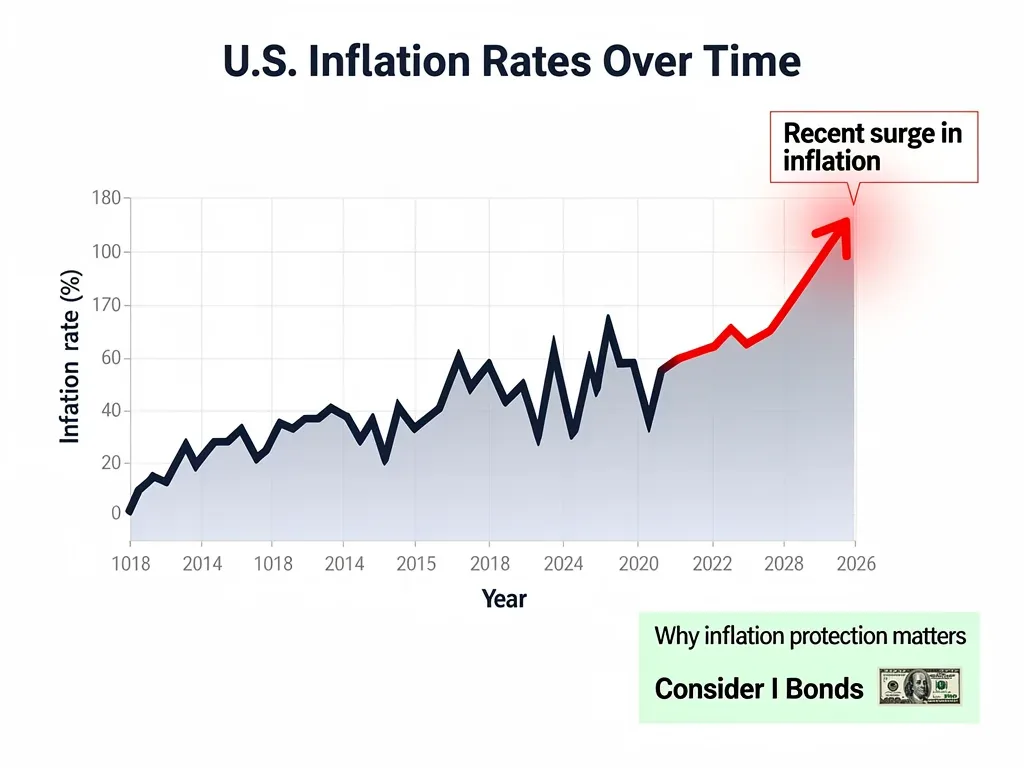
The variable inflation rate is announced twice a year, in May and November, and applies to bonds issued in the subsequent six-month period. For example, the rate announced in May influences bonds issued from May through October, and the rate announced in November affects bonds issued from November through April. This regular adjustment ensures that the bond’s yield accurately reflects current inflationary trends.
- Semiannual Adjustments: Rates are updated every six months based on CPI-U changes.
- Direct Correlation: Higher inflation leads to higher variable rates, and vice versa.
- Purchasing Power Preservation: This feature is designed to maintain the real value of your investment.
It’s important to note that even if the calculated variable rate is negative (due to deflation), the composite rate for I Bonds can never fall below zero. This provides an additional layer of protection, as your principal investment is always safe. This floor ensures that I Bonds are a low-risk investment, even in unusual economic circumstances.
Why Inflation Protection Matters in 2026
Looking at the economic projections for 2026, many experts anticipate continued vigilance regarding inflation. Supply chain issues, geopolitical events, and strong consumer demand could all contribute to persistent inflationary pressures. In such an environment, investments that do not offer inflation protection can see their real returns diminish significantly. I Bonds, however, are specifically designed to counteract this effect.
For long-term savers, especially those planning for retirement or significant future expenses, inflation protection is paramount. A dollar saved today needs to have similar purchasing power when it’s eventually spent. Without inflation-adjusted returns, the value of those savings can be severely eroded, impacting future financial security. I Bonds provide a simple yet effective solution to this challenge, making them a cornerstone of prudent financial planning for the years to come.
Ultimately, the inflation protection offered by Series I Savings Bonds is a defining characteristic that sets them apart. By directly linking interest rates to the Consumer Price Index, I Bonds ensure that investors’ capital maintains its real value, offering peace of mind in an uncertain economic future. This makes them an indispensable tool for anyone looking to safeguard their savings in 2026 and beyond.
Benefits of Investing in Series I Savings Bonds
Investing in Series I Savings Bonds offers a compelling array of benefits that cater to a wide range of financial goals, particularly those focused on safety, inflation protection, and long-term growth. Beyond their unique interest rate structure, I Bonds provide several advantages that make them a valuable addition to any investment portfolio. Understanding these benefits can help investors make informed decisions about their savings strategies.
One of the most significant advantages is their government backing. As obligations of the U.S. Treasury, I Bonds are considered one of the safest investments available. This sovereign guarantee means there is virtually no credit risk, providing investors with a high degree of security for their principal. This safety net is particularly appealing during periods of market volatility or economic uncertainty.
Tax Advantages and Deferral Options
I Bonds offer attractive tax benefits that can enhance their overall return. Interest earned on I Bonds is exempt from state and local income taxes, though it is subject to federal income tax. However, the federal tax can be deferred until you redeem the bond or it matures (up to 30 years). This deferral allows your interest to compound tax-free for an extended period, significantly boosting your total returns over the long term.
- State and Local Tax Exemption: No state or local taxes on interest earned.
- Federal Tax Deferral: Defer federal income tax until redemption or maturity.
- Educational Use Exemption: Interest may be tax-free if used for qualified higher education expenses.
Furthermore, if you use the proceeds from I Bonds to pay for qualified higher education expenses, the interest may be entirely tax-free at the federal level. This makes I Bonds an excellent tool for saving for college, offering a dual benefit of inflation protection and potential tax exemption. This specific tax advantage can significantly reduce the overall cost of education, making it a powerful financial planning instrument.
Liquidity and Accessibility
While I Bonds are designed for long-term savings, they also offer a degree of liquidity. You can redeem your I Bonds after one year, though a penalty of the last three months’ interest is applied if redeemed within the first five years. After five years, there is no penalty for early redemption. This flexibility allows investors to access their funds if an unexpected need arises, without locking them in for the full 30-year term.
The ease of purchase and management is another benefit. I Bonds can be purchased online through TreasuryDirect, the U.S. Treasury’s online platform. This direct access eliminates the need for brokers or intermediaries, simplifying the investment process. You can manage your bond holdings, track their value, and set up recurring purchases all from a single, secure online account.
In conclusion, the benefits of investing in Series I Savings Bonds extend beyond their inflation-protected returns. Their government backing provides unparalleled safety, while their tax advantages, including deferral options and potential educational exemptions, enhance their financial appeal. Combined with their reasonable liquidity and ease of access, I Bonds present a well-rounded and attractive investment vehicle for securing your financial future.
Comparing I Bonds with Other Inflation-Protected Securities
When considering investments designed to protect against inflation, Series I Savings Bonds are often compared with other instruments like Treasury Inflation-Protected Securities (TIPS). While both aim to preserve purchasing power, they operate under different mechanisms and offer distinct advantages and disadvantages. Understanding these differences is crucial for investors seeking the most suitable option for their portfolio in 2026.
TIPS are another popular choice for inflation protection. Unlike I Bonds, TIPS are marketable securities that can be bought and sold on the secondary market. Their principal value adjusts with inflation, and they pay a fixed interest rate on that adjusted principal. This means that both the principal and the interest payments increase with inflation, offering comprehensive protection.
I Bonds vs. TIPS: Key Differences
The primary distinction between I Bonds and TIPS lies in their structure and how they handle inflation adjustments. I Bonds have a fixed rate and a variable inflation rate, with interest accruing and being added to the bond’s value. TIPS, on the other hand, adjust their principal value directly, and then pay a fixed coupon rate on that inflation-adjusted principal. This results in different tax implications and liquidity profiles.
- Interest Calculation: I Bonds combine fixed and variable rates; TIPS adjust principal then pay fixed interest.
- Marketability: I Bonds are non-marketable; TIPS can be traded on the secondary market.
- Taxation: I Bonds defer federal tax; TIPS’ inflation adjustments are taxable annually (phantom income).
- Minimum Investment: Both have low minimums, but TIPS are often bought in larger increments.
The tax treatment is a significant differentiator. While I Bonds allow for federal tax deferral, TIPS’ inflation adjustments are considered taxable income in the year they occur, even if you don’t receive the cash until maturity. This phenomenon, known as ‘phantom income,’ can be a drawback for investors holding TIPS in taxable accounts, as they have to pay taxes on income they haven’t yet received.
Other Inflation-Hedging Investments
Beyond I Bonds and TIPS, other assets can offer some degree of inflation protection, though often with higher risk profiles. These include real estate, commodities, and certain types of equities. Real estate, for example, often appreciates in value during inflationary periods, and rental income can also increase. Commodities like gold and oil are also traditionally seen as inflation hedges, as their prices tend to rise with the cost of living.
However, these alternatives come with their own set of risks, such as market volatility, illiquidity, and higher management costs. I Bonds and TIPS, being government-backed, offer a more direct and secure form of inflation protection with significantly lower risk. The choice between these options depends on an investor’s risk tolerance, investment horizon, and specific financial goals.
In conclusion, while TIPS offer robust inflation protection and marketability, I Bonds stand out for their tax-deferred interest and simpler structure. Other inflation-hedging assets exist, but they often come with greater risk. For investors prioritizing safety and straightforward inflation defense in 2026, I Bonds remain a highly competitive and often superior choice, particularly for those in lower tax brackets or saving for specific goals like education.
Purchasing and Managing Your I Bonds in 2026
Acquiring and managing Series I Savings Bonds in 2026 is a streamlined process, primarily conducted through the U.S. Treasury’s online platform, TreasuryDirect. This direct approach offers convenience and transparency, allowing investors to take full control of their bond holdings. Understanding the steps involved in purchasing and effectively managing your I Bonds is crucial for maximizing their benefits.
The TreasuryDirect website serves as the sole portal for purchasing electronic I Bonds. This platform requires you to set up an account, which involves providing personal information and linking a bank account for transactions. The process is designed to be user-friendly, guiding you through each step from account creation to bond purchase. This direct interaction eliminates intermediaries, simplifying the investment experience.
Steps to Purchase I Bonds
The purchasing process for I Bonds is relatively simple once your TreasuryDirect account is established. You can buy I Bonds for yourself, or as gifts for others, and even for a minor. There are annual purchase limits, typically $10,000 per person per calendar year for electronic bonds, with an additional $5,000 available through tax refunds. These limits are per Social Security Number, ensuring broad access.
- Create a TreasuryDirect Account: Essential first step for all purchases.
- Link Bank Account: For funding purchases and receiving redemption proceeds.
- Choose Purchase Amount: Within annual limits, starting as low as $25.
- Schedule Recurring Purchases: Option to automate regular investments.
Once you’ve made a purchase, the I Bonds are held electronically in your TreasuryDirect account. You won’t receive a physical certificate. This digital format enhances security and reduces the risk of loss or damage. The system also allows for recurring purchases, which can be an excellent strategy for dollar-cost averaging and consistent savings.
Managing Your I Bond Holdings
Managing your I Bonds through TreasuryDirect is equally straightforward. The platform provides a comprehensive overview of your holdings, including their current value, interest earned, and maturity dates. You can monitor your investment’s performance, track the impact of the semiannual rate adjustments, and plan for future redemptions. The transparency offered by TreasuryDirect empowers investors to stay informed about their assets.
Redeeming your I Bonds is also done through the TreasuryDirect website. You can initiate a redemption request, specifying the amount you wish to redeem, and the funds will be deposited directly into your linked bank account. Remember the early redemption penalty if redeeming within the first five years. Planning your redemptions to avoid this penalty, if possible, can optimize your returns.
In conclusion, purchasing and managing Series I Savings Bonds in 2026 is a user-friendly process facilitated by TreasuryDirect. From setting up your account to making purchases and monitoring your holdings, the platform provides all the necessary tools. By understanding the purchase limits, redemption rules, and the benefits of electronic management, investors can effectively integrate I Bonds into their financial strategy and enjoy their inflation-protected growth.
Strategic Considerations for I Bond Investors in 2026
Investing in Series I Savings Bonds in 2026 requires more than just understanding their mechanics; it demands strategic planning to maximize their benefits within your overall financial framework. While I Bonds offer compelling advantages, particularly inflation protection and safety, how you integrate them into your portfolio and for what purposes can significantly impact their effectiveness. Strategic considerations range from asset allocation to tax planning and liquidity management.
One of the primary strategic considerations is determining the appropriate allocation of I Bonds within your portfolio. Given their low-risk nature and inflation-hedging capabilities, I Bonds can serve as an excellent component of the fixed-income portion of your investments. They can act as a stable anchor, providing a counterbalance to more volatile assets like stocks, especially during periods of market uncertainty or rising inflation.
Asset Allocation and Portfolio Diversification
For many investors, I Bonds are best utilized as a component of their emergency fund or as a reliable savings vehicle for specific, long-term goals. Their ability to preserve purchasing power makes them ideal for funds that you cannot afford to lose value due to inflation. This could include down payments for a home, future college expenses, or a portion of your retirement savings.
- Emergency Fund Component: Secure, inflation-protected funds for unexpected needs.
- Long-Term Goal Savings: Ideal for college, retirement, or major purchases due to purchasing power preservation.
- Diversification Tool: Reduces overall portfolio risk by counteracting inflation.
Considering your investment horizon is also crucial. While I Bonds mature in 30 years, their interest accrues for the entire period. For shorter-term goals (beyond one year), the early redemption penalty should be factored into your decision. For long-term goals, the tax deferral feature becomes increasingly valuable, allowing for significant compound growth over decades.
Maximizing Annual Purchase Limits
Another strategic consideration is to maximize your annual purchase limits. With a $10,000 electronic purchase limit per person per year, and an additional $5,000 from tax refunds, individuals and couples can strategically acquire a substantial amount of I Bonds over time. Spreading purchases across different years can also help to diversify the fixed rates you receive, potentially evening out returns over the long run.
Gift purchases are also a powerful tool. You can purchase I Bonds as gifts for others, including children, and these purchases count against the recipient’s annual limit, not yours. This allows for additional contributions to family members’ savings, further leveraging the benefits of I Bonds for long-term wealth building. It’s a thoughtful way to contribute to a child’s future while protecting their savings from inflation.
In conclusion, strategic considerations for I Bond investors in 2026 involve careful thought about asset allocation, specific financial goals, and maximizing annual purchase limits. By integrating I Bonds thoughtfully into your portfolio, you can effectively leverage their unique combination of safety, inflation protection, and tax advantages to build a more resilient and growth-oriented financial future. Their role as a stable, inflation-hedged asset makes them an indispensable tool in a well-diversified investment strategy.
The Future Outlook for Series I Savings Bonds Beyond 2026
While our immediate focus is on 2026, it’s prudent for investors to consider the long-term outlook for Series I Savings Bonds. Understanding potential future trends and policy changes can help in making sustained investment decisions. The enduring appeal of I Bonds lies in their fundamental design, which addresses a perennial concern for savers: the erosion of purchasing power due to inflation. This core utility ensures their relevance for years to come.
The U.S. Treasury’s commitment to offering I Bonds is rooted in its objective to provide a safe, accessible savings vehicle for American citizens. As long as inflation remains a potential economic factor, which it almost certainly will, the need for inflation-protected investments will persist. Therefore, the fundamental structure and availability of I Bonds are likely to remain constant, though specific rates will continue to fluctuate with economic conditions.
Potential Policy Changes and Economic Impacts
While the core mechanics of I Bonds are robust, future policy changes could subtly impact their attractiveness. For example, changes in the annual purchase limits, adjustments to the calculation of the fixed rate, or modifications to the tax treatment could influence investor behavior. However, such significant changes are typically rare and would likely be communicated well in advance by the Treasury.
Economic trends, particularly inflation and interest rates, will continue to be the primary drivers of I Bond returns. A sustained period of low inflation might reduce the variable component, making the fixed rate more central to the bond’s appeal. Conversely, a return to higher inflationary environments would significantly boost their overall yield, reaffirming their value as an inflation hedge.
Long-Term Role in Personal Finance
Looking beyond 2026, Series I Savings Bonds are expected to maintain their crucial role in personal finance, particularly for conservative investors and those focused on capital preservation. They will likely continue to be a preferred choice for building emergency funds, saving for retirement without stock market volatility, and funding future education costs. Their simplicity and security make them accessible to a broad demographic of savers.
Furthermore, as financial literacy increases and individuals seek more stable alternatives to volatile market investments, the appeal of I Bonds may even grow. Their straightforward approach to combating inflation offers a clear and understandable benefit, making them a compelling option for those who prioritize peace of mind alongside steady growth. The ongoing digital transformation of TreasuryDirect will also likely enhance their accessibility and ease of management.
In conclusion, the future outlook for Series I Savings Bonds beyond 2026 remains strong, underpinned by their fundamental design as a safe, inflation-protected investment. While economic conditions and potential minor policy adjustments may influence specific rates and features, their core utility in preserving purchasing power ensures their continued relevance. For long-term financial planning, I Bonds are poised to remain a reliable and valuable asset for American investors.
| Key Aspect | Description for 2026 |
|---|---|
| Fixed Rate | Set at purchase, constant for bond’s life (up to 30 years), influenced by market conditions. |
| Inflation Protection | Variable rate adjusted semiannually based on CPI-U, safeguarding purchasing power. |
| Tax Benefits | Exempt from state/local tax; federal tax deferral until redemption/maturity, potential for education exemption. |
| Purchase Limits | $10,000 electronic per SSN annually, plus $5,000 via tax refund. |
Frequently Asked Questions About Series I Savings Bonds
What are Series I Savings Bonds and how do they work?▼Series I Savings Bonds are low-risk, inflation-protected savings bonds issued by the U.S. Treasury. They earn interest based on a composite rate that combines a fixed rate, set at purchase, and a variable inflation rate, adjusted semiannually. This dual mechanism ensures your investment grows while preserving its purchasing power against inflation.
How is the interest rate for I Bonds determined in 2026?▼The I Bond interest rate is a combination of a fixed rate and a semiannual inflation rate. The fixed rate is determined by the U.S. Treasury and remains constant. The inflation rate is calculated based on the Consumer Price Index (CPI-U) and is updated every May and November, reflecting current inflation trends for the upcoming six months.
What are the tax implications of investing in Series I Bonds?▼Interest earned on Series I Bonds is exempt from state and local income taxes. Federal income tax can be deferred until the bond is redeemed or matures, which can be up to 30 years. Furthermore, if bond proceeds are used for qualified higher education expenses, the interest may be entirely federal tax-free.
Can I redeem my I Bonds at any time, and are there penalties?▼You can redeem I Bonds after holding them for at least one year. However, if you redeem them within the first five years of purchase, you will forfeit the last three months’ worth of interest. After five years, there is no penalty for early redemption, offering a balance between liquidity and long-term savings incentives.
What are the annual purchase limits for Series I Bonds?▼Individuals can purchase up to $10,000 in electronic Series I Bonds per calendar year through TreasuryDirect. An additional $5,000 per year can be purchased using your federal income tax refund, bringing the total potential annual purchase to $15,000 per person. These limits apply per Social Security Number.
Conclusion
In summation, Series I Savings Bonds in 2026 continue to represent a highly attractive and secure investment option, particularly for those prioritizing inflation protection and capital preservation. Their unique dual-rate structure, combining a fixed rate with a variable inflation adjustment, offers a robust defense against economic volatility and the erosion of purchasing power. Coupled with significant tax advantages and the backing of the U.S. government, I Bonds provide a stable foundation for any diversified financial portfolio. As investors navigate the complexities of the modern economy, understanding and strategically utilizing Series I Savings Bonds can be a key factor in achieving long-term financial security and growth.