Pell Grant Program 2026: Eligibility & Award Amounts Guide
Advertisements
The Pell Grant Program for 2026 offers crucial federal financial aid to eligible undergraduate students, primarily based on demonstrated financial need, enabling access to higher education without the burden of repayment.
Navigating the complexities of financial aid can often feel like a daunting task, especially when planning for higher education. However, understanding programs like the Pell Grant Program for 2026: Eligibility and Award Amounts is crucial for unlocking significant opportunities to fund your academic journey without accumulating debt.
The Foundation of Federal Student Aid: What is the Pell Grant?
The Pell Grant is a cornerstone of federal student aid in the United States, designed to help undergraduate students with exceptional financial need pursue higher education. Unlike loans, Pell Grants do not need to be repaid, making them an incredibly valuable resource for millions of students each year. This program plays a vital role in making college accessible, reducing financial barriers that might otherwise prevent deserving individuals from achieving their academic and career goals.
Since its inception, the Pell Grant program has been a beacon of hope for students from low-income backgrounds, enabling them to enroll in and complete postsecondary education. The program is continuously evaluated and adjusted, with each new academic year bringing potential changes to eligibility criteria and award limits. For 2026, understanding these nuances will be key to maximizing your financial aid potential.
Historical Context and Evolution
The Pell Grant program, originally known as the Basic Educational Opportunity Grant, was established in 1972 and renamed in honor of Senator Claiborne Pell in 1980. Its fundamental purpose has remained consistent: to provide need-based grants to low-income undergraduate students. Over the decades, the program has adapted to economic shifts, educational costs, and legislative changes, always striving to meet the evolving financial needs of students across the nation.
- 1972: Program established as Basic Educational Opportunity Grant.
- 1980: Renamed to Pell Grant in honor of Senator Claiborne Pell.
- Ongoing: Continuous adjustments to maximum award amounts and eligibility criteria.
These historical adjustments highlight the program’s enduring relevance and its commitment to supporting educational access. Each legislative cycle brings discussions and potential reforms aimed at strengthening the program’s impact, ensuring it remains effective in addressing contemporary challenges faced by students.
Why the Pell Grant Matters for 2026
For students planning to attend college in 2026, the Pell Grant remains one of the most significant forms of financial assistance available. With rising tuition costs and living expenses, securing non-repayable aid is more critical than ever. The Pell Grant not only helps cover tuition and fees but can also contribute to housing, books, and other educational expenses, significantly easing the financial burden on students and their families.
Understanding the specifics of the Pell Grant Program for 2026: Eligibility and Award Amounts early allows prospective students to plan their finances effectively and make informed decisions about their higher education journey. It’s not just about receiving money; it’s about gaining an opportunity that might otherwise be out of reach.
Eligibility Requirements for the Pell Grant Program in 2026
Determining eligibility for the Pell Grant Program for 2026 involves several factors, primarily centered around a student’s financial need and academic standing. The core principle is to support students who demonstrate the greatest need, ensuring that economic circumstances do not become an insurmountable barrier to education. It’s a comprehensive assessment that looks at various aspects of a student’s and their family’s financial situation.
The Free Application for Federal Student Aid (FAFSA) is the gateway to Pell Grant eligibility. This form collects detailed financial information, which is then used to calculate a student’s Student Aid Index (SAI), previously known as the Expected Family Contribution (EFC). The SAI is a crucial determinant of how much financial aid a student is eligible to receive, including the Pell Grant.
Key Criteria for Eligibility
To qualify for a Pell Grant, students must meet a series of federal requirements. These criteria are designed to ensure that the aid is directed to those who genuinely need it and are committed to their educational pursuits. Meeting these requirements is the first step toward securing this valuable federal funding.
- Financial Need: Demonstrated through the FAFSA, which calculates the Student Aid Index (SAI).
- Undergraduate Status: Must be an undergraduate student enrolled in a degree or certificate program.
- Academic Progress: Maintain satisfactory academic progress as defined by your institution.
- Citizenship: Be a U.S. citizen or eligible non-citizen.
- High School Diploma: Have a high school diploma or GED certificate.
These criteria are non-negotiable and form the bedrock of Pell Grant eligibility. Prospective students should familiarize themselves with each point to ensure they meet all necessary conditions before applying.
The Role of the FAFSA in 2026
The FAFSA, or Free Application for Federal Student Aid, is arguably the most critical component of the Pell Grant application process. For 2026, the FAFSA will continue to be the primary mechanism for assessing financial need and determining eligibility for federal student aid programs, including the Pell Grant. The accuracy and completeness of the FAFSA are paramount, as any errors can delay or jeopardize aid eligibility.
Changes introduced by the FAFSA Simplification Act aim to streamline the application process and make it more accessible for students. These changes include a revised methodology for calculating financial need, which could impact the SAI for many applicants. Students should be aware of these updates and how they might affect their eligibility for the Pell Grant Program for 2026.

Understanding Pell Grant Award Amounts for 2026
The maximum Pell Grant award amount is subject to change annually, based on congressional appropriations and federal budget decisions. While the exact figure for 2026 will not be finalized until closer to the academic year, understanding the factors that influence award amounts and historical trends can provide valuable insight. The goal is always to provide substantial support, but the exact figure can vary.
Several factors determine the actual amount a student receives, including their calculated Student Aid Index (SAI), the cost of attendance at their chosen institution, their enrollment status (full-time or part-time), and whether they attend for a full academic year. These elements combine to create a personalized award amount for each eligible student.
Factors Influencing Award Amounts
The Pell Grant is not a one-size-fits-all award; it’s tailored to individual student circumstances. The interplay of various financial and academic factors dictates the final grant amount. This personalized approach ensures that aid is distributed equitably based on need and educational costs.
- Student Aid Index (SAI): The lower your SAI, the higher your Pell Grant eligibility.
- Cost of Attendance (COA): The total cost of attending a particular institution, including tuition, fees, room, board, books, and other expenses.
- Enrollment Status: Full-time students generally receive higher awards than part-time students.
- Academic Year Length: Awards are prorated for less than a full academic year.
Each of these components plays a critical role in the final calculation. Students should understand how their personal situation aligns with these factors to better estimate their potential Pell Grant award for 2026.
Projected Maximum Award for 2026
While the definitive maximum Pell Grant for the 2026-2027 academic year has not yet been announced, projections often consider inflation, historical increases, and legislative priorities. For context, the maximum Pell Grant for the 2023-2024 award year was $7,395. Future increases are typically aimed at keeping pace with rising education costs, though this is not always fully achieved.
Students should monitor official announcements from the U.S. Department of Education and their institution’s financial aid office for the most up-to-date information regarding the Pell Grant Program for 2026: Eligibility and Award Amounts. Early awareness of these figures can significantly aid in financial planning for college.
The FAFSA Simplification Act and Its Impact on 2026
The FAFSA Simplification Act represents a significant overhaul of the federal student aid application process, aiming to make it easier for students and families to apply for financial aid and to expand eligibility for certain programs. These changes, which began implementation in recent cycles, will be fully integrated by the 2026-2027 academic year, profoundly impacting how Pell Grant eligibility and award amounts are determined.
One of the most notable changes is the replacement of the Expected Family Contribution (EFC) with the Student Aid Index (SAI). The SAI is designed to be a more accurate measure of a student’s ability to pay for college, and its calculation methodology differs substantially from the old EFC. This shift could lead to more students qualifying for Pell Grants or receiving higher award amounts.
Key Changes Introduced by the Act
The FAFSA Simplification Act brings several critical modifications that applicants for the Pell Grant Program for 2026 need to be aware of. These changes are intended to simplify the application, reduce barriers, and improve the overall aid determination process.
- SAI Replaces EFC: A new formula for determining financial need.
- Expanded Eligibility: Potentially more students will qualify for Pell Grants.
- Streamlined FAFSA Form: Fewer questions and a more user-friendly interface.
- Direct Data Exchange: Integration with IRS data for easier income verification.
- Child Support Exclusion: Child support received is no longer counted as untaxed income.
These updates collectively aim to enhance the accessibility and fairness of federal student aid. Understanding these changes is essential for any student applying for the Pell Grant in 2026, as they directly influence the application process and potential aid outcomes.
How the SAI Affects Pell Grant Eligibility
The transition from EFC to SAI is more than just a name change; it represents a fundamental shift in how financial need is assessed. The SAI calculation considers fewer factors than the EFC, potentially leading to a lower index for many students, which in turn could increase their Pell Grant eligibility.
For instance, the new formula no longer factors in the number of family members in college for the SAI calculation, which could impact families with multiple children pursuing higher education. Additionally, the act provides for a minimum Pell Grant award for students whose adjusted gross income falls below certain poverty thresholds, regardless of their SAI, further expanding access.
Applying for the Pell Grant: Step-by-Step for 2026
Applying for the Pell Grant Program for 2026 is an integral part of the broader federal student aid application process. While the FAFSA Simplification Act aims to make the process more straightforward, diligent attention to detail and timely submission remain crucial. Proactive planning can significantly reduce stress and ensure that you don’t miss out on potential aid.
The entire application hinges on completing and submitting the FAFSA. This form collects all the necessary financial and demographic information required to assess your eligibility for federal grants, scholarships, and loans. Understanding each step ensures a smooth application experience.
Completing the FAFSA
The FAFSA is available online and should be completed as early as possible each year, typically starting October 1st for the upcoming academic year. For the 2026-2027 academic year, the FAFSA will likely open in late 2025. It’s important to use the correct FAFSA form for the academic year you plan to attend college.
Gathering all necessary documents beforehand, such as tax returns, W-2 forms, and records of untaxed income, will expedite the process. The FAFSA Simplification Act’s direct data exchange with the IRS will further simplify income reporting for many applicants, reducing the need for manual entry and potential errors.
Important Deadlines and Tips
Missing deadlines is one of the most common reasons students fail to receive financial aid. There are three types of deadlines to be aware of: federal, state, and institutional. While the federal deadline for the Pell Grant is typically quite late in the academic year, many states and colleges have much earlier priority deadlines for their own aid programs. Meeting these earlier deadlines can be critical.
- Federal Deadline: Typically June 30th of the academic year for which you are applying.
- State Deadlines: Varies by state; often much earlier than the federal deadline.
- Institutional Deadlines: Set by individual colleges and universities; can be as early as January or February.
- Tip 1: Apply as soon as the FAFSA opens.
- Tip 2: Use the IRS Direct Data Exchange for accurate income information.
- Tip 3: Review all information carefully before submitting.
Submitting the FAFSA early not only ensures you meet all deadlines but also gives you the best chance at receiving aid from programs with limited funding, such as state grants and institutional scholarships. Procrastination can lead to missed opportunities.
Maintaining Pell Grant Eligibility Throughout Your Studies
Receiving a Pell Grant is not a one-time event; students must continue to meet certain criteria to maintain their eligibility throughout their academic career. This ensures that federal funds are used effectively and that students are making progress toward their educational goals. Understanding these ongoing requirements is just as important as initially qualifying for the Pell Grant Program for 2026.
The primary ongoing requirement is maintaining satisfactory academic progress (SAP). Each institution sets its own SAP policies, which typically include a minimum GPA, a maximum timeframe for degree completion, and a satisfactory completion rate of attempted credits. Failure to meet SAP can result in the loss of federal financial aid, including the Pell Grant.
Satisfactory Academic Progress (SAP)
Satisfactory Academic Progress (SAP) is a critical component of maintaining Pell Grant eligibility. Institutions are required by federal regulations to establish and apply SAP standards to all students receiving federal financial aid. These standards are designed to ensure that students are progressing towards their degree or certificate in a timely and effective manner.
Typical SAP policies include:
- Minimum GPA: Often a cumulative GPA of 2.0 or higher.
- Completion Rate: Successfully completing a certain percentage (e.g., 67%) of attempted credits.
- Maximum Timeframe: Completing the degree within 150% of the published program length.
Students who fail to meet SAP standards may be placed on financial aid probation or suspension, which can impact their ability to receive future Pell Grant funds. It’s crucial for students to understand their institution’s specific SAP policy and to monitor their academic performance closely.
Lifetime Eligibility Limit (LEU)
Another important consideration for maintaining Pell Grant eligibility is the Lifetime Eligibility Used (LEU). Federal law limits the total amount of Pell Grant funding a student can receive to 12 semesters, or approximately six years, of full-time study. This limit applies regardless of whether the student attends one institution or multiple.
The LEU is tracked as a percentage. For example, if you receive a full Pell Grant for one semester, you have used 50% of your annual eligibility and 8.33% of your lifetime eligibility. Once your LEU reaches 600% (equivalent to six years of full-time Pell Grant funding), you are no longer eligible for a Pell Grant, even if you still demonstrate financial need.
Beyond the Pell Grant: Other Aid Options for 2026
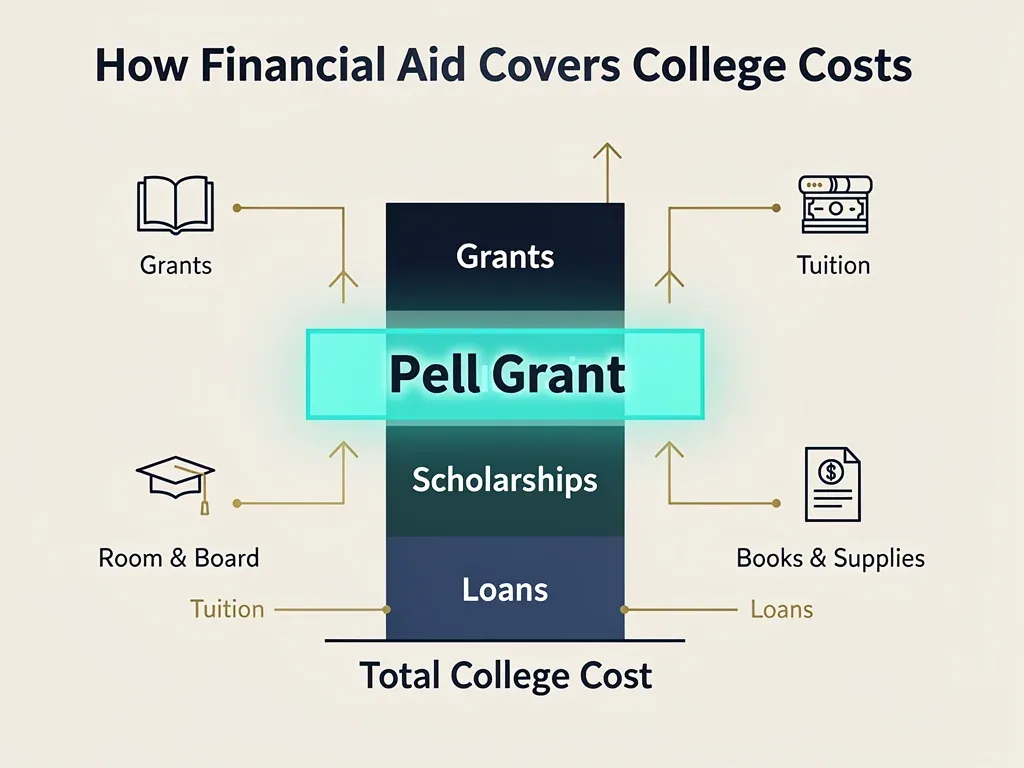
While the Pell Grant is an invaluable resource, it often does not cover the entire cost of attendance. Therefore, it’s essential for students to explore other financial aid options to bridge any remaining funding gaps. A comprehensive financial aid strategy typically involves a combination of grants, scholarships, work-study, and, if necessary, loans. Diversifying your aid sources can significantly reduce your out-of-pocket expenses and minimize reliance on student loans.
The FAFSA itself is the starting point for many federal and state aid programs beyond the Pell Grant. Completing it accurately and on time is the first step toward unlocking these additional opportunities. Students should also actively seek out scholarships from various organizations and consider federal work-study programs.
Federal Student Aid Programs
In addition to the Pell Grant Program for 2026, the federal government offers several other financial aid programs that can help students finance their education. These programs are often also need-based and can complement a Pell Grant award, providing a more complete financial aid package.
- Federal Supplemental Educational Opportunity Grants (FSEOG): For students with exceptional financial need, awarded by institutions.
- Federal Work-Study: Provides part-time jobs for students with financial need to help pay for educational expenses.
- Federal Student Loans: Direct Subsidized and Unsubsidized Loans, PLUS Loans, which must be repaid but offer favorable terms.
It’s important to understand the distinctions between these programs. Grants and work-study do not need to be repaid, while loans do. Prioritizing grants and work-study can help minimize future debt burdens.
Scholarships and Institutional Aid
Scholarships are another excellent source of non-repayable aid. Unlike federal grants, scholarships can be awarded based on a wide range of criteria, including academic merit, athletic talent, artistic ability, specific fields of study, community service, or even unique personal characteristics. Many colleges also offer their own institutional grants and scholarships, often based on a combination of need and merit.
Searching for scholarships should be an ongoing process. Students can look for opportunities through their high school counseling office, college financial aid websites, online scholarship search engines, and local community organizations. Applying for multiple scholarships, even small ones, can quickly add up to a substantial amount of aid.
Maximizing Your Pell Grant Opportunity for 2026
Securing a Pell Grant for 2026 can be a game-changer for many students, providing essential funds that directly reduce the cost of higher education. To ensure you receive the maximum possible award and maintain it throughout your studies, a strategic approach is necessary. This involves not only understanding the eligibility and application process but also making informed decisions about your academic path and financial management.
Proactive engagement with your institution’s financial aid office is paramount. They are your primary resource for navigating the complexities of financial aid, understanding specific deadlines, and addressing any unique circumstances that might affect your eligibility. Building a good relationship with financial aid advisors can provide invaluable support.
Strategic Planning for Financial Aid
Effective financial aid planning goes beyond simply filling out the FAFSA. It involves a holistic view of your educational and financial situation, making choices that optimize your aid package. Every decision, from college choice to enrollment status, can impact the amount of aid you receive.
- Apply Early: Submit your FAFSA as soon as it opens to meet priority deadlines.
- Accurate Information: Ensure all FAFSA data is correct to avoid delays or incorrect awards.
- Understand Your SAI: Know how your Student Aid Index impacts your Pell Grant.
- Monitor Academic Progress: Stay on track with your grades and course completion to maintain SAP.
- Communicate with Financial Aid: Keep your college’s financial aid office informed of any changes.
By taking these steps, students can significantly improve their chances of receiving and retaining their Pell Grant, contributing to a more affordable and successful educational experience.
Long-Term Financial Aid Management
Managing your financial aid effectively is a continuous process throughout your college career. It involves not only securing funds but also making wise choices about how those funds are used and being mindful of your lifetime eligibility. This long-term perspective ensures that you can sustain your educational funding until you achieve your academic goals.
Be aware of your Lifetime Eligibility Used (LEU) percentage to ensure you don’t exhaust your Pell Grant eligibility prematurely, especially if you anticipate needing more than four years to complete your degree. Consider summer enrollment carefully, as it also counts towards your LEU. By being strategic and informed, you can maximize the benefits of the Pell Grant Program for 2026 and beyond.
| Key Aspect | Brief Description |
|---|---|
| Eligibility Basis | Primarily based on demonstrated financial need, determined by FAFSA’s Student Aid Index (SAI). |
| Application Process | Complete the Free Application for Federal Student Aid (FAFSA) annually. |
| Award Determination | Influenced by SAI, cost of attendance, and enrollment status. Maximum award varies yearly. |
| Key Requirement | Maintain Satisfactory Academic Progress (SAP) and adhere to Lifetime Eligibility Limit (LEU). |
Frequently Asked Questions About the Pell Grant Program for 2026
What is the primary factor determining Pell Grant eligibility for 2026?▼The primary factor is the student’s demonstrated financial need, as calculated by the Student Aid Index (SAI) from their Free Application for Federal Student Aid (FAFSA). A lower SAI generally indicates greater financial need and higher Pell Grant eligibility.
Do I have to repay the Pell Grant?▼No, the Pell Grant is a form of federal financial aid that does not need to be repaid. It is designed to help undergraduate students with exceptional financial need cover educational expenses, making it a highly desirable form of aid.
How does the FAFSA Simplification Act affect Pell Grants in 2026?▼The Act replaces the Expected Family Contribution (EFC) with the Student Aid Index (SAI), streamlines the FAFSA form, and potentially expands Pell Grant eligibility for more students. These changes aim to simplify the application and broaden access to aid.
What is the maximum Pell Grant award for 2026?▼The exact maximum Pell Grant award for 2026 will be announced closer to the academic year by the U.S. Department of Education. It is subject to congressional appropriations and may vary from previous years, so monitoring official updates is crucial.
Can I receive a Pell Grant for graduate school?▼No, Pell Grants are exclusively for undergraduate students pursuing their first bachelor’s degree or certain post-baccalaureate programs. Graduate students are not eligible for Pell Grant funding, but other federal aid options may be available.
Conclusion
The Pell Grant Program for 2026 stands as a vital lifeline for countless students aspiring to higher education across the United States. By providing non-repayable federal aid based on financial need, it significantly reduces the economic barriers that often deter deserving individuals from pursuing their academic dreams. Understanding the nuances of eligibility, the factors influencing award amounts, and the transformative changes brought by the FAFSA Simplification Act is paramount for prospective students.
As you plan for the 2026 academic year, remember that proactive engagement with the FAFSA process, diligent monitoring of deadlines, and a clear understanding of ongoing requirements like Satisfactory Academic Progress and Lifetime Eligibility Used are key to maximizing your Pell Grant opportunity. While the Pell Grant is a powerful tool, exploring supplementary aid options like scholarships and other federal programs will ensure a comprehensive and sustainable financial plan for your educational journey. With careful planning and informed decision-making, the promise of higher education can become an achievable reality for more students than ever before.