Maximize Your 401(k) in 2026: The $23,000 Contribution Guide
Advertisements
Maximizing your 401(k) contributions in 2026, up to the $23,000 limit, is crucial for securing a robust retirement and leveraging significant tax advantages, requiring a strategic approach to personal finance.
Are you ready to take control of your financial future and build a substantial nest egg? Understanding how to maximize your 401(k) contributions in 2026 is a cornerstone of effective retirement planning, especially with the individual contribution limit set at $23,000 for many.
Understanding the 401(k) Landscape in 2026
The 401(k) remains one of the most powerful retirement savings vehicles available to American workers. For 2026, the Internal Revenue Service (IRS) has set the standard employee contribution limit at $23,000. This figure is a critical benchmark for anyone serious about retirement planning, offering a significant opportunity to save on a tax-advantaged basis.
Beyond the standard limit, it’s essential to recognize that this figure can change annually due to inflation adjustments. Staying informed about these potential changes is key to optimizing your savings strategy. The government’s goal with these adjustments is to ensure that retirement savings keep pace with the rising cost of living, preserving the purchasing power of your future income.
The Power of Tax-Advantaged Growth
One of the primary benefits of a 401(k) is its tax-advantaged growth. Contributions to a traditional 401(k) are typically pre-tax, meaning they reduce your taxable income in the year you contribute. This can lead to immediate tax savings. The money then grows tax-deferred, meaning you don’t pay taxes on investment gains until you withdraw the funds in retirement.
- Pre-tax Contributions: Lower your current taxable income.
- Tax-Deferred Growth: Investments grow without annual taxation on gains.
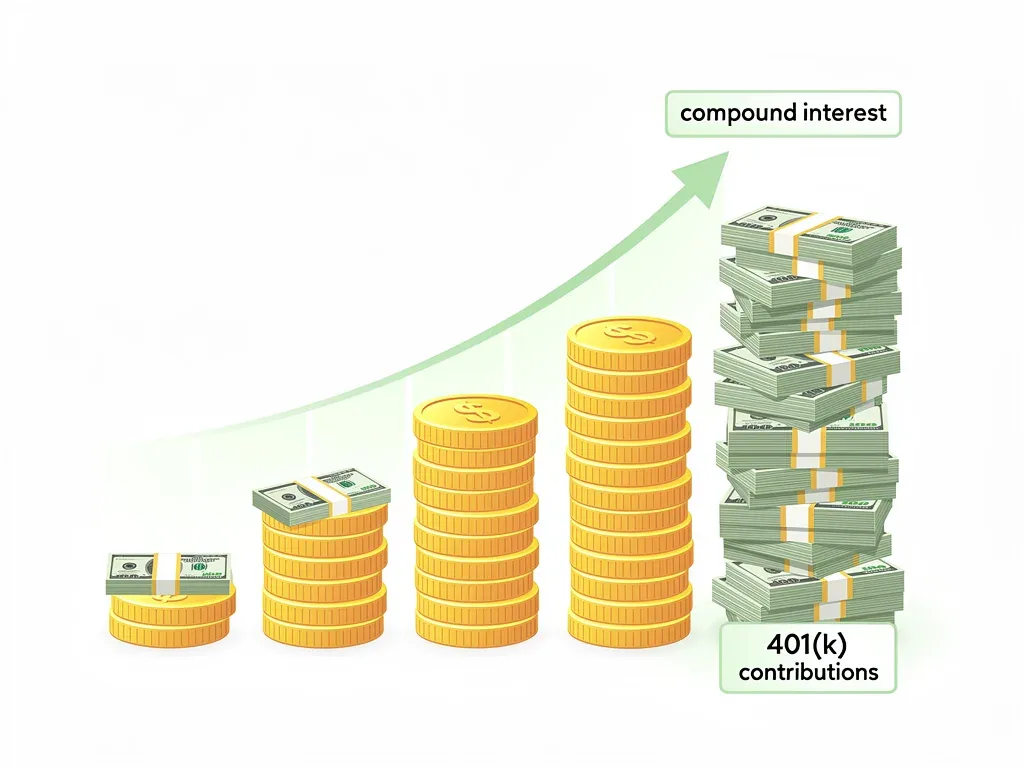
- Compounding Returns: Your earnings generate their own earnings over time.
- Employer Match: Often provides a significant boost to your savings.
Understanding these fundamental aspects of the 401(k) is the first step toward effective maximization. It’s not just about contributing; it’s about leveraging the structure of the plan to your greatest advantage. Many employers also offer a matching contribution, which is essentially free money and a crucial component of maximizing your overall retirement savings.
In conclusion, the 2026 401(k) landscape offers a robust framework for retirement savings. Familiarizing yourself with the contribution limits and the inherent tax advantages is foundational. It’s about more than just numbers; it’s about understanding how these mechanisms work together to secure your financial future.
Strategies to Reach the $23,000 Limit
Reaching the maximum $23,000 contribution limit for your 401(k) in 2026 requires a disciplined and often strategic approach. For many, simply increasing their payroll deduction to the maximum percentage isn’t always feasible due to immediate financial obligations. However, several methods can help you systematically work towards this goal throughout the year.
The key is to make consistent, incremental adjustments to your contributions. Even small increases can add up significantly over a year. Consider setting up automatic increases that coincide with salary raises or bonuses, ensuring that a portion of any new income goes directly into your retirement savings before you even see it in your checking account.
Automate Your Contributions
Automation is your best friend when it comes to saving. By setting up automatic payroll deductions, you ensure that your contributions are made regularly without requiring conscious effort each pay period. This method removes the temptation to spend money that could otherwise be allocated to your 401(k).
- Set a Target Percentage: Calculate the percentage of your salary needed to reach $23,000.
- Increase Gradually: If the full amount is too much, increase your contribution by 1% or 2% each year.
- Utilize Pay Raises: Dedicate a portion of any salary increase directly to your 401(k).
- Bonus Allocation: Consider contributing a percentage of any work bonuses to your retirement.
Another powerful strategy involves planning for catch-up contributions if you are age 50 or older. These additional contributions allow you to save even more, recognizing that older workers may have less time until retirement to accumulate sufficient funds. We will delve deeper into catch-up contributions in a later section, but it’s important to keep them in mind as part of your overall strategy.
Ultimately, reaching the $23,000 limit is a marathon, not a sprint. It involves consistent effort, smart planning, and a commitment to your long-term financial well-being. By automating your savings and making thoughtful adjustments, you can steadily progress towards your maximum contribution goal.
The Importance of Employer Matching Contributions
One of the most valuable, yet often underutilized, benefits of a 401(k) plan is the employer matching contribution. This is essentially free money that your employer contributes to your retirement account, based on a percentage of your own contributions. Failing to contribute enough to receive the full employer match is akin to leaving money on the table, directly impacting your potential retirement wealth.
Many companies offer a match, often structured as a percentage of your contribution up to a certain limit. For example, an employer might match 50 cents on every dollar you contribute, up to 6% of your salary. This means if you contribute 6% of your salary, your employer adds another 3%, effectively boosting your savings by 50% for that portion of your contribution.
Understanding Your Employer’s Match Policy
It’s crucial to understand the specifics of your company’s 401(k) matching policy. These details can vary significantly from one employer to another. Factors like vesting schedules, which dictate when employer contributions become fully yours, are also important to consider. A typical vesting schedule might be three to five years, meaning you must remain employed for that period to fully own the employer-contributed funds.
- Contribution Threshold: Determine the percentage you need to contribute to get the full match.
- Vesting Schedule: Understand when employer contributions become fully yours.
- Match Cap: Know if there’s a maximum dollar amount your employer will contribute.
- Annual Review: Revisit your company’s policy annually, as it may change.
Even if you cannot immediately contribute the full $23,000 in 2026, prioritizing at least enough to receive the maximum employer match should be a non-negotiable financial goal. This immediate return on investment is unparalleled and significantly accelerates your retirement savings. Over decades, the compounded growth of these matching contributions can amount to tens or even hundreds of thousands of dollars.
In essence, the employer match is a cornerstone of maximizing your 401(k) benefits. Make it a priority to understand your plan’s specifics and ensure you are capturing every dollar your employer is willing to contribute. It’s a powerful, often overlooked, component of a robust retirement strategy.
Catch-Up Contributions for Those 50 and Over
For individuals aged 50 and older, the IRS provides an invaluable opportunity to accelerate retirement savings through catch-up contributions. This provision acknowledges that those nearing retirement may have less time to save and potentially greater earning capacity. For 2026, the catch-up contribution limit for 401(k) plans is set at an additional $7,500.
This means if you are 50 or older, you can contribute the standard $23,000 plus an additional $7,500, bringing your total potential contribution to $30,500 for the year. This significant increase can make a substantial difference in bolstering your retirement nest egg, especially if you started saving later in life or experienced periods of reduced contributions.
How Catch-Up Contributions Work
The mechanism for catch-up contributions is straightforward: once you turn 50, you become eligible to contribute this extra amount. It’s not an automatic process; you typically need to adjust your payroll deductions with your plan administrator or HR department to include these additional contributions. It’s a proactive step that can yield considerable long-term benefits.
Consider the impact of an extra $7,500 per year over several years. Compounded over time, this additional saving can significantly enhance your financial security in retirement. It’s a strategic tool designed to help you make up for lost time or simply supercharge your savings during your peak earning years.
Many individuals find themselves in a better financial position later in their careers, with fewer expenses like mortgages or college tuition. This can be the ideal time to take full advantage of catch-up contributions. It’s a critical component of a comprehensive retirement plan for older workers, offering a direct path to higher savings and greater financial peace of mind.
In conclusion, if you are 50 or older, do not overlook the opportunity presented by catch-up contributions. This additional saving capacity is a powerful lever for maximizing your 401(k) and ensuring a more comfortable retirement. Consult with your plan administrator to ensure you’re utilizing this benefit effectively.
Roth 401(k) vs. Traditional 401(k): Which is Right for You?
When you’re looking to maximize your 401(k) contributions in 2026, understanding the difference between a Roth 401(k) and a traditional 401(k) is paramount. Both offer excellent avenues for retirement savings, but their tax treatments differ significantly, making one potentially more advantageous depending on your current and projected future tax situations.
A traditional 401(k) allows for pre-tax contributions, meaning your contributions reduce your taxable income now. Your money grows tax-deferred, and withdrawals in retirement are taxed as ordinary income. This is generally beneficial if you expect to be in a lower tax bracket in retirement than you are today.
Key Differences and Considerations
The Roth 401(k), on the other hand, is funded with after-tax dollars. Your contributions do not reduce your current taxable income. However, the immense benefit comes in retirement: qualified withdrawals, including all earnings, are entirely tax-free. This makes a Roth 401(k) particularly appealing if you anticipate being in a higher tax bracket in retirement or if you simply prefer to pay taxes now rather than later.
- Traditional 401(k): Tax deduction now, tax-deferred growth, taxed in retirement.
- Roth 401(k): No immediate tax deduction, tax-free growth, tax-free withdrawals in retirement.
- Tax Bracket Projection: Consider your current vs. future tax bracket.
- Flexibility: Roth 401(k) offers tax diversification in retirement.
Many employers offer both options, allowing you to choose the one that aligns best with your financial strategy. Some individuals even opt for a hybrid approach, contributing to both a traditional and a Roth 401(k) to diversify their tax exposure in retirement. This strategy can provide flexibility, allowing you to choose which accounts to draw from based on the prevailing tax rates when you retire.
The decision between a Roth and traditional 401(k) is highly personal and depends on a variety of factors, including your age, income level, and long-term financial goals. Consulting with a financial advisor can provide personalized guidance to help you make the most informed choice for your specific circumstances.

Beyond the 401(k): Other Retirement Savings Options
While maximizing your 401(k) contributions in 2026 is a critical step, it’s important to remember that it’s often just one piece of a broader retirement savings puzzle. For many, even after hitting the $23,000 limit (or $30,500 with catch-up contributions), there’s still room to save more for retirement. Diversifying your retirement savings across different account types can offer additional tax advantages and flexibility.
Exploring other retirement vehicles can provide supplementary growth opportunities and help you achieve your financial goals faster. These options can also offer different withdrawal rules or investment choices that might better suit your individual needs and risk tolerance.
IRA, Roth IRA, and Other Investment Accounts
Individual Retirement Arrangements (IRAs) are a popular choice for additional savings. Like 401(k)s, IRAs come in traditional and Roth versions, each with its own tax benefits. For 2026, the IRA contribution limit is typically lower than the 401(k) limit, but it’s an excellent way to save extra, especially if your employer does not offer a 401(k) or if you’ve already maxed out your employer-sponsored plan.
- Traditional IRA: Tax-deductible contributions, tax-deferred growth, taxed in retirement.
- Roth IRA: After-tax contributions, tax-free growth, tax-free withdrawals in retirement.
- Health Savings Accounts (HSAs): Triple tax advantage (tax-deductible contributions, tax-free growth, tax-free withdrawals for qualified medical expenses) and can be used for retirement if not spent on healthcare.
- Taxable Brokerage Accounts: Offer unlimited contribution potential, though without the specific tax advantages of retirement accounts. Useful for long-term investments beyond dedicated retirement plans.
For those who are self-employed or small business owners, options like a SEP IRA or a Solo 401(k) can allow for significantly higher contributions than a traditional IRA, often mirroring or even exceeding the limits of an employer-sponsored 401(k). These plans are designed to provide robust retirement savings solutions for individuals who don’t have access to a corporate plan.
By considering a combination of these accounts, you can create a comprehensive retirement strategy that optimizes tax benefits, maximizes savings potential, and provides the flexibility you need for a secure future. It’s about building a multi-faceted approach to your wealth accumulation.
Regularly Reviewing and Adjusting Your Plan
Maximizing your 401(k) contributions in 2026 isn’t a one-time decision; it’s an ongoing process that requires regular review and adjustment. Life circumstances, market conditions, and even IRS regulations can change, necessitating updates to your retirement savings strategy. A proactive approach ensures that your plan remains aligned with your financial goals and current realities.
It’s advisable to schedule an annual financial review, preferably around the end of the year or the beginning of the new year, to assess your progress and make any necessary modifications. This allows you to account for any changes in your income, expenses, or investment performance, and to adjust your contributions accordingly.
Key Aspects to Review Annually
During your annual review, several key areas deserve attention. First, confirm the current 401(k) contribution limits for the upcoming year, as these can be adjusted for inflation. This includes both the standard employee limit and the catch-up contribution limit for those age 50 and over. Ensuring you are contributing the maximum possible is crucial for accelerating your savings.
- Contribution Limits: Verify the latest IRS limits for 401(k) and other accounts.
- Investment Performance: Assess how your investments are performing and rebalance if necessary.
- Life Changes: Account for salary increases, new dependents, or major expenses.
- Employer Match: Reconfirm your employer’s matching policy and ensure you’re maximizing it.
Your investment allocation within your 401(k) should also be reviewed. As you get closer to retirement, you might consider shifting from a more aggressive, growth-oriented portfolio to one that is more conservative and focused on capital preservation. This process, known as rebalancing, helps manage risk and protects your accumulated wealth.
Finally, consider how your overall financial picture has evolved. Have you paid off significant debt? Received a promotion? Started a family? These life events can all impact your capacity and need for retirement savings, making regular adjustments to your plan indispensable for long-term financial success. A dynamic approach to your retirement strategy is always the most effective.
| Key Point | Brief Description |
|---|---|
| 2026 Contribution Limit | The standard individual 401(k) contribution limit is $23,000 for 2026. |
| Catch-Up Contributions | Individuals aged 50 and over can contribute an additional $7,500, totaling $30,500. |
| Employer Match | Always contribute enough to receive the full employer matching contribution, as it’s free money. |
| Roth vs. Traditional | Choose between pre-tax (Traditional) or after-tax (Roth) contributions based on your current and future tax bracket projections. |
Frequently Asked Questions About 401(k) Contributions
What is the maximum 401(k) contribution limit for 2026?▼For 2026, the standard employee contribution limit for a 401(k) plan is $23,000. This amount is subject to annual adjustments by the IRS, typically to account for inflation and economic changes, ensuring your retirement savings keep pace with living costs.
Who is eligible for 401(k) catch-up contributions in 2026?▼Individuals who are age 50 or older by the end of the calendar year 2026 are eligible to make catch-up contributions. The additional limit for these contributions is $7,500, allowing eligible savers to contribute a total of $30,500 to their 401(k).
How does an employer match affect my 401(k) contributions?▼Employer matching contributions are essentially free money added to your 401(k) by your employer, often based on a percentage of your own contributions. It significantly boosts your retirement savings and should always be maximized by contributing at least enough to receive the full match.
What is the difference between a traditional and Roth 401(k)?▼A traditional 401(k) uses pre-tax contributions, offering an immediate tax deduction and tax-deferred growth, with withdrawals taxed in retirement. A Roth 401(k) uses after-tax contributions, meaning no immediate deduction, but qualified withdrawals in retirement are entirely tax-free.
Should I prioritize my 401(k) over other savings options?▼Prioritizing your 401(k) is generally recommended, especially to capture any employer match. After maximizing your 401(k), consider other options like IRAs (Traditional or Roth) or HSAs to further diversify your retirement savings and leverage additional tax advantages.
Conclusion
Successfully maximizing your 401(k) contributions in 2026, particularly up to the $23,000 limit, is a cornerstone of a robust and secure retirement strategy. By understanding the nuances of contribution limits, leveraging employer matching programs, and taking advantage of catch-up contributions if eligible, you can significantly accelerate your wealth accumulation. The choice between a Roth and traditional 401(k) also plays a vital role, allowing you to tailor your tax strategy to your unique financial outlook. Remember that retirement planning is an ongoing journey, requiring regular review and adjustment to ensure your strategy remains aligned with your goals and evolving financial landscape. By taking these proactive steps, you are not just saving; you are actively building a resilient financial future.