Healthcare Subsidies 2026: New Savings Opportunities Unveiled
Advertisements
Healthcare subsidies in 2026 are set to introduce significant changes, offering new savings opportunities that aim to enhance the affordability and accessibility of health insurance for millions of Americans.
As we approach 2026, many Americans are keenly anticipating changes in healthcare policy, particularly concerning financial assistance. The landscape of healthcare subsidies 2026 is evolving, promising new savings opportunities that could significantly impact your budget and access to quality medical care. Understanding these shifts is crucial for securing the best possible health insurance plan for you and your family.
Understanding the Evolution of Healthcare Subsidies
The concept of healthcare subsidies has been a cornerstone of making health insurance accessible, particularly under the Affordable Care Act (ACA). These subsidies help reduce the financial burden of premiums and out-of-pocket costs, ensuring that more individuals and families can afford comprehensive coverage. As we look towards 2026, it’s important to grasp the historical context and the legislative trajectory that shapes these vital financial aids.
Historically, healthcare subsidies have been adjusted periodically to reflect economic conditions, healthcare costs, and political priorities. The goal remains consistent: to provide a safety net for those who might otherwise be priced out of the healthcare market. The upcoming changes are not just minor tweaks; they represent a concerted effort to refine and expand these programs, making them more effective and far-reaching.
The Genesis of ACA Subsidies
The Affordable Care Act, enacted in 2010, introduced a framework for federal subsidies designed to lower health insurance costs for eligible individuals and families. These subsidies primarily come in two forms: premium tax credits and cost-sharing reductions. Premium tax credits reduce monthly insurance premiums, while cost-sharing reductions lower deductibles, copayments, and out-of-pocket maximums.
- Premium Tax Credits (PTC): These are refundable credits that help eligible individuals and families afford health insurance coverage purchased through the Health Insurance Marketplace. The amount of the credit depends on household income, family size, and the cost of the benchmark plan in their area.
- Cost-Sharing Reductions (CSR): These subsidies lower the amount policyholders have to pay for deductibles, copayments, and coinsurance. They are available to those with incomes up to 250% of the federal poverty level who enroll in a silver plan through the Marketplace.
The foundational principles of the ACA subsidies aimed to cap the percentage of income individuals had to spend on premiums, a critical mechanism for ensuring affordability. These mechanisms have proven effective in extending coverage to millions, and the 2026 adjustments seek to build upon this success.
Recent Legislative Influences on Subsidies
In recent years, several legislative acts have significantly impacted healthcare subsidies. The American Rescue Plan Act (ARPA) of 2021 and the Inflation Reduction Act (IRA) of 2022 played pivotal roles in enhancing and extending these subsidies. ARPA temporarily expanded eligibility for premium tax credits and increased the amount of financial assistance available, making health insurance more affordable for a broader range of income levels. The IRA further extended these enhanced subsidies through 2025.
As these temporary enhancements approach their expiration, the discussions around 2026 focus on making some of these provisions permanent or introducing new, similar measures. This legislative activity underscores a continuous commitment to affordable healthcare, adapting to economic realities and the evolving needs of the American population. The goal is to prevent a “subsidy cliff” where millions could face sudden, sharp increases in their healthcare costs.
The evolution of healthcare subsidies is a dynamic process, reflecting ongoing efforts to balance fiscal responsibility with the imperative of public health. Understanding these foundational elements is the first step in navigating the new savings opportunities that 2026 promises to bring.
Key Changes and New Provisions for 2026
The year 2026 is poised to bring significant alterations to the structure and availability of healthcare subsidies. These changes are designed to address current gaps in coverage, improve affordability, and streamline the application process. For many, these new provisions will translate directly into tangible savings and improved access to essential health services.
One of the primary focuses for 2026 is the potential for making the enhanced premium tax credits, previously extended by the Inflation Reduction Act, a permanent fixture. This would mean that individuals and families would continue to pay a smaller percentage of their income towards health insurance premiums, regardless of income level beyond 400% of the federal poverty line, where the “subsidy cliff” traditionally existed.
Potential Permanence of Enhanced Subsidies
The enhanced subsidies introduced by ARPA and extended by IRA significantly lowered the amount individuals pay for premiums. For instance, many people with incomes above 400% of the federal poverty level became eligible for subsidies for the first time, and those already receiving subsidies saw their out-of-pocket premium costs decrease. Making these enhancements permanent would provide long-term stability and predictability for millions of households.
- Elimination of the “Subsidy Cliff”: This crucial change ensures that individuals earning more than 400% of the Federal Poverty Level (FPL) do not face a sudden loss of all subsidies, preventing dramatic increases in premium costs.
- Lower Premium Caps: The percentage of household income spent on premiums for benchmark plans is capped at a lower rate, making even the most expensive plans more affordable.
- Broader Eligibility: More middle-income households may find themselves eligible for some form of financial assistance, expanding the reach of affordable coverage.
The debate around permanent extension centers on congressional agreement and funding. However, the widespread positive impact of these enhanced subsidies creates strong momentum for their continuation, offering a glimmer of hope for sustained affordability in the healthcare market.
Expanded Eligibility Criteria
Beyond the potential permanence of enhanced subsidies, 2026 may also see an expansion of eligibility criteria, further broadening the scope of who can benefit. This could include adjustments to the Federal Poverty Level (FPL) thresholds or new considerations for specific demographic groups that have historically struggled with healthcare costs. The aim is to ensure that financial assistance reaches those who need it most, without creating undue bureaucratic hurdles.
For example, there might be new provisions for individuals in states that have not expanded Medicaid, often referred to as the “coverage gap.” While direct federal subsidies for this group are complex, legislative efforts might explore alternative mechanisms to provide financial assistance, ensuring no American is left without access to affordable health insurance due to their state’s policy decisions.
Another area of focus could be tailored support for specific health conditions or age groups. While the ACA already protects against discrimination based on pre-existing conditions, additional subsidies or programs might emerge to address the unique financial burdens associated with chronic illnesses or specific care needs for older adults who may not yet be Medicare-eligible.
Streamlined Application Processes
A recurring challenge for many seeking healthcare subsidies has been the complexity of the application process. For 2026, there is a strong push to streamline these procedures, making it easier for eligible individuals to enroll and receive the financial assistance they qualify for. This could involve simplified online interfaces, better integration with tax filing systems, and enhanced navigators to guide applicants.
The goal of streamlining is not just about convenience; it’s about reducing barriers to access. When the application process is daunting, eligible individuals may forego applying, missing out on crucial savings. By making the process more intuitive and less time-consuming, the government aims to maximize enrollment and ensure that the benefits of healthcare subsidies 2026 reach their intended recipients effectively.
These key changes and new provisions for 2026 collectively point towards a future where healthcare is more affordable and accessible for a greater number of Americans. Staying informed about these developments will be essential for leveraging all available savings opportunities.
Who Qualifies for Healthcare Subsidies in 2026?
Eligibility for healthcare subsidies in 2026 will largely build upon existing frameworks, with some crucial adjustments. Understanding the criteria is the first step in determining if you can benefit from these savings opportunities. The primary factors for qualification remain household income, family size, and access to other affordable coverage options.
Generally, subsidies are available to individuals and families who purchase health insurance through the Health Insurance Marketplace and whose household income falls within certain percentages of the Federal Poverty Level (FPL). However, the specific income thresholds and other conditions are subject to the legislative changes expected to solidify by 2026.

Income-Based Eligibility
The core of subsidy eligibility is tied to your household income relative to the Federal Poverty Level. While specific percentages may be adjusted, the general principle is that lower-income households receive greater financial assistance. For 2026, if the enhanced subsidies are made permanent, the “subsidy cliff” will remain eliminated, meaning no income ceiling for eligibility exists as long as your premiums exceed a certain percentage of your income.
This means that even if your income is above 400% FPL, you could still qualify for premium tax credits if the cost of the benchmark silver plan in your area is more than 8.5% of your household income. This provision is particularly beneficial for middle-income families and older adults who often face high premium costs.
It is important to accurately report your estimated income for the upcoming year when applying. Significant changes in income due to new jobs, promotions, or changes in household composition should be updated with the Marketplace to ensure you receive the correct amount of subsidy and avoid potential reconciliation issues during tax season.
Family Size and Composition
Your family size plays a significant role in determining your FPL, and consequently, your eligibility for subsidies. A larger family generally means a higher FPL, which can expand the income range within which you qualify for assistance. The Marketplace considers all individuals claimed on your tax return as part of your household.
Changes in family composition, such as marriage, divorce, birth or adoption of a child, or a child aging off your plan, can impact your eligibility and the amount of your subsidy. It’s crucial to report these life changes to the Marketplace promptly to ensure your financial assistance is accurately calculated. This ensures you are neither under-subsidized, leading to higher out-of-pocket costs, nor over-subsidized, which could result in owing money back during tax season.
Access to Other Coverage Options
A key determinant for Marketplace subsidy eligibility is whether you have access to other affordable health coverage. If you have access to affordable employer-sponsored health insurance that meets minimum value standards, you generally will not qualify for subsidies through the Marketplace. This is often referred to as the “firewall” rule.
- Employer-Sponsored Coverage: If your employer offers coverage that is considered affordable (meaning the employee’s share of the premium for self-only coverage is less than 9.5% of household income for 2026, though this percentage is adjusted annually) and meets minimum value, you likely won’t qualify for Marketplace subsidies.
- Medicaid/CHIP Eligibility: If you are eligible for Medicaid or the Children’s Health Insurance Program (CHIP), you will not qualify for Marketplace subsidies, as these programs are designed to provide comprehensive, low-cost or free coverage.
- Medicare Eligibility: Individuals eligible for Medicare are also not eligible for Marketplace subsidies.
There are exceptions, particularly for families where the employer coverage is affordable for the employee but not for the entire family (the “family glitch”). While the Inflation Reduction Act addressed this for 2023 and beyond, its status for 2026 would depend on legislative action. Understanding these nuances is critical for accurately assessing your qualification for healthcare subsidies in 2026.
Maximizing Your Savings with 2026 Subsidies
Navigating the complexities of healthcare subsidies can seem daunting, but with the right approach, you can maximize your savings in 2026. Proactive planning and a thorough understanding of the available options are key to ensuring you receive the most financial assistance possible. This involves more than just checking a box; it requires strategic engagement with the Marketplace and careful consideration of your personal circumstances.
The goal is not just to get a subsidy, but to get the optimal subsidy that aligns with your specific healthcare needs and financial situation. This means looking beyond just the premium cost and considering the total out-of-pocket expenses, including deductibles, copayments, and coinsurance. The interplay between premium tax credits and cost-sharing reductions is crucial here.
Choosing the Right Plan Tier
The Health Insurance Marketplace offers plans in different metallic tiers: Bronze, Silver, Gold, and Platinum. The tier you choose can significantly impact your out-of-pocket costs and how your subsidies are applied. For individuals eligible for cost-sharing reductions (CSRs), enrolling in a Silver plan is particularly beneficial.
- Silver Plans: These plans offer moderate monthly premiums and moderate out-of-pocket costs. If you qualify for CSRs, these benefits are only available if you choose a Silver plan. CSRs reduce your deductible, copayments, and out-of-pocket maximums, making Silver plans a much better value for eligible individuals.
- Bronze Plans: Typically have the lowest monthly premiums but the highest deductibles and out-of-pocket costs. While premium tax credits can reduce these premiums, CSRs do not apply, meaning you’d still pay more when you need care.
- Gold and Platinum Plans: These plans have higher monthly premiums but lower deductibles and out-of-pocket costs. While premium tax credits can help with premiums, the overall cost might still be higher for those who qualify for CSRs on a Silver plan.
Carefully compare the total estimated costs, including premiums and potential out-of-pocket expenses, across different tiers, especially if you anticipate needing regular medical care. A slightly higher premium on a Silver plan with CSRs might save you thousands in the long run compared to a Bronze plan with a lower premium but higher out-of-pocket costs.
Accurate Income Estimation
One of the most critical aspects of maximizing your subsidy is providing an accurate estimate of your household income for the upcoming year. Subsidies are based on your projected income, and discrepancies can lead to either missing out on savings or having to repay excess subsidies during tax season. Consider all sources of income, including wages, self-employment income, retirement income, and certain types of investment income.
If your income changes throughout the year, it is imperative to update your information with the Marketplace. This allows them to adjust your subsidy amount in real-time, preventing large tax surprises. Tools and navigators are available to help you estimate your income accurately and understand how various income sources impact your eligibility.
Exploring Other Assistance Programs
Beyond federal subsidies, some states and local organizations offer additional assistance programs for healthcare costs. These can include programs for specific medical conditions, prescription drug assistance, or help with understanding and enrolling in coverage. It’s worth researching what additional resources might be available in your area to further reduce your healthcare burden.
Furthermore, if you are experiencing significant financial hardship, some hospitals and healthcare providers offer financial assistance programs or charity care. Do not hesitate to inquire about these options if you are facing substantial medical bills. Maximizing your savings in 2026 involves a holistic approach, combining federal subsidies with careful plan selection and exploring all available local resources.
Impact on Different Income Brackets
The proposed and potential changes to healthcare subsidies for 2026 are designed to have a varied impact across different income brackets, aiming to create a more equitable and accessible healthcare system. While lower-income individuals have always been the primary focus of subsidy programs, the recent enhancements and future considerations are increasingly beneficial for middle-income families and even some higher earners.
Understanding how these changes specifically affect your income bracket is crucial for planning your healthcare budget and making informed decisions about your insurance coverage. The goal is to prevent situations where individuals are either forced to choose between essential care and other necessities or are priced out of coverage entirely.
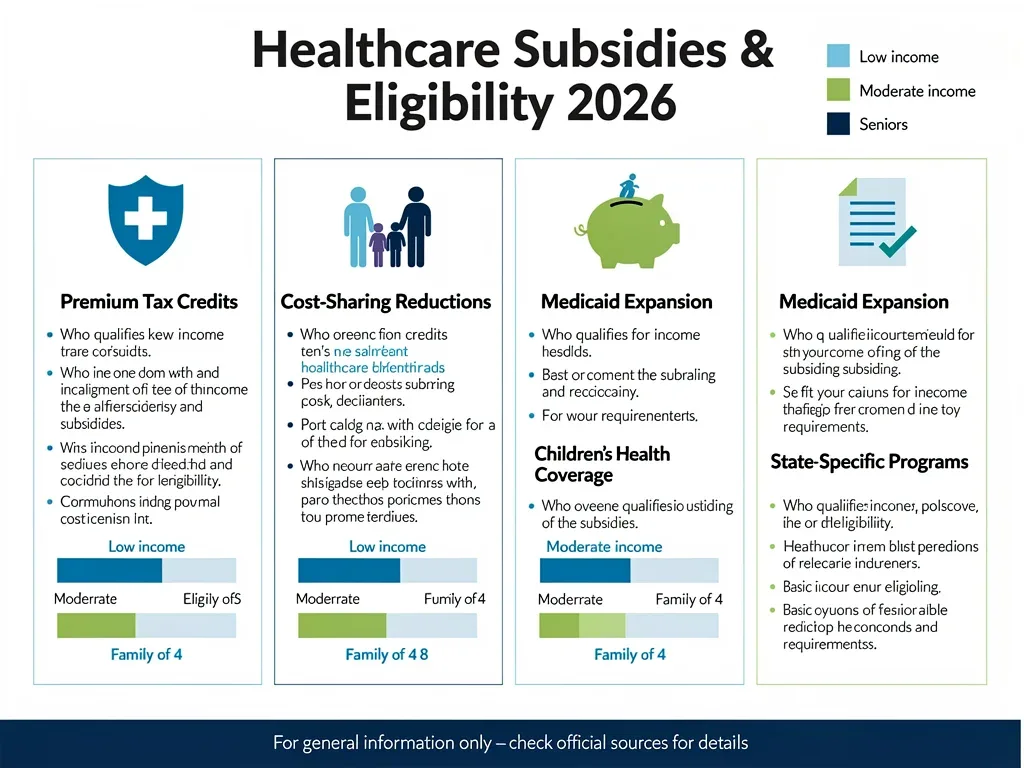
Low-Income Households (Up to 250% FPL)
For individuals and families with incomes up to 250% of the Federal Poverty Level, the impact of 2026 subsidies is expected to be profoundly positive. This group typically qualifies for the most substantial premium tax credits and is the exclusive recipient of cost-sharing reductions (CSRs). The potential permanence of enhanced subsidies ensures that their premium contributions remain very low, often close to zero for benchmark plans.
The continued availability of CSRs, which significantly reduce deductibles, copayments, and out-of-pocket maximums, means that healthcare will not only be affordable in terms of monthly premiums but also when medical care is actually needed. This comprehensive financial protection is vital for ensuring that this vulnerable population can access necessary health services without facing catastrophic financial burdens.
Middle-Income Households (250% – 400% FPL)
Middle-income households, traditionally defined as those earning between 250% and 400% of the FPL, have seen significant benefits from recent subsidy enhancements. For 2026, if these enhancements are made permanent, this group will continue to receive substantial premium tax credits, keeping their premium contributions capped at a manageable percentage of their income.
While this bracket typically does not qualify for cost-sharing reductions, the premium tax credits are crucial in making Marketplace plans affordable. The potential for continued lower caps on premium contributions means that more middle-income families can opt for more comprehensive plans (like Gold or Platinum) that offer better benefits and lower out-of-pocket costs, without breaking their budget.
Higher-Income Households (Above 400% FPL)
Perhaps one of the most impactful changes for 2026, assuming the enhanced subsidies are made permanent, will be for higher-income households, specifically those above 400% of the Federal Poverty Level. Prior to the ARPA, this group faced the “subsidy cliff,” where they received no financial assistance, often leading to extremely high premium costs.
With the elimination of the subsidy cliff, these households can now receive premium tax credits if the cost of the benchmark silver plan exceeds 8.5% of their household income. This effectively caps the amount they have to pay for premiums, making health insurance much more affordable. This change is particularly beneficial for older adults who are not yet Medicare-eligible and often face the highest premiums due to age-based rating rules.
The overall impact of healthcare subsidies 2026 across all income brackets is a move towards greater affordability and equity. By ensuring that no one pays an excessive percentage of their income for health insurance, these policies aim to strengthen the nation’s healthcare safety net and promote broader access to care.
Navigating the Health Insurance Marketplace in 2026
The Health Insurance Marketplace (Healthcare.gov, or state-based exchanges) remains the central hub for enrolling in plans and accessing healthcare subsidies in 2026. Navigating this platform effectively is crucial to finding the right coverage and maximizing your financial assistance. The Marketplace is designed to offer a range of plans from different insurance providers, allowing for comparison and selection based on your specific needs and budget.
As 2026 approaches, expect continued efforts to enhance the user experience on the Marketplace, making it more intuitive and user-friendly. This includes improved tools for comparing plans, clearer explanations of subsidy eligibility, and robust support systems to assist consumers through the enrollment process.
Open Enrollment Period
The annual Open Enrollment Period (OEP) is the primary time when individuals and families can enroll in a new health insurance plan or make changes to their existing coverage through the Marketplace. While the exact dates for the 2026 OEP will be announced, it typically runs from November 1st to January 15th of the following year. It is crucial to mark these dates and ensure you complete your application within this window to secure coverage.
During Open Enrollment, you can compare plans, update your income and household information, and apply for subsidies. Even if you are happy with your current plan, it’s advisable to review your options each year, as plan offerings and your subsidy eligibility can change. New plans might become available, or existing plans might adjust their benefits or costs.
Special Enrollment Periods (SEP)
Outside of the Open Enrollment Period, you may still be able to enroll in a Marketplace plan or change your existing one if you experience a Qualifying Life Event (QLE). These Special Enrollment Periods are designed to provide flexibility for individuals facing significant life changes that impact their health coverage needs. Examples of QLEs include:
- Changes in Residence: Moving to a new county or state where your current plan is not available.
- Changes in Household Size: Getting married, divorced, having a baby, adopting a child, or experiencing a death in the family.
- Loss of Other Coverage: Losing job-based coverage, COBRA, Medicaid, or CHIP (voluntarily quitting a job or not paying premiums usually doesn’t qualify).
- Changes in Eligibility for Assistance: A change in income or household status that affects your eligibility for subsidies.
If you experience a QLE, you typically have 60 days from the date of the event to enroll in a new plan. It’s important to report these events promptly to the Marketplace to avoid gaps in coverage.
Assistance from Navigators and Brokers
For those who find the Marketplace difficult to navigate or require personalized guidance, free assistance is available. The Marketplace provides access to trained navigators and certified brokers who can help you understand your options, compare plans, and complete your application for healthcare subsidies 2026.
They can help you:
- Understand your subsidy eligibility and estimate your potential savings.
- Compare different plans based on your specific health needs and budget.
- Complete the application accurately and efficiently.
- Troubleshoot any issues that may arise during enrollment.
Utilizing these resources can significantly reduce stress and ensure you make the best choices for your healthcare coverage for 2026.
Future Outlook: Sustainability and Long-Term Impact
As we delve into the specifics of healthcare subsidies in 2026, it’s equally important to consider the long-term outlook for these programs. The sustainability of current and proposed subsidy structures, as well as their enduring impact on the American healthcare system, are critical aspects that shape public policy and individual financial planning. The discussions around 2026 are not just about immediate relief but also about building a more resilient and equitable healthcare future.
The primary concern for sustainability revolves around federal funding and legislative consensus. While the enhanced subsidies have proven effective, their long-term continuation requires ongoing political will and a stable funding mechanism. The economic climate and evolving healthcare costs will undoubtedly influence these discussions, but the demonstrated benefits of widespread access to affordable care provide a strong argument for their permanence.
Addressing Healthcare Affordability Gaps
One of the key long-term impacts of robust healthcare subsidies is their ability to address persistent affordability gaps in the U.S. healthcare system. Despite significant strides, millions still struggle with high out-of-pocket costs, even with insurance. The 2026 adjustments aim to further mitigate these challenges by ensuring that a greater percentage of the population can afford both premiums and the actual cost of care.
By reducing financial barriers, subsidies encourage earlier intervention, preventative care, and better management of chronic conditions, ultimately leading to a healthier population and potentially lower overall healthcare expenditures in the long run. The focus shifts from emergency room visits for preventable conditions to proactive health management, a more sustainable model for both individuals and the healthcare system.
The Role of Technology and Innovation
Technology and innovation are expected to play an increasingly vital role in the future of healthcare subsidies. Digital platforms for enrollment, AI-driven tools for plan comparison, and improved data analytics can make the subsidy application process more efficient, accurate, and user-friendly. These technological advancements can also help in identifying and reaching underserved populations, ensuring that subsidies are distributed effectively.
- AI-Powered Plan Matching: Algorithms that analyze individual health needs, budget constraints, and subsidy eligibility to recommend optimal plans.
- Telehealth Integration: Subsidies may increasingly consider the affordability of telehealth services, expanding access to care, especially in rural or underserved areas.
- Data-Driven Policy Adjustments: Continuous analysis of subsidy effectiveness and enrollment trends to inform future policy adjustments and optimize resource allocation.
The integration of technology can streamline administrative processes, reduce overhead costs, and ultimately enhance the consumer experience, making it easier for people to access and utilize their healthcare benefits. This forward-looking approach is crucial for the long-term viability and effectiveness of subsidy programs.
Long-Term Economic and Health Outcomes
The long-term impact of sustained and effective healthcare subsidies extends beyond individual financial relief to broader economic and public health outcomes. A healthier workforce is a more productive workforce, contributing to economic growth. Reduced medical debt can free up household income for other expenditures, stimulating local economies.
From a public health perspective, increased access to preventive care and early treatment can lead to a decrease in the incidence and severity of chronic diseases, lower mortality rates, and an overall improvement in the nation’s health. The investment in healthcare subsidies 2026 is therefore not just a social expenditure but a strategic investment in the well-being and economic prosperity of the country. The future outlook suggests a continued commitment to these principles, adapting to new challenges while building on past successes.
Preparing for Open Enrollment 2026
With significant changes anticipated for healthcare subsidies in 2026, proactive preparation for the upcoming Open Enrollment Period is more important than ever. Being well-prepared ensures that you can efficiently navigate the Health Insurance Marketplace, understand your eligibility for new savings opportunities, and select the best plan for your needs without last-minute stress. Starting early can make a considerable difference in your healthcare planning.
The enrollment process can be complex, especially with evolving rules and new provisions. By gathering necessary documents, researching options, and understanding key deadlines, you can maximize your chances of securing affordable and comprehensive coverage. Don’t wait until the last minute; informed decisions require ample time for consideration.
Gathering Necessary Documents and Information
Before Open Enrollment begins, collect all pertinent documents and information that will be required for your Marketplace application. Having these details readily accessible will streamline the application process and prevent delays. Key documents and information include:
- Personal Information: Social Security Numbers (SSNs) or document numbers for immigrants for everyone in your household.
- Income Information: Estimated household income for 2026, including pay stubs, W-2s, 1099 forms, and other income sources.
- Employer-Sponsored Coverage Details: Information about any health coverage offered by your employer, including plan name, monthly premium for self-only coverage, and whether it meets minimum value standards.
- Current Health Plan Information: If you have existing coverage, details about your current plan can be helpful for comparison.
Accurate and complete information is vital for determining your eligibility for subsidies and ensuring that your financial assistance is calculated correctly. Any discrepancies can lead to delays or issues during tax reconciliation.
Researching Plan Options and Providers
The Health Insurance Marketplace will likely offer a variety of plans from different insurers in 2026. Take the time to research these options thoroughly. Compare not only the monthly premiums (after subsidies) but also the deductibles, copayments, coinsurance, and out-of-pocket maximums. Consider your anticipated healthcare needs for the year, including prescription medications, doctor visits, and potential specialist care.
Look into the network of doctors and hospitals included in each plan to ensure your preferred providers are covered. Check if your essential medications are on the plan’s formulary. Many Marketplace websites offer tools to compare plans side-by-side, making this research process more manageable. Don’t solely focus on the lowest premium; a slightly higher premium for a plan with better benefits or a lower deductible might save you money in the long run if you anticipate needing medical care.
Seeking Professional Guidance
If you find the process overwhelming or have complex circumstances, do not hesitate to seek professional guidance. Certified Marketplace navigators, agents, and brokers are available to provide free, unbiased assistance. These professionals are trained to understand the intricacies of healthcare subsidies 2026, plan options, and eligibility rules.
They can help you:
- Understand your subsidy eligibility and estimate your potential savings.
- Compare different plans based on your specific health needs and budget.
- Complete the application accurately and efficiently.
- Troubleshoot any issues that may arise during enrollment.
Utilizing these resources can significantly reduce stress and ensure you make the best decisions about your healthcare coverage for 2026.
| Key Aspect | Brief Description |
|---|---|
| Enhanced Subsidies Status | Potential for permanent extension of increased premium tax credits, eliminating the “subsidy cliff” for higher incomes. |
| Eligibility Criteria | Primarily income-based relative to FPL, with family size and access to employer coverage as key factors. |
| Maximizing Savings | Choose Silver plans for CSRs, accurately estimate income, and explore state/local assistance programs. |
| Marketplace Navigation | Utilize Open Enrollment, understand Special Enrollment Periods, and seek help from navigators or brokers. |
Frequently Asked Questions About Healthcare Subsidies 2026
What are the primary changes expected for healthcare subsidies in 2026?▼The main changes anticipated for healthcare subsidies in 2026 involve the potential permanent extension of enhanced premium tax credits, which would continue to lower monthly premiums for many. This aims to eliminate the “subsidy cliff” for higher-income individuals and ensure a larger percentage of income is protected from high healthcare costs.
Who will be eligible for healthcare subsidies in 2026?▼Eligibility for healthcare subsidies in 2026 will primarily depend on your household income relative to the Federal Poverty Level and your family size. With potential permanent enhanced subsidies, even those above 400% FPL may qualify if their benchmark plan premiums exceed 8.5% of their income, provided they don’t have affordable employer coverage.
How can I maximize my savings with the 2026 healthcare subsidies?▼To maximize your savings, accurately estimate your 2026 income and update it if changes occur. If eligible for cost-sharing reductions, choose a Silver plan. Compare plans carefully on the Marketplace, considering deductibles and out-of-pocket costs, not just premiums. Also, explore any state or local assistance programs.
What is the “subsidy cliff” and how might it be affected in 2026?▼The “subsidy cliff” refers to the abrupt loss of all premium tax credits for individuals earning just above 400% of the Federal Poverty Level. For 2026, there is strong legislative momentum to make the elimination of this cliff permanent, ensuring that no one pays more than a set percentage of their income for health insurance premiums, regardless of income.
When should I start preparing for Open Enrollment 2026?▼You should start preparing for Open Enrollment 2026 well in advance of its typical start date of November 1st. Gather all necessary documents, such as income estimates and personal information. Research available plans and consider seeking assistance from Marketplace navigators or certified brokers to ensure a smooth and informed enrollment process.
Conclusion
The landscape of healthcare subsidies in 2026 presents a promising outlook for millions of Americans seeking affordable health insurance. With the potential for permanent enhanced premium tax credits and continuous efforts to streamline access, new savings opportunities are on the horizon. Understanding these changes, knowing who qualifies, and strategically navigating the Health Insurance Marketplace are crucial steps to maximizing your benefits. By staying informed and proactive, individuals and families can secure comprehensive, affordable coverage, contributing to a healthier and more financially stable future.