AI’s Impact on Education 2026: Tools & Ethical Concerns
Advertisements
Artificial intelligence is set to revolutionize education by 2026, offering personalized learning tools and efficiency gains, but it also necessitates careful navigation of ethical challenges like data privacy and fairness to ensure equitable and effective learning environments.
The landscape of learning is rapidly evolving, and by 2026, the impact of AI on education in 2026: tools and ethical considerations for students will be undeniable. This technological revolution promises to redefine how students learn, how educators teach, and the very structure of educational institutions. Understanding these shifts is crucial for preparing the next generation for a future deeply intertwined with artificial intelligence.
The Rise of Personalized Learning with AI
Artificial intelligence is ushering in an era of unprecedented personalization in education, moving beyond the one-size-fits-all model that has long dominated classrooms. This shift promises to cater to individual student needs, learning styles, and paces, making education more effective and engaging.
AI-driven platforms can analyze student performance data in real-time, identifying areas where a student excels or struggles. This granular insight allows for the dynamic adjustment of curriculum and teaching methods, ensuring that each student receives the most relevant and impactful instruction.
Adaptive Learning Systems
Adaptive learning systems are at the forefront of AI’s personalized approach. These platforms use algorithms to tailor content delivery based on a student’s progress and understanding. If a student masters a concept quickly, the system can advance them to more complex material. Conversely, if they struggle, it provides additional resources and alternative explanations.
- Dynamic Content Adjustment: AI automatically modifies lessons and exercises to match individual student proficiency.
- Real-time Feedback: Students receive immediate feedback on their work, helping them correct mistakes and reinforce learning.
- Personalized Pathways: Each student follows a unique learning path optimized for their specific needs and goals.
- Performance Analytics: Educators gain valuable insights into student progress, allowing for targeted intervention.
Intelligent Tutoring Systems
Beyond adaptive content, intelligent tutoring systems (ITS) offer a more interactive and responsive learning experience. These AI tutors can simulate human instructors, providing explanations, answering questions, and even engaging in Socratic dialogues to deepen understanding. They are designed to understand the nuances of a student’s thought process, offering guidance that is both precise and empathetic.
The goal of ITS is not to replace human teachers but to augment their capabilities, providing individualized support that would be impossible for a single educator to offer to a large class. This allows teachers to focus on higher-level tasks, such as fostering critical thinking and socio-emotional development.
The advent of personalized learning through AI marks a significant evolution in educational practice. By tailoring the learning experience to each student, AI tools are poised to unlock greater potential and foster a deeper, more enduring understanding of subjects. This personalization is not just about efficiency; it’s about making education truly student-centric.
Innovative AI Tools Enhancing Student Learning
The educational technology landscape is being reshaped by a plethora of innovative AI tools designed to enhance student learning in diverse ways. These tools go beyond simple content delivery, offering dynamic interactions, creative outlets, and improved accessibility, fundamentally changing how students engage with academic material.
From AI-powered writing assistants that refine prose to virtual reality simulations that bring complex concepts to life, the range of applications is vast. These technologies are not merely supplementary; they are becoming integral components of the learning process, fostering deeper understanding and engagement.
AI-Powered Content Creation and Curation
AI tools are increasingly assisting students and educators in creating and curating educational content. This includes AI algorithms that can summarize lengthy texts, generate practice questions, or even assemble multimedia presentations on specific topics. For students, this means faster access to relevant information and new ways to process it. For educators, it streamlines content development, allowing more time for direct student interaction.
Moreover, AI can curate vast amounts of online educational resources, filtering for quality and relevance to a student’s particular learning objectives. This reduces information overload and ensures that students are exposed to the most valuable and up-to-date materials.

The ability of AI to rapidly process and synthesize information transforms research and learning material acquisition, enabling students to explore subjects with greater depth and efficiency.
Virtual and Augmented Reality for Immersive Learning
Virtual Reality (VR) and Augmented Reality (AR), powered by AI, are creating immersive learning environments that were once the stuff of science fiction. These technologies allow students to explore historical sites, conduct virtual science experiments, or dissect virtual anatomy without leaving the classroom. AI enhances these experiences by making them adaptive and responsive to student actions.
- Realistic Simulations: VR/AR enables students to engage with lifelike simulations for hands-on learning without physical constraints.
- Enhanced Engagement: Immersive experiences captivate students, leading to better retention and understanding of complex topics.
- Accessibility: These tools can make learning accessible to students with different needs, providing alternative ways to interact with content.
- Global Exploration: Students can virtually visit distant locations or explore historical events, broadening their perspectives.
Language Learning and Accessibility Tools
AI is also making significant strides in language learning and improving accessibility for students with disabilities. AI-powered language apps offer personalized pronunciation feedback, grammar correction, and conversational practice, simulating native speaker interactions. For students with learning disabilities, AI tools can provide real-time transcription, text-to-speech conversion, and intelligent summarization, breaking down communication barriers and fostering inclusion.
These innovative tools are not just about convenience; they are about democratizing education, making it more engaging, effective, and accessible to a wider range of learners. As AI continues to evolve, the possibilities for enhancing student learning will only expand further.
Ethical Considerations: Data Privacy and Security
As AI tools become more integrated into the educational fabric, the collection and analysis of student data raise significant ethical concerns, particularly regarding data privacy and security. The vast amounts of information gathered by adaptive learning platforms and intelligent tutoring systems, while beneficial for personalization, also present potential risks if not managed responsibly.
Educational institutions and technology providers bear a substantial responsibility to protect sensitive student information. The trust placed in these systems by students, parents, and educators hinges on robust privacy policies and secure data handling practices.
Protecting Student Data
The data collected by AI in education can include academic performance, learning styles, behavioral patterns, and even biometric information. This rich dataset, if compromised, could expose students to various risks, including identity theft, targeted advertising, or discrimination. Therefore, stringent measures are required to ensure data protection.
Implementing strong encryption, anonymization techniques, and strict access controls are paramount. Furthermore, transparency about what data is collected, how it is used, and with whom it is shared is essential for building and maintaining trust.
The Challenge of Data Ownership and Consent
A critical ethical dilemma revolves around data ownership and consent. Who owns the data generated by students using AI platforms? Students themselves, their parents, the educational institution, or the technology provider? Clear policies are needed to define these roles and responsibilities.
- Informed Consent: Obtaining clear and informed consent from students and parents regarding data collection and usage.
- Data Minimization: Collecting only the data absolutely necessary for educational purposes.
- Secure Storage: Ensuring all collected data is stored securely and protected against unauthorized access.
- Deletion Policies: Establishing clear policies for data retention and deletion once it is no longer needed.
Mitigating Security Risks
Beyond privacy, the security of AI educational platforms against cyber threats is a constant concern. Educational systems are often targets for cyberattacks, and the integration of AI could introduce new vulnerabilities. Robust cybersecurity frameworks, regular audits, and proactive threat detection are crucial to safeguard student data from malicious actors.
The ethical imperative to protect student data privacy and ensure robust security cannot be overstated. As AI continues to evolve in education, a proactive and comprehensive approach to these challenges will be vital for fostering a safe and trustworthy learning environment for all.
Addressing Bias and Fairness in AI Algorithms
The algorithms that power AI tools in education are not inherently neutral; they are developed by humans and trained on data that can reflect existing societal biases. If left unaddressed, these biases can lead to unfair or discriminatory outcomes for students, exacerbating existing inequalities within the educational system.
Ensuring fairness in AI algorithms is a complex but crucial task. It requires careful design, rigorous testing, and continuous monitoring to identify and mitigate any biases that could disadvantage certain groups of students, whether based on race, gender, socioeconomic status, or other factors.
Sources of Algorithmic Bias
Algorithmic bias can stem from several sources. Training data that is unrepresentative or contains historical biases is a common culprit. For example, if an AI assessment tool is primarily trained on data from a specific demographic, it might perform poorly or unfairly evaluate students from other backgrounds. Bias can also be introduced through the design of the algorithm itself or the metrics used to evaluate its performance.
Understanding these sources is the first step towards developing more equitable AI systems. It necessitates a multidisciplinary approach involving data scientists, educators, ethicists, and social scientists.
Strategies for Ensuring Fairness
Several strategies can be employed to promote fairness and reduce bias in AI education tools. This includes diversifying training datasets, implementing fairness-aware algorithms, and conducting thorough bias audits throughout the development and deployment phases.
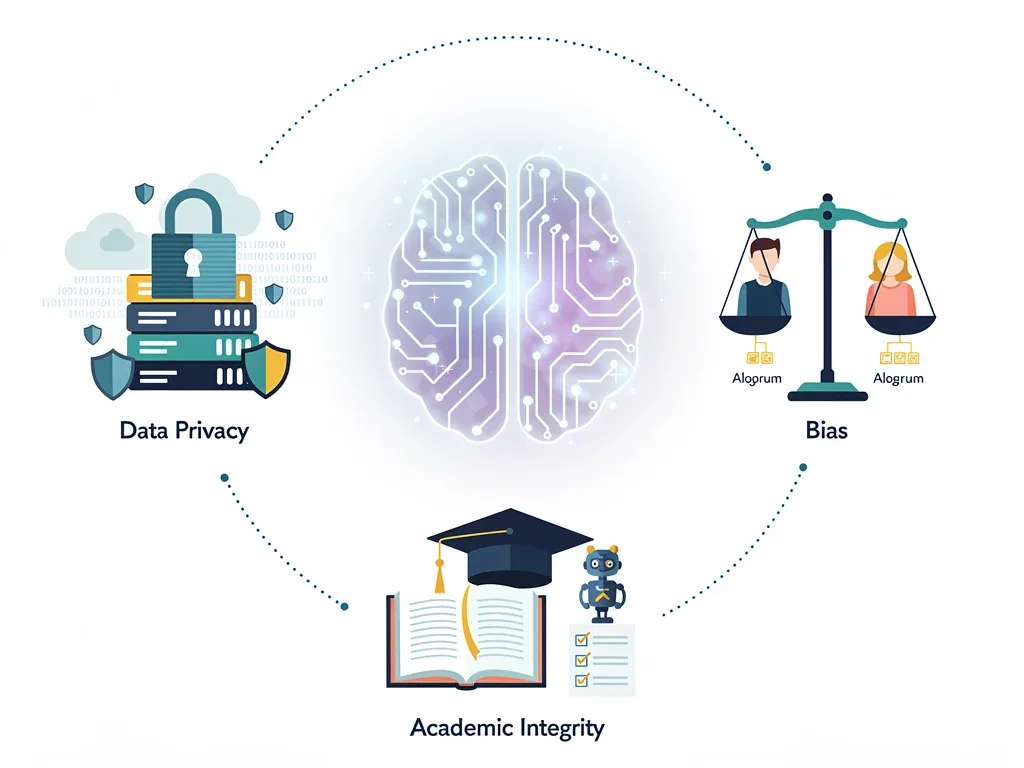
Transparency in how AI systems make decisions is also vital. When the decision-making process is opaque, it becomes difficult to identify and address unfair outcomes. Explainable AI (XAI) techniques can help shed light on these processes.
- Diverse Training Data: Using representative and unbiased datasets to train AI models.
- Fairness Metrics: Employing specific metrics to evaluate and optimize algorithms for equitable outcomes.
- Human Oversight: Maintaining human review and intervention in AI-driven decisions, especially in high-stakes contexts.
- Bias Audits: Regularly testing AI systems for discriminatory patterns and adjusting as needed.
Impact on Equity and Access
The presence of bias in AI educational tools can have a profound impact on equity and access. Biased assessment tools might unfairly track students into certain academic pathways, while biased recommendation systems could limit their exposure to diverse learning opportunities. Addressing these issues is fundamental to ensuring that AI serves as a tool for equity, rather than a perpetuator of inequality.
By proactively addressing bias and striving for fairness, AI in education can move closer to its potential as a truly transformative force for good, ensuring that all students, regardless of their background, have an equal opportunity to succeed.
The Future Role of Educators and Academic Integrity
The integration of AI into education fundamentally reshapes the roles of educators and brings new challenges to maintaining academic integrity. Far from making teachers obsolete, AI empowers them to focus on higher-order tasks, while also necessitating a re-evaluation of traditional assessment methods in an AI-augmented learning environment.
Educators in 2026 will likely act more as facilitators, mentors, and designers of learning experiences, rather than sole disseminators of information. Simultaneously, the ease with which AI can generate content demands innovative approaches to ensuring that student work is original and authentically reflects their understanding.
Evolving Roles for Educators
AI tools can automate many routine tasks, such as grading objective assessments, providing basic feedback, and managing administrative duties. This frees up educators to dedicate more time to personalized coaching, fostering critical thinking, and developing socio-emotional skills—areas where human interaction remains irreplaceable.
Teachers will need to become adept at integrating AI into their pedagogical practices, understanding how to leverage these tools to create richer, more engaging learning experiences. Their expertise will shift towards curating AI-driven resources, interpreting AI-generated data, and guiding students in navigating an AI-rich world.
Challenges to Academic Integrity
The accessibility of powerful AI models, such as advanced language generators, presents a significant challenge to academic integrity. Students can potentially use these tools to complete assignments, essays, or even code without genuinely understanding the material. This raises questions about how to accurately assess a student’s true knowledge and skills.
Educational institutions must develop new policies and strategies to address AI-assisted academic dishonesty. This includes educating students on the ethical use of AI, designing assignments that require critical thinking and original thought beyond AI’s current capabilities, and utilizing AI detection tools responsibly.
- Rethinking Assessments: Moving towards project-based learning and presentations that showcase critical thinking.
- Ethical AI Use Education: Teaching students how to use AI tools responsibly and ethically.
- AI Detection Tools: Employing software to identify AI-generated content, while acknowledging their limitations.
- Emphasis on Process: Valuing the learning process and iterative drafts over just the final product.
Fostering Critical Thinking in an AI World
Perhaps the most crucial role for educators in the age of AI will be to cultivate critical thinking, media literacy, and digital citizenship. Students need to understand how AI works, its limitations, and how to evaluate information generated by AI. They must learn to question, analyze, and synthesize information, rather than passively accept AI-generated outputs.
The future of education will see a partnership between human educators and AI, where each complements the other’s strengths. This collaboration will redefine learning, making it more dynamic and preparing students not just for current challenges but for those yet to emerge.
Preparing Students for an AI-Driven Workforce
As AI continues to permeate every industry, preparing students for an AI-driven workforce is no longer an option but a necessity. Educational systems must adapt to equip students with the skills, knowledge, and mindset required to thrive in a world where AI is a ubiquitous tool and a significant economic force.
This preparation goes beyond technical skills, encompassing critical thinking, creativity, problem-solving, and ethical reasoning, all of which are increasingly valued in an automated future. The goal is to cultivate individuals who can work alongside AI, leveraging its capabilities while contributing uniquely human attributes.
Essential Skills for the AI Era
While coding and data science skills are undoubtedly important, a broader set of competencies will be crucial. Students need to develop strong analytical skills to interpret AI-generated insights, creativity to innovate with AI, and complex problem-solving abilities to tackle challenges that AI alone cannot solve. Furthermore, adaptability and continuous learning will be paramount as AI technologies evolve rapidly.
Understanding the ethical implications of AI and developing a strong sense of digital citizenship will also be vital for responsible participation in the future workforce.
Curriculum Adjustments and New Programs
Educational institutions are already beginning to adjust curricula and introduce new programs to address the demands of the AI era. This includes integrating AI literacy across various subjects, offering specialized courses in AI and machine learning, and promoting interdisciplinary studies that combine AI with fields like humanities, arts, and social sciences.
Practical, project-based learning experiences that allow students to work with real-world AI applications are also becoming more common, providing hands-on experience and fostering a deeper understanding of AI’s potential and limitations.
- AI Literacy: Integrating basic AI concepts and applications across all educational levels.
- Computational Thinking: Developing problem-solving skills that are fundamental to working with AI.
- Interdisciplinary Studies: Encouraging combinations of AI with other fields to foster innovation.
- Ethical AI Education: Teaching the societal and moral implications of AI development and deployment.
Fostering Human-AI Collaboration
A key aspect of preparing students is to teach them how to effectively collaborate with AI. This involves understanding AI’s strengths and weaknesses, knowing when to rely on AI for efficiency and when human judgment is indispensable. The future workforce will not be about humans versus AI, but rather humans and AI working together to achieve greater outcomes.
By focusing on these essential skills and adapting educational approaches, we can ensure that students are not just consumers of AI but active participants and innovators in shaping the AI-driven world of tomorrow.
The Role of Policy and Regulation in AI Education
As AI’s presence in education grows, the need for thoughtful policy and regulation becomes increasingly apparent. Without clear guidelines, the rapid advancement and deployment of AI tools could lead to unintended consequences, widening educational disparities, or compromising student welfare. Effective policies are essential to harness AI’s potential while mitigating its risks.
Governments, educational bodies, and technology developers must collaborate to establish frameworks that ensure AI in education is used ethically, equitably, and effectively. This involves balancing innovation with protection, and flexibility with accountability.
Developing Ethical AI Guidelines
One of the primary roles of policy is to establish clear ethical guidelines for the development and deployment of AI in educational settings. These guidelines should address issues such as data privacy, algorithmic bias, transparency, and accountability. They should provide a roadmap for developers to create responsible AI tools and for educators to use them wisely.
These guidelines are not meant to stifle innovation but to channel it towards positive outcomes, ensuring that AI serves the best interests of students and society as a whole.
Ensuring Equity and Access through Regulation
Policy and regulation also play a crucial role in ensuring that AI in education promotes equity and access, rather than exacerbating existing divides. This might involve funding initiatives to provide AI tools to underserved communities, establishing standards for accessibility, and monitoring for discriminatory outcomes.
Regulations can also address the digital divide, ensuring that all students have access to the necessary technology and internet connectivity to benefit from AI-powered learning opportunities. Without such interventions, AI could deepen the chasm between well-resourced and under-resourced schools and students.
- Standardized Data Privacy: Implementing consistent data protection laws across educational AI platforms.
- Bias Mitigation Mandates: Requiring developers to actively test and reduce algorithmic bias in their tools.
- Accessibility Standards: Enforcing design principles that make AI educational tools usable by all students.
- Funding for Digital Equity: Allocating resources to ensure equitable access to AI technologies and infrastructure.
International Cooperation and Best Practices
Given the global nature of technology, international cooperation will be vital in developing effective policies and regulations for AI in education. Sharing best practices, harmonizing standards, and collaborating on research can help create a more robust and coherent global approach. This collective effort can accelerate the development of beneficial AI while providing a united front against potential harms.
Ultimately, the successful integration of AI into education by 2026 will depend not just on technological innovation, but equally on the thoughtful and proactive development of policies and regulations that guide its use towards a more equitable, effective, and ethical future for all learners.
| Key Aspect | Brief Description |
|---|---|
| Personalized Learning | AI adapts content and pace to individual student needs, enhancing engagement and effectiveness. |
| Ethical Data Use | Ensuring student data privacy, security, and consent is crucial for trust in AI systems. |
| Combating Bias | Strategies to identify and mitigate algorithmic biases for fair and equitable educational outcomes. |
| Educator’s Evolving Role | Teachers transition to facilitators, focusing on critical thinking and human skills, alongside AI. |
Frequently Asked Questions About AI in Education
How will AI personalize learning for students by 2026?▼By 2026, AI will personalize learning through adaptive platforms that analyze student performance in real-time, tailoring content, pace, and teaching methods to individual needs. Intelligent tutoring systems will offer customized explanations and feedback, ensuring a more effective and engaging educational journey for each student.
What are the main ethical concerns regarding AI in education?▼The primary ethical concerns include data privacy and security, as AI platforms collect vast amounts of student data. Algorithmic bias is another critical issue, potentially leading to unfair outcomes based on demographics. Ensuring transparency in AI decision-making and preventing academic dishonesty also pose significant challenges.
How will AI change the role of teachers in the classroom?▼Teachers’ roles will evolve from primary information providers to facilitators and mentors. AI will automate administrative and repetitive tasks, allowing educators to focus on fostering critical thinking, creativity, and socio-emotional development. They will guide students in navigating AI tools and interpreting AI-generated insights.
How can students prepare for an AI-driven workforce?▼Students should focus on developing critical thinking, problem-solving, creativity, and ethical reasoning skills. Understanding AI’s capabilities and limitations, along with digital literacy, will be crucial. Collaborative projects involving AI tools and interdisciplinary studies will also provide valuable preparation for future careers.
What policies are needed to govern AI in education?▼Policies are needed to ensure data privacy, combat algorithmic bias, and promote equitable access to AI tools. Clear ethical guidelines for AI development and deployment, along with regulations to bridge the digital divide, are essential. International cooperation will also be key to establishing global best practices for responsible AI integration.
Conclusion
The journey towards 2026 reveals a transformative educational landscape, one profoundly shaped by artificial intelligence. From the promise of hyper-personalized learning experiences and innovative tools that make education more engaging and accessible, to the complex ethical tightropes of data privacy, algorithmic fairness, and academic integrity, AI presents both immense opportunities and significant challenges. Preparing students for an AI-driven workforce necessitates a shift in curriculum and skill development, emphasizing critical thinking and human-AI collaboration. Ultimately, the successful integration of AI into education hinges on a collective commitment from educators, policymakers, technology developers, and students themselves to navigate these changes thoughtfully, ensuring that AI serves as a powerful force for good, fostering equitable, effective, and enriching learning environments for all.