Quantum Computers by Q4 2026: Data Security Impact
Advertisements
The imminent arrival of commercial quantum computers by Q4 2026 is set to reshape the landscape of data security, demanding immediate attention to develop robust post-quantum cryptographic solutions.
The technological horizon is rapidly shifting, bringing forth a monumental advancement that promises to redefine our digital world: the first commercial quantum computers are expected by Q4 2026. This isn’t just another incremental step in computing; it represents a profound paradigm shift, particularly concerning quantum computing data security. The implications for how we protect our most sensitive information are vast and urgent, demanding immediate attention from governments, corporations, and individuals alike.
The quantum leap: understanding the technology
Quantum computing harnesses the strange and powerful principles of quantum mechanics to process information in ways classical computers cannot. Instead of bits, which represent information as either 0 or 1, quantum computers use qubits, which can be 0, 1, or both simultaneously through superposition. This, along with phenomena like entanglement, allows quantum machines to tackle problems that are currently intractable for even the most powerful supercomputers.
The journey from theoretical concept to commercial availability has been long and arduous, marked by significant breakthroughs in qubit stability, error correction, and architectural design. The expectation of commercial quantum computers by Q4 2026 signals a maturation of the field, moving from experimental labs to practical applications. This transition is not merely about faster calculations; it’s about fundamentally altering the types of problems we can solve and, crucially, the security of our digital infrastructure.
The core principles of quantum mechanics in computing
At the heart of quantum computing are superposition and entanglement. Superposition allows a qubit to exist in multiple states at once, exponentially increasing the processing power as more qubits are added. Entanglement, often described as ‘spooky action at a distance,’ links the states of two or more qubits such that they are intrinsically connected, regardless of their physical separation. These principles enable quantum computers to explore many possibilities simultaneously, making them exceptionally powerful for certain types of computations.
- Superposition: Qubits can be in multiple states at once, unlike classical bits.
- Entanglement: Qubits become linked, affecting each other’s states instantly.
- Quantum Parallelism: The ability to perform many computations simultaneously.
- Decoherence: A major challenge where qubits lose their quantum state due to environmental interaction.
Understanding these foundational concepts is crucial to grasping why quantum computers pose such a significant challenge to existing data security protocols. Their ability to process vast amounts of information in parallel allows them to efficiently solve problems that are computationally infeasible for classical machines, including those that underpin modern encryption.
Current encryption standards: a ticking time bomb
Our current digital world relies heavily on robust encryption to protect everything from financial transactions and personal communications to national security secrets. Public-key cryptography, particularly RSA and Elliptic Curve Cryptography (ECC), forms the backbone of this security. These algorithms derive their strength from the mathematical difficulty of factoring large numbers or solving discrete logarithm problems, tasks that classical computers find incredibly time-consuming.
However, quantum computers are inherently different. Algorithms like Shor’s algorithm, developed in 1994, demonstrate that a sufficiently powerful quantum computer could factor large numbers and solve discrete logarithm problems with alarming efficiency. This means that the cryptographic foundations upon which our digital security rests could be rendered obsolete, potentially exposing sensitive data encrypted today to future decryption by quantum machines. The impending arrival of commercial quantum computers turns this theoretical threat into a very real and present danger.
The vulnerability of RSA and ECC
RSA and ECC are asymmetric encryption methods crucial for secure communication over insecure channels. RSA’s security depends on the difficulty of factoring the product of two large prime numbers. ECC’s security relies on the difficulty of solving the elliptic curve discrete logarithm problem. Both are considered computationally hard for classical computers, making brute-force attacks impractical.
- RSA: Relies on the computational difficulty of factoring large integers.
- ECC: Based on the mathematics of elliptic curves and discrete logarithms.
- Key Exchange: Used to securely establish shared secret keys over public channels.
- Digital Signatures: Ensures authenticity and integrity of digital messages.
The fundamental problem is that Shor’s algorithm, if implemented on a large-scale quantum computer, can break both RSA and ECC. This isn’t a matter of simply needing bigger classical computers; it’s a fundamental mathematical vulnerability that quantum mechanics exploits. Consequently, any data encrypted with these methods today, if intercepted and stored, could be decrypted in the near future once quantum computers become available.

The dawn of post-quantum cryptography (PQC)
Recognizing the existential threat quantum computing poses to current encryption, cryptographers worldwide have been diligently working on developing new cryptographic algorithms resistant to quantum attacks. This field is known as Post-Quantum Cryptography (PQC). The goal of PQC is to create new mathematical problems that are hard for both classical and quantum computers to solve, thereby securing our digital future.
Several families of PQC algorithms are under consideration, each based on different mathematical foundations, including lattice-based cryptography, code-based cryptography, hash-based cryptography, and multivariate polynomial cryptography. The National Institute of Standards and Technology (NIST) has been leading a global effort to standardize these new algorithms, a process that is critical for widespread adoption and interoperability. This standardization is not just a technical exercise; it’s a race against time to prepare our digital infrastructure for the quantum era.
NIST’s standardization efforts and leading PQC candidates
NIST initiated a multi-round competition to solicit, evaluate, and standardize quantum-resistant public-key cryptographic algorithms. This rigorous process involves submissions from researchers globally, followed by extensive public scrutiny and cryptanalysis. The aim is to identify algorithms that are secure, efficient, and practical for real-world deployment.
- Kyber: A lattice-based key-encapsulation mechanism (KEM), chosen for general encryption.
- Dilithium: A lattice-based digital signature scheme, selected for digital signatures.
- Falcon: Another lattice-based digital signature scheme, offering different performance trade-offs.
- SPHINCS+: A hash-based signature scheme, notable for its strong security guarantees.
The selection of these algorithms marks a significant step towards quantum-safe cryptography. However, the transition to PQC will be a complex and massive undertaking, requiring widespread software and hardware upgrades across all sectors. The clock is ticking, and the urgency to implement these new standards before commercial quantum computers become a widespread threat is paramount.
Economic and geopolitical implications
The advent of commercial quantum computers and the subsequent need for PQC will have profound economic and geopolitical ramifications. Nations and corporations that successfully develop and deploy quantum computing capabilities, or robust PQC solutions, will gain significant strategic advantages. Those lagging behind risk having their sensitive data compromised, leading to economic espionage, intellectual property theft, and national security vulnerabilities.
The cost of transitioning to PQC will be substantial, involving research and development, software updates, hardware replacements, and extensive training. However, the cost of inaction – the potential loss of critical data – is far greater. This creates a global arms race, not just in quantum computing development, but also in cryptographic defense. International cooperation, alongside competitive innovation, will be essential to navigate this complex landscape and ensure a secure global digital economy.
The race for quantum supremacy and its impact on global power dynamics
Quantum supremacy, the point at which a quantum computer can perform a task that a classical computer cannot in any feasible amount of time, is a key benchmark. Achieving and leveraging this supremacy has direct implications for military intelligence, financial markets, and critical infrastructure. The nation or entity that first masters quantum computing could potentially decrypt adversaries’ communications, disrupt financial systems, or compromise defense systems.
- Intelligence Gathering: Decrypting encrypted communications from other nations.
- Financial Stability: Protecting or compromising financial transactions and markets.
- Critical Infrastructure: Securing or attacking energy grids, transportation, and communication networks.
- Supply Chain Security: Ensuring the integrity of global supply chains against quantum threats.
The geopolitical landscape will inevitably be reshaped by quantum capabilities. Countries are investing heavily in quantum research, understanding that future economic and military power may hinge on their ability to harness this technology responsibly and securely. The race is on to build both the offensive capabilities of quantum computing and the defensive shields of PQC.
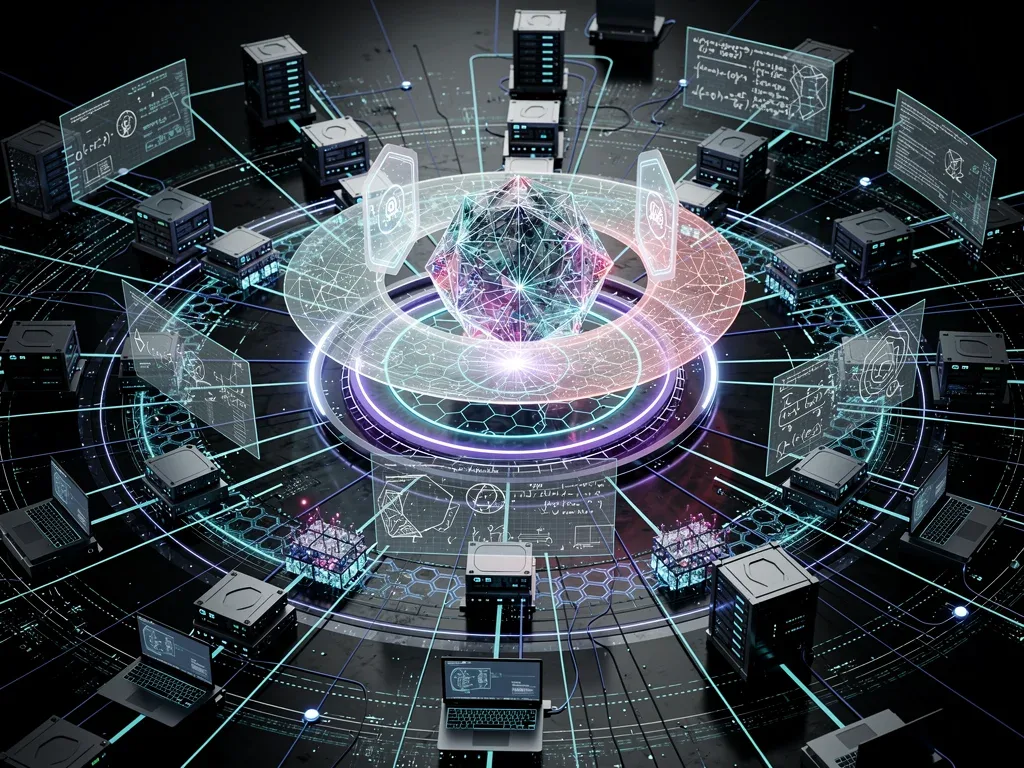
Preparing for the quantum future: strategies and challenges
Preparing for the quantum future requires a multi-faceted approach involving immediate action and long-term strategic planning. Organizations must begin by inventorying their data and systems, identifying what data is sensitive and how it is currently protected. This ‘crypto-agility’ assessment is the first step towards understanding the scope of the migration to PQC.
The challenges are numerous, ranging from the complexity of integrating new cryptographic standards into existing systems to the potential for new vulnerabilities in PQC algorithms themselves. Furthermore, the global shortage of cybersecurity professionals with quantum expertise adds another layer of difficulty. Education, collaboration, and continuous research will be vital to successfully navigating this transition. The time to act is now, not when the first commercial quantum computer is fully operational and capable of breaking current encryption.
Key strategies for a smooth transition to PQC
A successful migration to post-quantum cryptography will require careful planning and execution. It’s not a matter of simply swapping out old algorithms for new ones; it involves a comprehensive overhaul of cryptographic infrastructure.
- Crypto-Agility: Design systems that can easily update cryptographic algorithms.
- Inventory and Prioritize: Identify sensitive data and critical systems requiring PQC first.
- Pilot Programs: Test PQC solutions in isolated environments before widespread deployment.
- Talent Development: Invest in training and recruiting cybersecurity professionals with PQC expertise.
Organizations should consider a ‘hybrid’ approach, where both classical and PQC algorithms are used concurrently, providing a fallback mechanism while PQC matures. This phased approach allows for gradual adoption and risk mitigation during the transition period. The goal is to build resilience against quantum threats without disrupting current operations.
The silver lining: quantum computing’s potential for good
While the security implications of quantum computing are significant, it’s crucial not to overlook the immense potential this technology holds for solving some of humanity’s most pressing challenges. Beyond breaking encryption, quantum computers promise breakthroughs in fields ranging from medicine and materials science to artificial intelligence and climate modeling. Their ability to simulate complex systems with unprecedented accuracy could accelerate drug discovery, design more efficient catalysts, and optimize logistics on a global scale.
For instance, in medicine, quantum simulations could lead to the development of new drugs and personalized treatments by modeling molecular interactions at a fundamental level. In materials science, quantum computers could help design novel materials with specific properties, revolutionizing industries from aerospace to energy. These transformative applications underscore that while quantum computing presents a security challenge, it also offers unparalleled opportunities for scientific advancement and societal benefit, provided we can secure its foundations.
Transformative applications beyond cryptography
The potential applications of quantum computing extend far beyond cryptanalysis, promising to unlock solutions to problems currently out of reach for classical computers. These applications could drive innovation across numerous sectors.
- Drug Discovery: Simulating molecular structures for new pharmaceuticals.
- Materials Science: Designing novel materials with enhanced properties.
- Financial Modeling: Optimizing complex financial portfolios and risk assessment.
- Artificial Intelligence: Enhancing machine learning algorithms for better data analysis.
- Climate Modeling: Improving predictions and understanding of climate change.
Embracing quantum computing means not only preparing for its defensive challenges but also actively exploring and investing in its vast potential to address global issues. The balance lies in fostering innovation while simultaneously building robust security frameworks to ensure that these powerful tools are used for the collective good.
| Key Aspect | Brief Description |
|---|---|
| Commercial Quantum Computers | Expected by Q4 2026, these machines will leverage quantum mechanics for unprecedented computational power. |
| Data Security Threat | Current public-key encryption (RSA, ECC) is vulnerable to quantum attacks, posing a significant risk to sensitive data. |
| Post-Quantum Cryptography (PQC) | New cryptographic algorithms designed to resist attacks from both classical and quantum computers, currently undergoing standardization. |
| Strategic Preparation | Organizations must inventory systems, develop crypto-agility, and plan for a phased migration to PQC to mitigate future risks. |
Frequently asked questions about quantum computing and data security
What is the primary concern regarding quantum computers and data security?▼The main concern is that current public-key encryption algorithms, like RSA and ECC, rely on mathematical problems that quantum computers can solve efficiently. This means that data encrypted today could be decrypted by quantum machines in the near future, compromising privacy and security.
When are commercial quantum computers expected to become widely available?▼While experimental quantum computers exist, the first commercial quantum computers capable of breaking significant encryption are anticipated to be available by Q4 2026. This timeline emphasizes the urgency for organizations to prepare for the quantum threat.
What is post-quantum cryptography (PQC)?▼Post-quantum cryptography refers to new cryptographic algorithms designed to be resistant to attacks from both classical and quantum computers. These algorithms are based on different mathematical problems that are expected to remain hard even for powerful quantum machines.
How should organizations prepare for the quantum threat to data security?▼Organizations should start by auditing their current cryptographic infrastructure, identifying sensitive data, and understanding their ‘crypto-agility.’ Planning for a phased migration to PQC, including pilot programs and workforce training, is crucial to mitigate future risks effectively.
Will quantum computers make all encryption useless?▼No, not all encryption will become useless. While asymmetric public-key cryptography is at risk, symmetric encryption and hash functions are generally considered more resilient, though larger key sizes may be needed. PQC is specifically designed to replace vulnerable public-key methods.
Conclusion
The projected arrival of commercial quantum computers by Q4 2026 marks a pivotal moment in the history of technology and data security. It presents both an unprecedented challenge to our current cryptographic infrastructure and an extraordinary opportunity for scientific and societal advancement. The imperative to transition to post-quantum cryptography is no longer a distant theoretical exercise but an urgent, practical necessity. By proactively investing in PQC research, standardization, and implementation, and by fostering a culture of crypto-agility, we can secure our digital future against the quantum threat while simultaneously harnessing the immense potential of quantum computing for the betterment of humanity. The time for preparation is now, ensuring that our digital world remains resilient and secure in the face of this revolutionary technological leap.