Early Application Advantages: Boost College Chances by 15% in 2026
Advertisements
Submitting college applications early, particularly by November 2026, significantly enhances your chances of admission, offering strategic benefits like reduced competition and demonstrating strong interest to universities.
Are you aiming for your dream college? The timing of your application can be just as crucial as its content. Understanding the early application advantages, particularly how a November 2026 submission can boost your college chances by a significant margin, is a game-changer for aspiring students. This strategic move could increase your admission prospects by as much as 15%, setting you apart in a competitive landscape.
Understanding Early Application Options: Early Decision vs. Early Action
Navigating the college application process can feel like a complex maze, especially when considering the various submission timelines. Early application options, primarily Early Decision (ED) and Early Action (EA), offer distinct pathways that can significantly impact your admission outcomes. It’s crucial to grasp the nuances of each to make an informed decision that aligns with your college aspirations.
Both ED and EA allow you to apply earlier than the regular decision deadline, typically in October or November, with notification of admission often arriving by December. This expedited timeline can alleviate much of the stress associated with waiting for admission decisions, providing clarity much sooner in your senior year.
Early Decision: A Binding Commitment
Early Decision is a binding agreement. If you are accepted under ED, you are committed to attending that institution and must withdraw all other applications. This option is ideal for students who have a clear first-choice college and are absolutely certain about where they want to spend their next four years.
- Binding Nature: Once accepted, you must enroll.
- Single Application: You can only apply ED to one institution.
- Higher Acceptance Rates: Often statistically higher than regular decision due to demonstrated commitment.
Early Action: A Non-Binding Advantage
Early Action, conversely, is non-binding. You apply early, receive an early decision, but are not obligated to accept the offer. This flexibility allows you to compare financial aid packages and admission offers from multiple schools before making a final choice by the May 1st deadline.
- Non-Binding: No obligation to enroll if accepted.
- Multiple Applications: You can apply EA to several schools.
- Reduced Pressure: Early notification provides peace of mind without commitment.
Understanding these fundamental differences is the first step in leveraging early application advantages. For a November 2026 submission, knowing whether you’re ready for a binding commitment or prefer the flexibility of a non-binding option will dictate your strategy. Both routes, however, offer a distinct edge over the regular decision pool, often seeing higher acceptance rates due to the smaller applicant pool and the signal of strong interest you send to the university.
The Statistical Edge: Why Early Applications Boost Your Chances
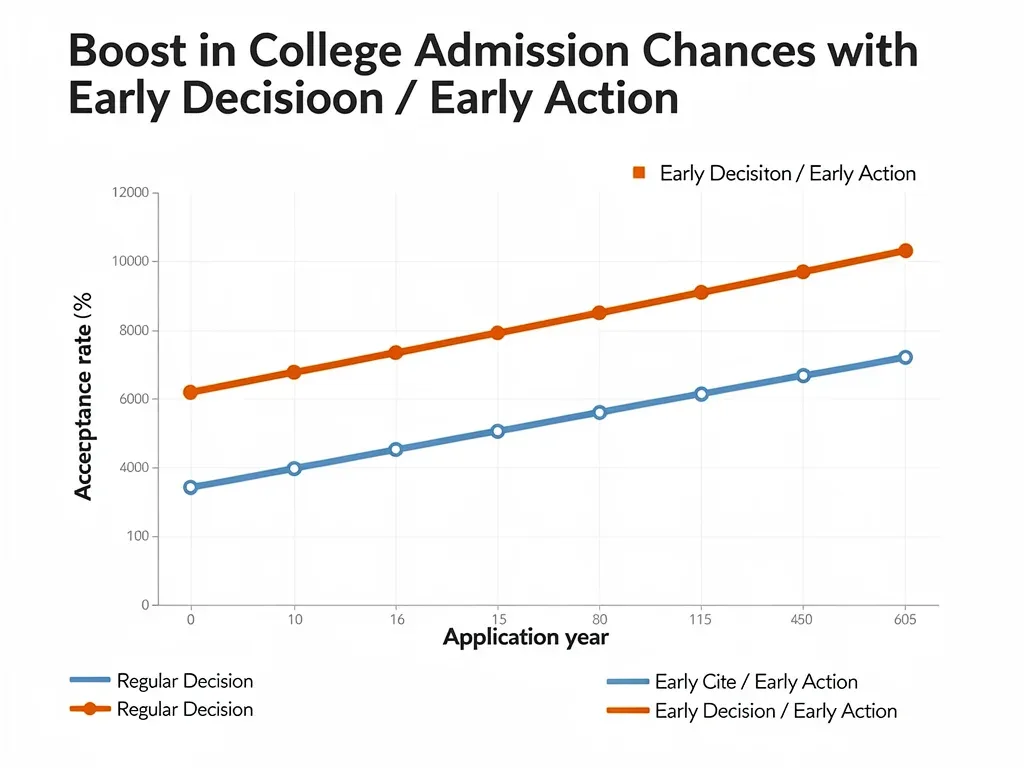
The allure of early application isn’t just about getting a decision sooner; it’s deeply rooted in statistical advantages that can significantly tip the scales in your favor. Colleges often admit a larger percentage of their applicant pool through early programs compared to regular decision, making a November 2026 submission a highly strategic move for those seeking to maximize their admission prospects.
This statistical boost is not a myth; it’s a well-documented phenomenon across a wide array of institutions, from highly selective universities to smaller liberal arts colleges. The reasons behind these elevated acceptance rates are multifaceted, encompassing factors related to applicant pool size, demonstrated interest, and institutional enrollment management.
Smaller Applicant Pool, Less Competition
One of the most straightforward explanations for higher early acceptance rates is the smaller, yet highly qualified, applicant pool. By applying early, you are competing against fewer individuals, which naturally increases your statistical probability of admission. Many students are still refining their applications or waiting for senior year grades, making the early rounds less crowded.
Consider the competitive landscape: if a college receives 10,000 regular decision applications for 1,000 spots, the acceptance rate is 10%. If they receive 2,000 early applications for 300 spots, the early acceptance rate could be 15% or higher. This immediate reduction in competition is a powerful argument for leveraging early application advantages.
Demonstrated Interest: A Key Factor
Colleges highly value demonstrated interest, as it correlates with higher yield rates (the percentage of admitted students who actually enroll). Applying early, especially via Early Decision, sends a clear and unambiguous signal to the admissions committee that their institution is a top choice for you. This signal can be a significant differentiator in a competitive application process.

Admissions officers are keenly aware that students who apply early are often more likely to accept an offer of admission. This helps colleges manage their enrollment targets and ensures they fill their incoming class with students who are genuinely enthusiastic about attending. Therefore, your early application isn’t just a submission; it’s a statement of intent that can sway decisions.
Institutional Goals and Enrollment Management
Universities use early application rounds as a critical tool for enrollment management. By admitting a substantial portion of their class early, they gain a clearer picture of their incoming student body, which aids in planning for housing, course offerings, and financial aid distribution. This predictability is invaluable for institutions.
- Predictability: Early acceptances help colleges predict their yield.
- Shaping the Class: Admissions can strategically admit students to shape the diversity and academic profile of the incoming class.
- Financial Aid Considerations: Early applicants might have a slight edge in financial aid, though this varies by institution and need-based aid is typically consistent across rounds.
The cumulative effect of these factors creates a compelling argument for early application. While a 15% boost is an approximation and can vary, the underlying statistical benefits are undeniable. For students targeting a November 2026 submission, this means a tangible increase in their odds of receiving that coveted acceptance letter.
Strategic Preparation for a November 2026 Submission
Achieving a successful early application by November 2026 requires meticulous planning and strategic execution. It’s not simply about submitting early, but about submitting a strong, polished application that stands out. This demands proactive engagement throughout your high school career, culminating in a focused effort during your junior and senior years.
Starting early allows you to build a robust academic and extracurricular profile, gather necessary materials without last-minute stress, and craft compelling essays that truly reflect your personality and aspirations. The preparation phase is where the foundation for those early application advantages is laid.
Academic Excellence and Course Selection
Your academic record is the cornerstone of your application. Colleges look for a challenging curriculum and strong grades. For an early application, your grades up to the end of your junior year will be paramount, alongside your senior year course selections.
- Challenging Courses: Take AP, IB, or honors classes relevant to your intended major.
- Consistent Performance: Maintain high grades throughout all years of high school.
- Senior Year Schedule: Select rigorous courses that demonstrate continued academic ambition.
Beyond grades, standardized test scores (SAT/ACT) are often a key component. Plan to take these tests well in advance, ideally by the spring of your junior year, to allow for retakes if necessary. A strong score submitted early can significantly bolster your application.
Extracurricular Activities and Leadership
Colleges seek well-rounded individuals who contribute meaningfully outside the classroom. Your extracurricular activities should demonstrate passion, commitment, and, ideally, leadership. Begin cultivating these interests early in high school, focusing on depth over breadth.
For a November 2026 submission, ensure your activities are well-documented and that you can articulate the impact you’ve made. Leadership roles, community service, part-time jobs, or personal projects all contribute to a compelling narrative that showcases your unique qualities and potential contributions to a college campus.
Crafting Compelling Essays and Recommendations
The essay is your opportunity to let your voice shine and differentiate yourself from other applicants with similar academic profiles. Start brainstorming topics and drafting essays during the summer before your senior year. Seek feedback from teachers, counselors, and trusted mentors to refine your narrative.
Recommendation letters are equally vital. Identify teachers and counselors who know you well and can speak to your strengths, character, and potential. Request these letters early, providing them with ample time and any necessary information (like your resume or a list of accomplishments) to write a thoughtful and personalized recommendation. A November 2026 deadline means requesting these by early fall of your senior year at the latest.
Maximizing Your Essays and Supplemental Materials
Your essays and supplemental materials are often the most personal and revealing components of your college application. While grades and test scores provide a quantitative measure of your abilities, these qualitative elements offer a window into your personality, values, and aspirations. Maximizing their impact is crucial for early applicants looking to capitalize on early application advantages.
A November 2026 submission means having these materials polished and perfected well before the typical crunch time. This foresight allows for multiple revisions, thoughtful reflection, and the opportunity to convey a truly authentic representation of yourself to admissions committees.
The Power of a Personal Statement
Your main personal statement is your chance to tell your story. It should be unique, engaging, and reflective. Avoid clichés and generic topics. Instead, focus on a specific experience, idea, or passion that has shaped who you are and what you hope to achieve.
- Authenticity: Write in your own voice, showcasing your personality.
- Specificity: Use vivid details and anecdotes to illustrate your points.
- Reflection: Explain what you learned and how you grew from your experiences.
Begin brainstorming topics in the spring of your junior year. Draft multiple versions, seeking feedback from trusted advisors. The goal is a polished essay that leaves a lasting positive impression, highlighting why you would be a valuable addition to their campus community.
Supplemental Essays: Tailoring Your Application
Many universities require supplemental essays, often asking specific questions about why you want to attend their institution or what you would contribute to their community. These essays are not mere formalities; they are critical opportunities to demonstrate genuine interest and fit.
For each supplemental essay, conduct thorough research on the university. Mention specific programs, professors, courses, or campus initiatives that genuinely excite you. Generic answers will fall flat. Admissions officers can easily spot essays that have been recycled without customization.
By investing time in tailoring these essays, you reinforce your commitment and demonstrate that you have done your homework. This level of detail and personalization significantly strengthens your case, contributing to the overall early application advantages.
Compiling a Strong Activities List
Your activities list, often presented through platforms like the Common Application, should be more than just a list of what you did. It should be a concise yet impactful summary of your involvement, responsibilities, and achievements. Use action verbs and quantify your impact whenever possible.
For a November 2026 deadline, ensure this list is finalized and reviewed for clarity and completeness. Highlight any leadership roles, significant accomplishments, or unique experiences that set you apart. This section provides a snapshot of your engagement and dedication outside of academics, rounding out your overall profile.
Financial Aid and Early Applications: What You Need to Know
For many students and families, financial aid is a critical component of the college decision-making process. The interplay between early applications and financial aid can be a source of confusion, but understanding the nuances is essential, especially when aiming for those early application advantages by November 2026.
While early application can boost your admission chances, it’s important to be informed about how it might affect your financial aid package. The good news is that for need-based aid, applying early generally does not put you at a disadvantage, and in some cases, it can even offer subtle benefits.
Need-Based Aid: Consistency Across Rounds
For most institutions, need-based financial aid is determined by your family’s financial situation, as assessed through the Free Application for Federal Student Aid (FAFSA) and the CSS Profile. These forms calculate your Expected Family Contribution (EFC), and colleges use this to determine your aid package.
- FAFSA and CSS Profile: Submit these forms as early as possible, ideally by the early application deadline.
- Institutional Policy: Most colleges commit to meeting the demonstrated need of early applicants to the same extent as regular decision applicants.
- Early Estimates: Some institutions provide early estimates of financial aid packages for ED applicants, which can be helpful for planning.
It is crucial to check each college’s specific financial aid policies for early applicants. Some may require earlier submission of financial aid forms, so stay organized and meet all deadlines to ensure you receive full consideration.
Merit-Based Aid: Potential for Advantage
While need-based aid is generally consistent, there can sometimes be subtle early application advantages for merit-based scholarships. Some institutions may have a limited pool of merit scholarships, and by applying early, you might be considered for these funds before they are fully allocated.
However, this is not a universal rule, and many colleges award merit scholarships across all application rounds. If merit aid is a significant factor, research the specific policies of your target schools. For Early Decision applicants, it’s particularly important to understand the financial commitment before binding yourself, as you won’t have other offers to compare.
If you are admitted ED and the financial aid package is insufficient, you may be released from the binding agreement, but this is rare and usually requires significant unmet need. Therefore, ensure you’ve had open discussions with your family about affordability before committing to an ED application. For EA applicants, the flexibility to compare offers remains a significant benefit, allowing you to weigh both admission and financial aid packages before making your final decision.
Avoiding Common Pitfalls in Early Applications
While the early application advantages are compelling, navigating the process requires careful attention to detail to avoid common pitfalls that could undermine your efforts. A November 2026 submission is a powerful strategy, but only if executed flawlessly. Rushing an application or misinterpreting guidelines can negate the benefits you’re striving for.
Many students, eager to gain an edge, mistakenly believe that simply submitting early is enough. However, a weak or incomplete early application can be more detrimental than a strong regular decision application. The goal is to submit your best work, not just your first work.
Submitting an Unpolished Application
The most significant mistake early applicants make is submitting an application that isn’t fully ready. Early means ‘early,’ not ‘unfinished.’ Admissions committees expect the same level of polish and completeness from early applicants as they do from regular decision applicants.
- Incomplete Essays: Rushed essays often lack depth and originality.
- Unchecked Errors: Typos, grammatical mistakes, and factual inaccuracies create a poor impression.
- Missing Components: Forgetting to request transcripts or recommendation letters in time can delay or invalidate your application.
Ensure every component of your application – essays, activities list, recommendations, and test scores – is thoroughly reviewed and finalized before hitting submit. The extra time afforded by an early start should be used for refinement, not for procrastination.
Applying Early Decision to the Wrong School
Early Decision is a binding commitment, and applying ED to a school that isn’t your absolute top choice can lead to significant regrets. It’s crucial to be 100% certain about your commitment before selecting this option.
Consider all factors: academic fit, campus culture, location, and, critically, affordability. If financial aid is a major concern, and you’re unsure if a particular school will meet your needs, Early Decision might not be the best route. The inability to compare financial aid offers from other institutions is a serious consideration.
Ignoring Specific College Requirements
Each college has unique application requirements and deadlines, even within early application rounds. Failing to adhere to these specific guidelines can result in your application being delayed, incomplete, or even rejected.
Thoroughly read and re-read the application instructions for each institution. Pay close attention to supplemental essay prompts, specific recommendation letter requirements, and any unique portfolio or interview components. What works for one school might not work for another. Staying organized with a detailed checklist for each application is paramount to avoiding these common pitfalls and truly harnessing the early application advantages for a November 2026 submission.
The Long-Term Impact of Early Admission Success
Securing early admission to your dream college, especially through a November 2026 submission, extends its benefits far beyond just receiving an acceptance letter. The long-term impact of this early success can positively influence your senior year, your transition to college, and even your future academic and professional trajectory. It’s a strategic move that provides a foundation for confidence and preparedness.
The immediate relief from the college application stress allows you to focus more fully on your academics, extracurriculars, and personal growth during your final year of high school. This newfound freedom can lead to a more enriching and less anxiety-ridden transition into higher education, truly embodying the spirit of early application advantages.
A Stress-Free Senior Year
One of the most significant immediate benefits of early admission is the ability to enjoy your senior year without the looming pressure of college applications. You can dedicate more time to your studies, deepen your involvement in extracurricular activities, or simply savor your last year of high school with friends and family.
This reduction in stress can often lead to improved academic performance, as you’re no longer distracted by application deadlines and anxieties. It allows for a more balanced and fulfilling end to your secondary education, setting a positive tone for your upcoming college experience.
Enhanced College Preparedness
Knowing where you’re going to college months in advance provides a unique opportunity for enhanced preparation. You can connect with future classmates, explore campus resources, and delve deeper into your chosen field of study. This proactive engagement can make your transition to college much smoother.
- Connect with Peers: Join online groups or forums for admitted students.
- Research Resources: Familiarize yourself with academic support, career services, and student organizations.
- Academic Focus: Use your senior year to strengthen foundational skills relevant to your college major.
This early engagement fosters a sense of belonging even before you step foot on campus, reducing potential anxieties about the unknown and making you feel more connected to your future university community.
Future Opportunities and Networking
Early admission can also open doors to various opportunities. You might be invited to special admitted student events, receive early access to housing selection, or even be considered for exclusive scholarships or programs. These early connections can be invaluable.
Furthermore, the confidence gained from early admission success can translate into a more proactive approach to your college career and beyond. It reinforces the idea that strategic planning and hard work yield positive results, a lesson that will serve you well in future academic and professional endeavors. The early application advantages, therefore, are not just about getting in; they’re about setting the stage for a successful and less stressful journey through higher education.
| Key Aspect | Benefit of Early Application |
|---|---|
| Acceptance Rates | Statistically higher due to smaller applicant pool and demonstrated interest. |
| Competition | Reduced competition compared to regular decision rounds. |
| Senior Year Stress | Significantly reduced, allowing focus on academics and personal growth. |
| Financial Aid | Need-based aid generally consistent; potential for merit aid consideration. |
Frequently Asked Questions About Early College Applications
What is the primary difference between Early Decision and Early Action?▼Early Decision (ED) is a binding commitment, meaning if accepted, you must enroll. Early Action (EA) is non-binding, allowing you to apply early, receive a decision, but still consider other offers before committing. Both offer early notification and potential statistical advantages.
How much can early application really boost my chances of admission?▼While specific percentages vary by institution, many colleges report significantly higher acceptance rates for early applicants, sometimes by 10-20% or more, compared to regular decision. This is due to a smaller, more committed applicant pool and demonstrated interest.
Does applying early affect my financial aid package?▼For need-based aid, most institutions commit to meeting demonstrated need for early applicants similar to regular decision. For merit-based aid, applying early might offer a slight advantage as some scholarships may be awarded in early rounds, but policies vary by school.
What are the key materials I need to prepare for an early application?▼Key materials include strong academic transcripts (up to junior year), competitive standardized test scores, compelling personal essays, tailored supplemental essays, and thoughtful letters of recommendation from teachers and counselors. Start preparing these well in advance.
Is it better to submit a strong regular decision application than a rushed early one?▼Absolutely. A well-crafted, polished regular decision application will always be more effective than a rushed or incomplete early application. Early submission is only beneficial if your application fully represents your best work and meets all institutional requirements.
Conclusion
The strategic decision to pursue early application advantages for a November 2026 submission is more than just a timeline choice; it’s a powerful declaration of intent and a calculated move to significantly enhance your college admission prospects. By understanding the statistical edge, meticulously preparing all components, and avoiding common pitfalls, students can position themselves for success. This proactive approach not only increases the likelihood of admission but also contributes to a more relaxed and fulfilling senior year, setting a strong foundation for a successful transition into higher education. Embrace the opportunity to stand out and make your dream college a reality.
