Digital SAT 2026: Essential Prep Tools & Strategies
Advertisements
Preparing for the Digital SAT in 2026 requires a strategic approach, leveraging adaptive testing platforms and comprehensive study materials to achieve optimal scores for college admissions.
Are you looking to ace the Digital SAT Preparation 2026 and secure your spot in your dream college? The landscape of standardized testing is evolving, and understanding the nuances of the Digital SAT is crucial for prospective students. This comprehensive guide will equip you with the essential tools and strategies needed to navigate this new format successfully.
Understanding the Digital SAT Format
The transition to the Digital SAT marks a significant shift from the traditional paper-and-pencil exam. This new format, fully implemented by 2026, promises a more streamlined, adaptive, and student-friendly experience. Gone are the days of bubbling in answers and flipping through lengthy test booklets. Instead, students will encounter a test delivered via a secure digital platform, primarily on College Board-approved devices, offering a dynamic and personalized assessment.
One of the most notable changes is the adaptive nature of the test. The Digital SAT employs a multi-stage adaptive design, meaning the difficulty of the second module in both the Reading and Writing section and the Math section will adjust based on your performance in the first module. This adaptive format ensures that the test is more efficient, shorter in duration, and provides a more precise measure of a student’s abilities. Familiarity with this adaptive logic is paramount for effective preparation.
Key Changes to Expect
Beyond the digital delivery and adaptive structure, several other modifications are noteworthy. The test is now shorter, clocking in at approximately two hours and fourteen minutes, compared to the previous three-hour exam. This reduction in time can significantly impact test-taking stamina and focus, making efficient time management even more critical. Moreover, the Digital SAT allows for the use of a built-in graphing calculator for the entire Math section, a welcome change for many students.
- Shorter test duration (approx. 2 hours 14 minutes).
- Adaptive testing modules for personalized difficulty.
- Built-in graphing calculator accessible for all Math questions.
- Digital platform with integrated tools like annotation and flagging.
Understanding these fundamental changes is the first step in crafting an effective preparation strategy. The Digital SAT is not just a digital version of the old test; it’s a fundamentally redesigned assessment that demands a different approach to studying and practice. Embracing these changes rather than resisting them will set you on the path to success.
Essential Digital Tools for Preparation
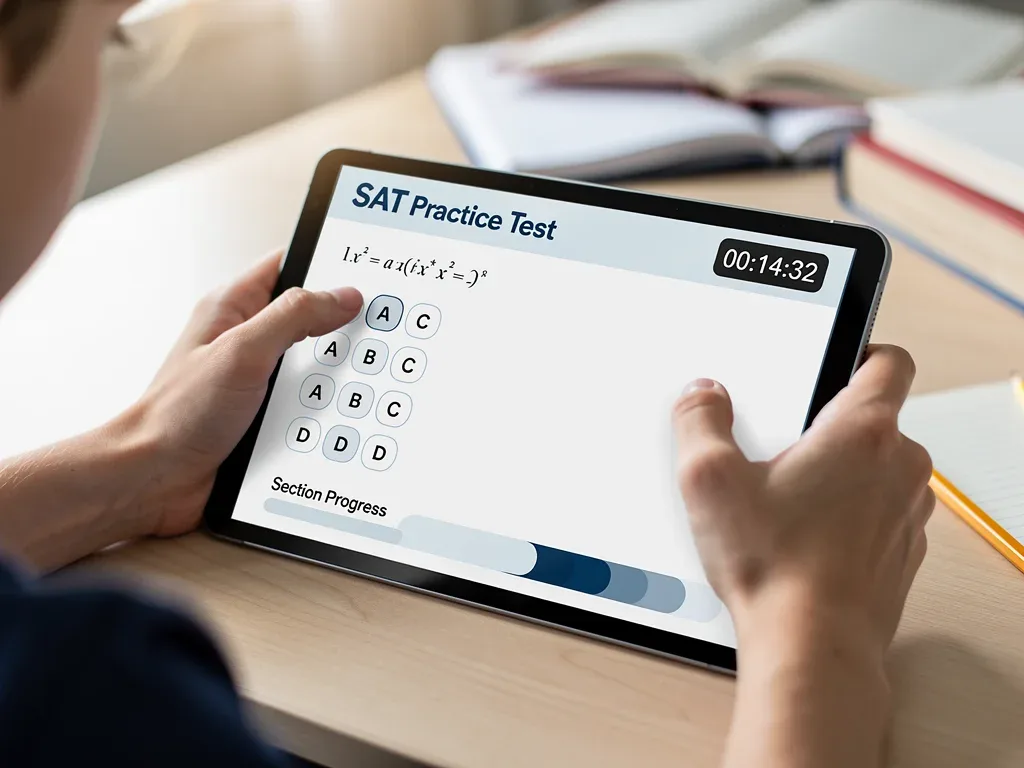
Preparing for the Digital SAT requires embracing the digital ecosystem. Traditional textbooks still have their place, but the core of your preparation should revolve around digital tools that mimic the actual test environment. The College Board itself offers official practice tests through its Bluebook app, which is an indispensable resource. This app provides full-length, adaptive practice tests that closely replicate the live testing experience, complete with a timer, built-in calculator, and annotation features.
Beyond the official resources, numerous third-party platforms have emerged, offering a wealth of practice questions, diagnostic tools, and personalized study plans. These platforms often leverage artificial intelligence to identify your strengths and weaknesses, tailoring content to address specific areas where you need improvement. When selecting a platform, look for those that offer adaptive practice, detailed analytics, and explanations for both correct and incorrect answers.
Leveraging Online Resources Effectively
Online resources extend beyond just practice tests. Educational websites, YouTube channels, and online tutors provide supplementary materials, strategy breakdowns, and live instruction. Many of these resources are free or available at a lower cost than traditional tutoring. The key is to be discerning and choose reputable sources that align with the College Board’s guidelines and the Digital SAT format.
- College Board’s Bluebook app for official practice.
- Adaptive learning platforms for personalized study.
- Online tutoring and educational videos for concept reinforcement.
- Digital flashcards and vocabulary apps for quick review.
Integrating these digital tools into your study routine will not only familiarize you with the test’s interface but also enhance your understanding of the content. Regular engagement with these resources will build confidence and refine your test-taking skills, making the actual exam feel less daunting. Remember, consistent practice in a digital environment is crucial.
Crafting a Strategic Study Plan
A well-structured study plan is the backbone of successful Digital SAT preparation. Generic study approaches often fall short; instead, your plan should be personalized, realistic, and adaptable. Begin with a diagnostic test to establish a baseline score and identify your strongest and weakest areas. This initial assessment will inform where to allocate most of your study time and efforts.
Divide your preparation into manageable phases. The first phase should focus on content review, ensuring a solid understanding of all the concepts tested in both the Reading and Writing and Math sections. This involves revisiting grammar rules, vocabulary, algebraic principles, and geometric theorems. Use textbooks, online modules, and instructional videos to reinforce your knowledge.
Implementing Effective Practice Routines
Once you’ve reviewed the content, transition to focused practice. This phase should involve working through practice questions by topic, gradually increasing difficulty. Regularly take timed practice modules to build stamina and improve pacing. As you progress, integrate full-length adaptive practice tests to simulate the actual exam conditions. Analyze your performance after each practice test, paying close attention to patterns of errors and areas that consistently challenge you.
Consider dedicating specific days or blocks of time to each section. For instance, Mondays and Wednesdays could be for Reading and Writing, while Tuesdays and Thursdays are for Math. Fridays can be reserved for review, full-length practice tests, or addressing specific weaknesses identified during the week. Consistency is more important than cramming, so aim for regular, shorter study sessions rather than infrequent, marathon ones.

Mastering Reading and Writing Strategies
The Reading and Writing section of the Digital SAT presents a unique challenge, combining elements of traditional reading comprehension with grammar and usage questions. The passages are shorter, often presenting a single question per passage, which means you need to quickly grasp the main idea and supporting details. Focus on developing strong active reading skills, such as identifying the author’s purpose, main argument, and tone.
For the writing portion, a solid understanding of standard English conventions is paramount. This includes punctuation, sentence structure, verb tense, and subject-verb agreement. Practice identifying and correcting grammatical errors in various contexts. The Digital SAT often tests your ability to improve the clarity, conciseness, and rhetorical effectiveness of written text. Pay attention to how different sentence structures and word choices impact the overall message.
Targeting Specific Question Types
The Digital SAT Reading and Writing section features a variety of question types, from main idea and evidence-based questions to rhetoric and synthesis. Become familiar with each type and develop specific strategies for tackling them. For instance, when encountering a main idea question, focus on the introductory and concluding sentences of the passage. For rhetoric questions, consider the author’s purpose and audience.
- Practice active reading techniques for short passages.
- Review grammar rules and standard English conventions.
- Develop strategies for various question types (e.g., main idea, evidence, rhetoric).
- Utilize digital annotation tools during practice for better comprehension.
Effective preparation for this section involves a blend of content knowledge and strategic application. Regularly engage with diverse texts to improve your comprehension speed and accuracy. The more you practice identifying grammatical errors and improving sentence structure, the more intuitive these tasks will become under timed conditions.
Conquering the Digital SAT Math Section
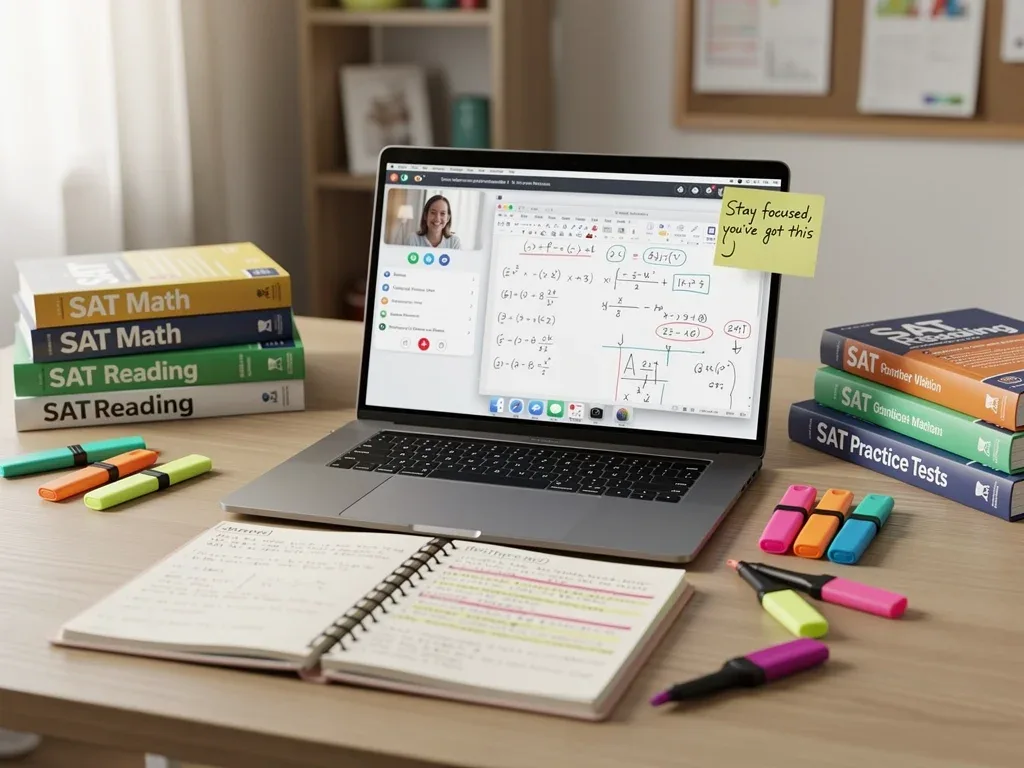
The Digital SAT Math section assesses your proficiency in algebra, advanced math, problem-solving and data analysis, and geometry and trigonometry. A key advantage is the built-in graphing calculator, available for all questions. While this is a significant aid, it’s essential to understand when and how to use it effectively. Over-reliance on the calculator can sometimes slow you down, so know your basic arithmetic and algebraic manipulations.
The Math section is also adaptive, meaning your performance on the first module will determine the difficulty of the second. This implies that strong foundational skills are crucial, as a solid performance early on can lead to a higher potential score. Focus on understanding the underlying mathematical concepts rather than simply memorizing formulas. The Digital SAT often presents problems in real-world contexts, requiring you to translate word problems into mathematical equations.
Strategic Approaches to Math Problems
Develop a systematic approach to problem-solving. Start by carefully reading the question to understand what is being asked. Identify the given information and what you need to find. Then, consider different strategies: can you solve it algebraically, by plugging in numbers, or by using the calculator? Practice estimating answers to quickly eliminate incorrect choices.
- Master fundamental mathematical concepts across all domains.
- Learn to use the built-in graphing calculator efficiently and appropriately.
- Practice translating word problems into mathematical expressions.
- Develop problem-solving strategies, including estimation and substitution.
Regular practice with a variety of problem types is essential. Don’t shy away from challenging questions; instead, use them as learning opportunities. Review explanations for both correct and incorrect answers to deepen your understanding of the concepts and identify any gaps in your knowledge. Consistent effort in the Math section will lead to significant improvements.
Test Day Strategies and Mental Preparation
Beyond content knowledge and practice, success on the Digital SAT hinges on effective test-day strategies and a strong mental game. The night before the exam, ensure you get adequate rest. A well-rested mind performs better under pressure. On test day, eat a nutritious breakfast to fuel your brain and arrive at the testing center with plenty of time to spare, avoiding any last-minute rush or anxiety.
During the test, manage your time wisely. The Digital SAT has a clear timer on the screen, so keep an eye on it but don’t let it distract you. If you encounter a challenging question, use the flagging feature to mark it and return later if time permits. Avoid getting stuck on one question for too long, as this can eat into valuable time and increase stress levels. Move on and come back if you have extra time at the end of the module.
Maintaining Focus and Composure
Test anxiety is a common challenge, but it can be managed with proper mental preparation. Practice mindfulness exercises or deep breathing techniques to calm your nerves before and during the exam. Remind yourself of all the hard work you’ve put in and trust your preparation. Remember that the test is adaptive; if you find the second module challenging, it likely means you performed well on the first, leading to more difficult questions, which is a good sign.
- Prioritize adequate sleep and a healthy breakfast on test day.
- Practice time management and use the flagging feature for difficult questions.
- Utilize relaxation techniques to manage test anxiety.
- Trust your preparation and maintain a positive mindset throughout the exam.
Approaching the Digital SAT with a calm, focused, and strategic mindset can make a significant difference in your performance. Your mental state is just as important as your academic readiness. By combining thorough preparation with effective test-taking strategies, you can maximize your potential and achieve the score you desire.
| Key Preparation Area | Brief Description |
|---|---|
| Digital Format Familiarization | Practice with the College Board Bluebook app to understand the adaptive interface and tools. |
| Strategic Study Planning | Create a personalized plan based on diagnostic tests, focusing on content review and timed practice. |
| Reading & Writing Mastery | Develop active reading skills for short passages and reinforce standard English conventions. |
| Math Section Proficiency | Understand core concepts, efficiently use the built-in calculator, and practice problem-solving strategies. |
Frequently Asked Questions About the Digital SAT
What is the biggest difference between the old SAT and the Digital SAT?▼The most significant difference is the adaptive testing format, where the difficulty of subsequent modules adjusts based on your performance. Additionally, it’s shorter, entirely digital, and includes a built-in graphing calculator for all Math questions, offering a more dynamic and personalized assessment experience.
Do I need to bring my own device for the Digital SAT?▼While some testing centers may provide devices, it’s generally recommended to bring your own fully charged laptop or tablet that meets the College Board’s specifications. Always check with your specific testing center and review College Board guidelines well in advance to ensure compliance and avoid issues on test day.
How can I best prepare for the adaptive nature of the Digital SAT?▼To prepare for the adaptive format, consistently use the College Board’s Bluebook app for official practice tests. These tests are designed to mimic the adaptive experience, helping you understand how question difficulty changes and allowing you to build strategies for managing the unique flow of the digital exam.
Are there any free resources available for Digital SAT preparation?▼Yes, the College Board provides free official practice tests through its Bluebook app. Additionally, Khan Academy offers extensive free practice materials and instructional videos aligned with the Digital SAT. Many other educational websites and YouTube channels also provide valuable free content to support your studies.
What should I do if I get stuck on a question during the Digital SAT?▼If you encounter a difficult question, use the flagging feature to mark it and move on. Do not spend too much time on a single problem. If you have time remaining at the end of the module, you can return to flagged questions. This strategy helps manage time effectively and prevents unnecessary stress.
Conclusion
Preparing for the Digital SAT in 2026 is an endeavor that demands foresight, diligence, and a strategic embrace of new technologies. The shift to a digital, adaptive format presents both challenges and opportunities for students aiming for college success. By understanding the test’s structure, leveraging essential digital tools like the Bluebook app, crafting a personalized study plan, and mastering section-specific strategies, you can position yourself for optimal performance. Remember that consistent practice, coupled with effective test-day strategies and mental preparedness, forms the cornerstone of a successful outcome. Approach this new chapter in standardized testing with confidence, knowing that thorough preparation is your most powerful asset.